Introduction
If you’re wondering how big 1 cm is, here’s the short answer first: one centimeter is about 0.39 inches — just under half an inch, and exactly 10 millimeters. If you’re hunting for everyday things that are 1 cm long, you’ll find fifteen below. It’s one of those measurements that shows up everywhere once you notice it. Crafters use it for seam allowances and beadwork. Parents eyeball it when checking a child’s splinter or scrape. Gardeners measure seed depth in centimeters, and shoppers compare button sizes and phone cases with it. The trick is having a mental picture ready. A green pea is about 1 cm across, and so is the height of a standard LEGO brick. Keep those two in your head and you’ll never be far off.
1 cm Conversion Chart
| Unit | Converted Value |
|---|---|
| Inches | ≈ 0.39 in |
| Feet | ≈ 0.03 ft |
| Yards | ≈ 0.01 yd |
| Millimeters | 10 mm |
| Meters | 0.01 m |
15 Common Things That Are 1 cm Long
Here are fifteen familiar objects, each measuring about one centimeter. The first table holds the closest matches; the second adds more everyday items in the same neighborhood.
Common Objects That Are About 1 cm
| Object | Approximate Length |
|---|---|
| A standard LEGO brick (height) | 9.6 mm |
| A green pea | about 1 cm |
| A shirt button | about 1.1 cm |
| A blueberry | 1–1.5 cm |
| A pushpin head | about 1 cm |
| A USB-A plug (width) | about 1.2 cm |
| An M&M candy | about 1.3 cm |
| Your pinky fingernail (width) | about 1 cm |
More Everyday Items Around 1 cm
| Object | Approximate Length |
|---|---|
| A Cheerio | about 1.2 cm |
| A cherry pit | about 1 cm |
| A sunflower seed | about 1 cm |
| A dried chickpea | about 1 cm |
| A coffee bean | about 1 cm |
| A AAA battery (diameter) | 10.5 mm |
| An AA battery (diameter) | about 1.4 cm |
How Big Is 1 cm?
One centimeter is genuinely small — the kind of size you read off the millimeter marks of a ruler rather than the big numbered lines. It’s about the width of your pinky fingernail, or the height of a single LEGO brick. If you can picture either one, you already know what 1 cm looks like.
To place it on the scale, think of 9 millimeters as just a hair smaller — set side by side, you’d barely spot the difference. 2 centimeters is exactly double: two peas in a row instead of one. And an inch is 2.54 cm, so 1 cm is less than half of that familiar unit.
Because it’s small, the centimeter is a precision size. You’ll meet it in sewing patterns, DIY measurements, jewelry specs, and printer settings. Estimating it well means fewer surprises in all the little moments when the details actually matter.
Easy ways to estimate 1 cm in everyday life
- Use your pinky nail: Glance at your smallest fingernail. Its width is roughly a centimeter, and unlike a ruler, it’s always with you.
- Picture a LEGO brick: One classic brick standing upright is 9.6 mm tall — as close to 1 cm as any household object gets.
- Think of a pea: A single green pea, fresh or frozen, is about a centimeter across. Easy to see in your mind.
- Pinch a shirt button: The button on your cuff or collar is about 1.1 cm wide. Pinch it and feel the size.
- Recall a USB plug: The old rectangular USB-A plug is about 12 mm wide. Shave a millimeter off your mental image.
- Halve an inch in your head: An inch is 2.54 cm, so half an inch is a touch more than 1 cm. Picture half an inch, then trim it slightly.
1. A Standard LEGO Brick
The single most reliable 1 cm reference in any toy box is the classic LEGO brick. Each one stands 9.6 millimeters tall — just four-tenths of a millimeter under a full centimeter. That precision is what makes it so useful: every brick ever made, in every country, shares the same dimensions. Hold one between your thumb and forefinger and you can feel exactly how big 1 cm is. Teachers and engineers love it for the same reason: when a unit never changes, your eye learns to trust it. The next time a measurement calls for a centimeter, picture that little brick standing on your desk.
2. A Green Pea
Pop a frozen pea out of the bag and you’re looking at roughly 1 cm across. Most garden peas measure between 7 and 10 millimeters, which puts the plumper ones right at the centimeter mark. Peas work beautifully as a reference because they’re round, familiar, and nearly everyone has handled one. If a recipe tells you to dice vegetables into 1 cm cubes, picture a pea first — then cut your pieces to match its size. Keep a bag in the freezer and you have a permanent, edible set of centimeter gauges.
3. A Shirt Button
A standard four-hole shirt button measures about 1.1 cm across — a whisper over the mark, but close enough for quick estimating. Buttons earn their place on this list because they’re everywhere, including on the shirt you’re probably wearing right now. That ubiquity is the point: you don’t need to go find one. Pinch the button at your cuff between two fingers, and the width you’re feeling is essentially one centimeter. Spare buttons sewn inside jacket linings work just as well as the ones on your cuffs.
4. A Blueberry
A typical blueberry runs 1 to 1.5 cm in diameter, which puts the smaller berries right at 1 cm. Fruit makes a surprisingly handy reference because you handle it often and its size sticks in memory. Think of the berries in your morning bowl — the modest ones, not the jumbo giants — and you have a natural, edible ruler. When someone says “about a centimeter,” your breakfast already showed you what that means. The punnets at the grocery store are full of them, so this reference is easy to refresh any week.
5. A Pushpin Head
The round plastic head of a standard pushpin is about 1 cm wide. Office supplies make excellent references because they’re manufactured to consistent sizes and sit in plain sight on desks everywhere. Press one into a corkboard and the little colored dome staring back at you is almost exactly a centimeter across. Different brands vary a touch, but the classic dome shape stays within a millimeter of the mark. It’s a tidy visual anchor for anyone who works at a desk.
6. A USB-A Plug
The familiar rectangular USB-A plug — the one on older flash drives and charging cables — is about 12 mm wide, just over 1 cm. It’s a solid reference because you’ve plugged one in hundreds of times; the shape is burned into muscle memory. The next time you hold one, notice its width. That flat metal rectangle is your centimeter, plus one extra millimeter on top. Newer USB-C plugs are much smaller, so make sure you’re picturing the old rectangular one.
7. An M&M Candy
A plain milk-chocolate M&M measures about 1.3 cm across — a touch over our target, but close enough for estimating. Candy works as a gauge because it’s uniform: every piece in the bag is essentially the same size. Picture a single M&M on the table, then shave a sliver off each side in your mind. What remains is very close to one centimeter. Peanut M&Ms run noticeably larger, so stick to the plain chocolate kind for this comparison.
8. Your Pinky Fingernail
Look at your smallest finger. An adult’s pinky fingernail is roughly 1 cm wide, making it the most convenient reference on this list — it travels with you everywhere. No ruler, no phone, no props needed. Just glance down at your hand. Everyone’s nail differs a little, so treat this one as approximate rather than exact, but for a fast real-world check, nothing beats it. Kids can use it too — their smaller nails just mean their personal centimeter runs a little short.
9. A Cheerio
The classic toasted oat ring is about 1.2 cm across — just a breath over 1 cm. Breakfast cereal is surprisingly consistent from piece to piece, and nearly everyone has poured a bowl at some point in life. Picture a single Cheerio sitting on the table. Now imagine it a tiny bit smaller, and you’ve nailed the centimeter without touching a ruler. Honey Nut and other varieties share the same size, so any box in the pantry will do.
10. A Cherry Pit
Crack open a cherry and the pit inside is about 1 cm long. It’s a neat reference because it’s smooth, hard, and uniform — nature’s own little measuring stone. The next time you’re eating cherries, fish one pit out and hold it between your fingers. That small, glossy oval is almost exactly one centimeter from end to end. Plum and apricot pits run bigger, so the cherry’s modest stone is the one to remember.
11. A Sunflower Seed
A striped sunflower seed in its shell runs about 1 cm long. Seeds make trustworthy references because each variety grows to a consistent size, season after season. If you snack on them, you already know the feel: that little shell resting between your fingers is a centimeter you can practically taste. Crack one open and the kernel inside is smaller — it’s the shell that marks the size. Pumpkin seeds are flatter and wider, so don’t mix the two up in your mind.
12. A Dried Chickpea
A dried chickpea is about 1 cm across — round, beige, and instantly recognizable from any pantry shelf. Dried beans and peas are remarkably uniform, which is exactly what you want in a measuring reference. Scoop one from the bag and roll it between your fingers. That small, firm sphere is your centimeter, ready for the spice drawer or the craft table.
13. A Coffee Bean
A roasted coffee bean is roughly 1 cm long. Anyone who grinds their own coffee handles these daily, and the size barely varies from bean to bean. Picture a single bean just before it drops into the grinder — that familiar oval with the crease down the middle. If you can see it clearly in your mind, you can see one centimeter. Espresso blends and drip blends use the same beans, so the size holds steady across the coffee aisle.
14. A AAA Battery (Diameter)
Turn a AAA battery on its side and look at its diameter — the distance straight across the cylinder. It measures 10.5 mm, which is essentially 1 cm. Batteries are precision-made to international standards, so this is one of the most exact references on the list. Remote controls, wall clocks, and small toys all run on AAAs, which means one is rarely far from reach. Check the label on the battery itself — the AAA marking confirms you’ve grabbed the right one.
15. An AA Battery (Diameter)
The slightly fatter AA battery measures 14 mm across — about 1.4 cm, noticeably over our mark. It still belongs here as a comparison partner for the AAA above. Hold the two side by side: the slimmer AAA’s width is your centimeter, and the AA is visibly wider. Two batteries from the same drawer, one quick lesson in relative size. TV remotes usually take one or the other, so pop the battery cover open and compare them directly.
Frequently Asked Questions
Is 1 cm bigger than an inch?
No — it’s much smaller. An inch equals 2.54 cm, so 1 cm is less than half an inch (about 0.39 inches). You would need two and a half centimeters stacked together to make a single inch.
What household item is closest to 1 cm?
A standard LEGO brick comes closest at 9.6 mm tall — just 0.4 mm under the mark. A green pea and a shirt button are also excellent everyday matches, each landing within a millimeter or two.
How many millimeters are in 1 cm?
Exactly 10 — one centimeter and 10 millimeters are the same length, no rounding involved. The metric system is decimal, so converting is simple: multiply centimeters by 10 to get millimeters, or divide millimeters by 10 to get centimeters.
What does 1 cm look like on a ruler?
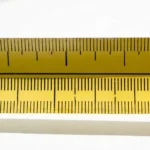
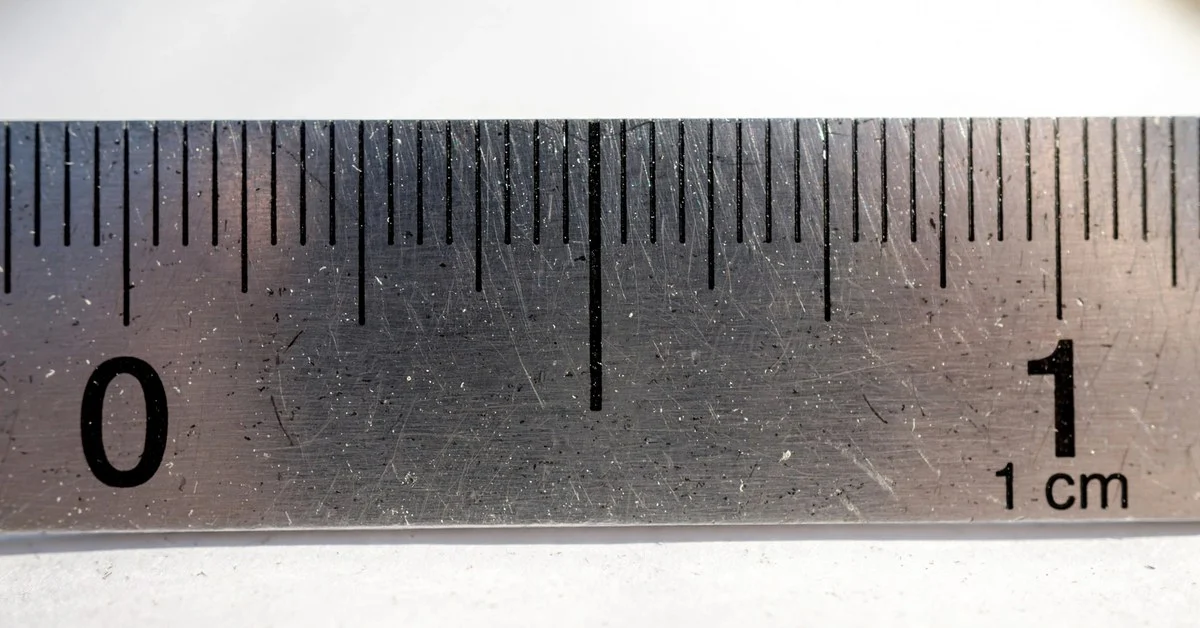
On a standard metric ruler, 1 cm is the distance between two numbered marks — for example, from 0 to 1. Each centimeter is divided into 10 tiny millimeter lines, so count ten of the smallest marks and you’ve measured exactly 1 cm.
See also: how big 5 cm is. See also: how big 8 cm is.
Final Thoughts
So, how big is 1 cm? It’s the width of your pinky nail, the height of a LEGO brick, the size of a pea — a small unit that turns up in the fiddliest corners of daily life. Once those pictures live in your head, estimating a centimeter becomes automatic. You’ll judge seam allowances, seed depths, button sizes, and splinter lengths without hunting for a ruler. The next time a pattern, a package label, or a craft instruction mentions centimeters, you won’t need to convert anything in your head. You’ll simply see it: one small, familiar length you’ve handled a thousand times. Small as it is, the centimeter earns its keep every single day — quietly holding together the details most people never notice.

I’m Owen Reeves, a content writer at MeasureZit.com, specializing in measurements, unit conversions, and mathematical concepts. I turn technical topics into clear, accurate content that’s easy to understand. My focus is precision, clarity, and genuinely useful information.