Introduction
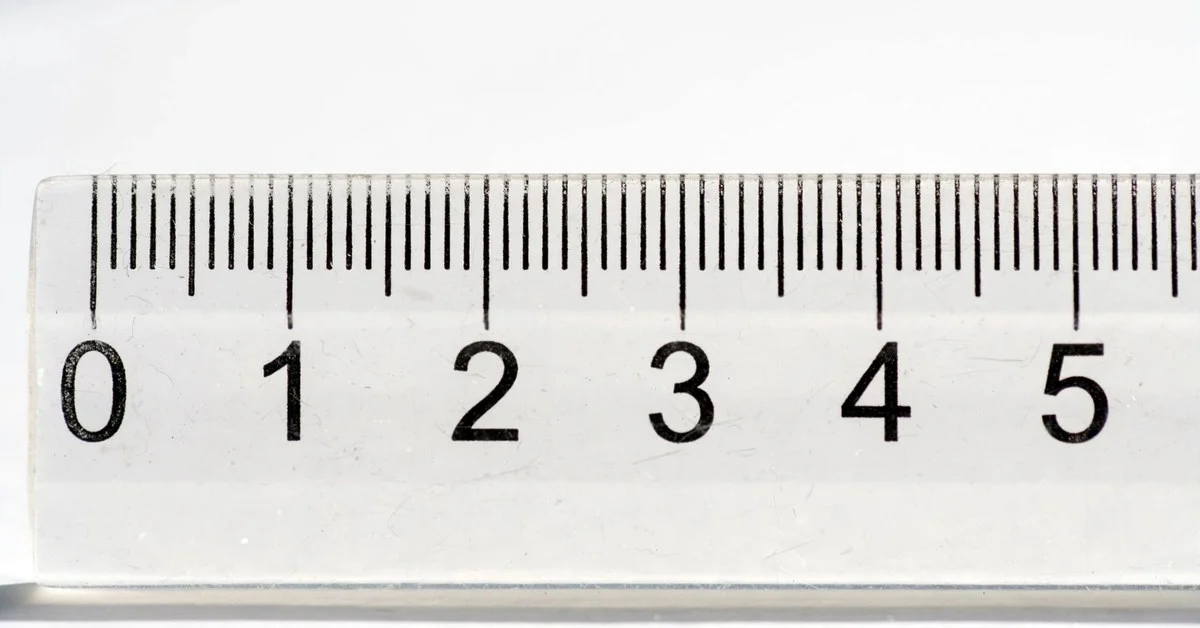
If you’re wondering how big 5 cm is, here’s the quick answer: 5 centimeters is about 1.97 inches — just under 2 inches, or exactly 50 millimeters. Looking for everyday things that are 5 cm long? You’ll find fifteen of them below. It’s a size that pops up constantly in daily life. An AA battery measures 5 cm long. So does a jumbo paperclip. Crafters measure ribbon and trim in centimeters, cooks eyeball cookie and egg sizes, and anyone shopping for a phone case or a watch strap compares dimensions like these. Once you can picture 5 cm without thinking, all those little measuring moments get easier. A large egg is close, a business card is close — keep one mental image handy and you’re set.
5 cm Conversion Chart
| Unit | Converted Value |
|---|---|
| Inches | ≈ 1.97 in |
| Feet | ≈ 0.16 ft |
| Yards | ≈ 0.05 yd |
| Millimeters | 50 mm |
| Meters | 0.05 m |
15 Common Things That Are 5 cm Long
Here are fifteen familiar objects, each measuring about five centimeters. The first table holds the closest matches; the second adds more everyday items in the same neighborhood.
Common Objects That Are About 5 cm
| Object | Approximate Length |
|---|---|
| An AA battery | 50.5 mm |
| A jumbo paperclip | about 5 cm |
| A business card (width) | 5.1 cm |
| A credit card (height) | about 5.4 cm |
| A large egg (height) | about 5.5–6 cm |
| A house key | about 5–6 cm |
| A chocolate chip cookie | about 5 cm |
| A golf tee | 5.4 cm |
More Everyday Items Around 5 cm
| Object | Approximate Length |
|---|---|
| A standard pink eraser | about 5–6 cm |
| A matchbox | about 5 cm |
| A lime | about 5–6 cm |
| A large strawberry | about 4–5 cm |
| A teabag | about 5–7 cm |
| A USB flash drive | about 5–7 cm |
| A shot glass (height) | about 6 cm |
How Big Is 5 cm?
Five centimeters is a comfortable hand-scale size — small enough to pinch between your fingers, big enough to see clearly across the room. It’s just under two inches, which makes it one of the easiest metric sizes for inch-thinkers to grasp. Picture 2 inches on a ruler, then trim off a hair: that’s 5 cm.
To place it on the scale, 4 centimeters is a finger’s width smaller — noticeable if you hold them side by side. 6 centimeters is a finger’s width bigger. And an AA battery, the one in your TV remote, is 50.5 mm long: essentially a perfect 5 cm you can hold in your hand.
This is a working size. You’ll meet it in battery compartments, envelope windows, craft supplies, and the produce aisle. When a listing says an item is 5 cm tall or wide, you now have a drawer full of mental references to judge it by — no ruler required.
Easy ways to estimate 5 cm in everyday life
- Grab an AA battery: At 50.5 mm long, it’s the gold standard. Keep one in a drawer and you own a physical 5 cm gauge.
- Picture a large egg: A big hen’s egg stands about 5.5–6 cm tall. Imagine it slightly shorter and you’re there.
- Think of a business card: The short edge of a standard business card is 5.1 cm. Nearly perfect, and easy to visualize.
- Use two fingers: Hold your index and middle fingers together — for most adults, their combined width is close to 5 cm.
- Recall a cookie: A classic chocolate chip cookie is about 5 cm across. Your snack drawer doubles as a measuring kit.
- Halve a 10 cm span: The width of a credit card is 8.56 cm, but half of a 10 cm phone-screen section is easy: picture 10 cm, then cut it in half.
1. An AA Battery
The AA battery is the single best 5 cm reference in any home. Standard AAs measure 50.5 mm long — just half a millimeter over five centimeters, as close to exact as everyday objects get. That precision comes from international manufacturing standards: every brand, in every country, makes them the same size. Pop one out of a remote control and hold it up. Most households have a dozen of them scattered across remotes, clocks, and toys. The length in your hand is 5 cm you can trust, which is why this humble cylinder tops the list.
2. A Jumbo Paperclip
A jumbo paperclip stretches about 50 mm from end to end — essentially 5 cm of bent wire. It’s a lovely reference because it lives in desk drawers everywhere and costs almost nothing. Clip a small stack of papers with one and notice its length against your thumb. For crafters and office workers, this is the 5 cm gauge that’s always within arm’s reach. Teachers keep boxes of them on desks, so classrooms are full of 5 cm gauges too.
3. A Business Card (Width)
The short edge of a standard business card measures 5.1 cm — one millimeter over our target. Business cards follow the ISO 7810 ID-1 size in much of the world (85.6 × 53.98 mm), so the width is consistent wherever you travel. Pull one from your wallet and turn it sideways. That short edge is a near-perfect 5 cm, printed with someone’s phone number. Even in the digital age, most wallets hold a few, making this reference nearly universal.
4. A Credit Card (Height)
Turn a credit card on its side and its height — the short edge — is 53.98 mm, about 5.4 cm. Slightly over the mark, but the card’s fame makes it worth including: billions of people carry one daily. The size is locked by the same ISO standard as business cards, so it never varies. Picture your own card standing on edge, then trim a few millimeters off in your mind. Hotel key cards share the same dimensions, which doubles your chances of spotting one.
5. A Large Egg (Height)
A large hen’s egg stands about 5.5 to 6 cm tall. Eggs are graded by weight, so the height varies a little from egg to egg — treat this one as a friendly approximation rather than a precision gauge. Still, it’s wonderfully familiar: open the fridge and there’s your reference, sitting in the carton. When a recipe or a craft project mentions 5 cm, picture an egg standing on its end. Medium eggs run a touch shorter, so reach for the large ones when you’re estimating.
6. A House Key
A typical house key measures about 5 to 6 cm from bow to tip. Keys differ by brand and blank type, so this one runs a little long — but everyone carries one, which counts for a lot in a reference object. Pull yours out and look at it. The length from the round head to the jagged tip is roughly 5 cm, and it’s in your pocket right now. Car keys with chunky fobs run longer, but the classic brass house key stays near the mark.
7. A Chocolate Chip Cookie
A classic chocolate chip cookie — the homemade or bakery kind, not the mini bites — is about 5 cm across. Cookies vary by baker, so think of the standard scoop-sized one rather than the giant café slabs. This reference earns its place through sheer familiarity: you’ve held hundreds of them. The next time one is in your hand, take a mental snapshot of its diameter. Oatmeal and peanut butter cookies baked from a standard scoop land in the same range.
8. A Golf Tee
A standard wooden golf tee measures 2.125 inches long, which works out to 5.4 cm. Tees are manufactured to tight tolerances because golfers are particular people, so the size is dependable. Even if you never play, you’ve seen them: that little peg with the cupped top. Longer tees exist for drivers, but the classic short tee is the 5.4 cm one. Line one up in your mind and you have a tidy 5 cm marker.
9. A Standard Pink Eraser
The classic pink block eraser from school — the wedge-shaped one — runs about 5 to 6 cm long. Generations of students have worn these down to nubs, which tells you how universal they are. Fresh out of the packet, its length sits right around our target. Art gum and plastic erasers come in similar sizes, so the whole eraser family works as a gauge. If you have kids, there’s probably one at the bottom of a backpack this very minute.
10. A Matchbox
A standard box of kitchen matches measures about 5 cm long. Matchboxes are sized to fit comfortably in a hand, and manufacturers have settled on similar dimensions worldwide. Strike a mental image of the box: the striking strip, the little drawer, the whole thing about as long as an AA battery. The small pocket-size boxes run shorter, so picture the full kitchen-size box. It’s a humble object doing quiet measuring work.
11. A Lime
A typical lime is about 5 to 6 cm in diameter — round, green, and easy to picture. Citrus sizes vary by variety and season, so think of the everyday Persian limes stacked in the grocery store rather than the giant specimens. Roll one in your palm the next time you make tacos or cocktails. Key limes are much smaller, so this reference means the common Persian variety. That familiar sphere is roughly 5 cm across.
12. A Large Strawberry
A big, ripe strawberry measures about 4 to 5 cm from stem to tip — just under our target. Berries are wonderfully irregular, so picture the plumpest ones from the punnet, the kind that barely fit in a spoon. This is the “slightly small” reference on the list: imagine it stretched just a touch longer and you land on 5 cm. Wild strawberries are tiny by comparison — this is strictly the supermarket kind.
13. A Teabag
A standard square teabag runs about 5 to 7 cm tall including the tag string’s paper tab. Sizes differ between brands — some are plump pillows, others flat squares — so treat this as a rough gauge. Still, the morning ritual makes it memorable: dunk, steep, and notice. Round pods and pyramid sachets differ in size, so the flat square bag is your anchor. That little sachet hanging in your mug is in the 5 cm neighborhood.
14. A USB Flash Drive
A typical USB flash drive measures about 5 to 7 cm long, depending on the design. Slim metal ones run shorter; chunky plastic ones run longer. It’s a modern reference for a modern measurement — most desks and drawers hold at least one. Picture the one you own: its length, end to end, is your personal 5 cm benchmark. The cap adds length on some models, so judge by the body alone.
15. A Shot Glass (Height)
A standard shot glass stands about 6 cm tall — a touch over our mark, included here as the “slightly large” bookend. Barware follows fairly consistent volumes, so the height doesn’t vary wildly. Picture one on a bar top, then shave a centimeter off the top in your mind. Heavy-based novelty glasses vary, but the classic straight-sided shot stays near 6 cm. What’s left is 5 cm, measured in a very social unit.
Frequently Asked Questions
Is 5 cm the same as 2 inches?
Almost. Two inches equals 5.08 cm, so 5 cm is just 0.8 mm short of 2 inches — a difference you’d need calipers to notice. For everyday estimating, you can treat them as the same.
What is closest to 5 cm in a house?
An AA battery, at 50.5 mm long, is the closest common object — essentially exact. A jumbo paperclip and the short edge of a business card (5.1 cm) are also excellent matches, and two adult finger-widths held together get you within a millimeter or two.
How many millimeters are in 5 cm?
Exactly 50. Multiply centimeters by 10 to get millimeters, so 5 cm × 10 = 50 mm. The metric system’s decimal structure makes these conversions painless.
Is 5 cm bigger than a golf ball?
Yes. A standard golf ball is 42.7 mm (about 4.3 cm) in diameter, so 5 cm is roughly 7 mm bigger. Picture a golf ball with a thin ring of space around it.
See also: how big 8 cm is. See also: how big 12 cm is.
Final Thoughts
So, how big is 5 cm? It’s an AA battery, a jumbo paperclip, a large egg standing on end — a friendly, hand-sized unit that shows up everywhere from the kitchen drawer to the craft box. Once you’ve linked the number to one of these objects, estimating gets effortless. Package dimensions, battery compartments, cookie cutters, and seed packets all start making instant sense. The next time a product page lists something as 5 cm wide, you won’t need to measure a thing — you’ll just know. Five centimeters may be small, but it’s one of the most useful sizes to carry in your head, quietly doing its job in a hundred daily decisions. From the checkout line to the garden bed, it’s a measurement worth knowing by heart.

I’m Priya Sharma, a content writer at MeasureZit.com, specializing in measurements, unit conversions, and mathematical concepts. I turn technical topics into clear, accurate content that’s easy to understand. My focus is precision, clarity, and genuinely useful information.










