Here is a question with an answer as solid as they come. There are exactly 3 feet in a yard, which is 36 inches or about 0.91 meters. The yard is defined as 3 feet, so the number is exact by definition and never needs rounding.
The yard lives in a practical middle zone: bigger than a foot, smaller than a mile. Fabric is sold by the yard, football fields are measured in yards, and landscapers quote mulch and soil by the cubic yard. It is the unit of sports fields, sewing rooms, and garden centers.
So how many feet in a yard, and what does a yard actually look like? Below is the exact answer, a conversion chart, 15 everyday objects about a yard long, and simple ways to estimate it.
1 Yard Conversion Chart
| Unit | Converted Value |
|---|---|
| Inches | 36 in |
| Feet | 3 ft |
| Yards | 1 yd |
| Millimeters | 914.4 mm |
| Centimeters | 91.44 cm |
| Meters | ≈ 0.91 m |
One yard is defined as exactly 3 feet, or 36 inches.
Table A: Common Objects That Are About a Yard (3 Feet)
| Item | Approximate Length |
|---|---|
| 1. Yardstick | 36 in |
| 2. Baseball Bat | ≈ 30–34 in |
| 3. Acoustic Guitar | ≈ 38–40 in (slightly longer) |
| 4. Kitchen Countertop (Height) | 36 in |
| 5. Toddler (Height) | ≈ 34–36 in |
| 6. Standard Door (Width) | ≈ 30–36 in |
| 7. Washing Machine (Height) | ≈ 40–43 in (slightly taller) |
| 8. Dishwasher (Height) | ≈ 34–35 in |
Table B: More Everyday Items Near a Yard
| Item | Approximate Length |
|---|---|
| 9. 3-Foot Step Ladder | 36 in |
| 10. Small Christmas Tree | 36 in |
| 11. Fire Hydrant | ≈ 30 in (shorter) |
| 12. Bike Wheel (Diameter) | ≈ 26–29 in (shorter) |
| 13. Large Suitcase (Height) | ≈ 28–30 in (shorter) |
| 14. Ironing Board (Height) | ≈ 36 in at full height |
| 15. Refrigerator (Width) | ≈ 30–36 in |
How Long Is a Yard?
A yard is the length of a yardstick, the height of a kitchen counter, the width of a doorway. At 36 inches it is exactly three times a 3-foot span, which makes sense because it is defined that way. Step up to 5 feet and you have added two more feet; drop to 30 inches and you are six inches short.
For a smaller comparison, a standard door width at 30 to 36 inches tops out right at a yard. On the larger side, a washing machine at 40 to 43 inches stands a few inches taller. The yard is also just shy of a meter: a meter is 39.37 inches, so a yard is about 3.4 inches shorter. Football fields put the yard to work visibly: 100 yards of playing field, marked in white every ten. Gardeners buy soil by the cubic yard, a cube 3 feet on every side. It is a unit that earns its keep outdoors.
Easy ways to estimate a yard in everyday life
- Use a yardstick: It is literally 36 inches long. The tool is the definition.
- Nose to fingertip: For many adults, the distance from nose to outstretched fingertip is close to a yard. Cloth merchants used this for centuries.
- Picture a countertop: Kitchen counters stand 36 inches high. That vertical yard is in every kitchen.
- Think three rulers: Three 12-inch rulers end to end make exactly one yard.
- Check a doorway: A standard door is 30 to 36 inches wide, topping out at a yard.
- Use a guitar: An acoustic guitar at 38 to 40 inches is just over a yard long.
1. A Yardstick
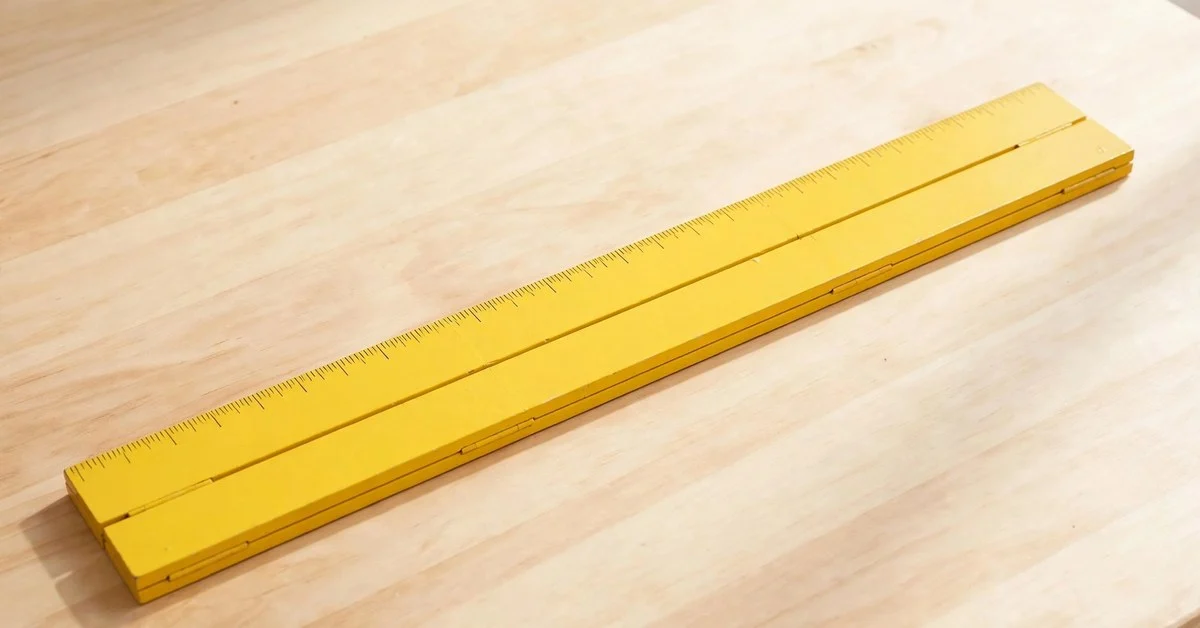
The yardstick is the yard made physical. It measures exactly 36 inches, with inch marks down one edge and often a meter scale on the back. Classrooms, fabric stores, and workshops keep them within reach. Lay one on the floor and you are looking at the definition of a yard. Teachers have pointed with these for generations. There is no better reference because the tool and the unit are the same thing. Meter sticks, at 39.37 inches, look nearly identical until you check the markings. Hardware stores hang them side by side, which makes for a fun spot-the-difference game.
2. A Baseball Bat
Dugouts hold the “slightly shorter” slugger. An adult baseball bat typically measures 30 to 34 inches long, a couple of inches shy of a full yard. Youth bats run shorter still. Hold one upright next to a yardstick and the gap is small: a few inches at the barrel. Players choose bats by feel, but the lengths cluster near the yard. It is America’s pastime doubling as a measuring tape. Softball bats run a touch shorter, cricket bats a touch longer. Little League bats for younger kids drop to the 26 to 30 inch range.
3. An Acoustic Guitar
Music rooms offer the “slightly longer” strings. A full-size acoustic guitar measures about 38 to 40 inches long, just over a yard. The dreadnought body sets the standard dimensions. Lean one against the wall and its headstock clears the yard mark by a couple of inches. Guitarists know this length from every case they have carried. It is a melodious near-yard hiding in the corner. Electric guitars run slightly shorter, classical guitars about the same. The case it travels in adds a few inches of padding all around.
4. A Kitchen Countertop (Height)
Kitchens build the yard vertically. Standard countertops stand exactly 36 inches high, a dimension the cabinet industry holds sacred. Dishwashers, ranges, and cabinets are all designed around this height. Stand at your counter and rest your hands on it: you are touching a vertical yard. Remodelers measure everything from this line. It is the most-used yard in the average home. Bathroom vanities match it too, usually within half an inch. The standard was set when builders agreed on comfortable work heights generations ago.
5. A Toddler (Height)
Parenthood provides the living yard. A typical 2-year-old stands about 34 to 36 inches tall, right at the yard mark. Pediatricians track this on growth charts, and parents mark it on doorframes. Watch a toddler reach for a countertop: at 36 inches, the counter is exactly at their eye level or crown. The comparison is heartwarming and precise. Kids grow fast, but at two, they are a yardstick with opinions. By age three, most children have outgrown the yard mark entirely. Growth charts in pediatric offices track exactly this milestone with percentile curves.
6. A Standard Door (Width)
Doorways frame the horizontal yard. A standard interior door measures 30 to 36 inches wide, with many common doors hitting 32 or 36 inches. The 36-inch door is exactly a yard across. Walk through yours and note the width. Movers think in door widths when judging furniture. It is the yard you pass through a dozen times a day. Older homes often have 30-inch doors, newer builds favor 32 or 36. Barn doors and pocket doors follow the same width conventions.
7. A Washing Machine (Height)
Laundry rooms stack the “slightly taller” box. A standard top-load washing machine stands about 40 to 43 inches tall, a few inches above a yard. Front-loaders on pedestals climb higher still. Stand beside yours and the yard mark hits around the lid’s midpoint. Appliance installers work from these heights daily. Picture the machine with its top few inches trimmed. That is your yard. Dryers match washers in height so pairs line up neatly. Stackable units, of course, double the height for tight laundry closets.
8. A Dishwasher (Height)
Kitchens hide another near-yard under the counter. A standard dishwasher measures about 34 to 35 inches tall, designed to slide beneath the 36-inch countertop with clearance. The one-inch gap is deliberate, allowing for leveling and installation. Open yours and the top rack sits just below the yard line. It is a precise, purposeful near-miss built into every kitchen. The adjustable feet allow about an inch of play for uneven floors.
9. A 3-Foot Step Ladder
Hardware stores sell the yard by the step. A 3-foot step ladder stands 36 inches to its top platform, exactly a yard. The A-frame design makes the height easy to read. Climb to the top step (safely) and you are standing a yard off the ground. DIYers own these for changing bulbs and reaching shelves. It is a climbing yard with rubber feet. Taller 4-foot and 6-foot models simply stack the unit.
10. A Small Christmas Tree
Holiday corners hold the festive yard. A 3-foot tabletop Christmas tree stands exactly 36 inches tall, a popular size for apartments and offices. The proportions are scaled from full-size trees, so it reads as a proper tree in miniature. Set one on a table and its star hits the yard mark. December decor doubles as measurement education. Full-size 6-foot trees, of course, double the reference exactly.
11. A Fire Hydrant
City sidewalks guard the “shorter” iron. A standard fire hydrant stands about 30 inches tall above ground, six inches shy of a yard. The domed top and side nozzles make the height memorable. Picture one with a 6-inch extension on top, roughly a soda can’s height. Urban walkers pass these daily. It is municipal infrastructure moonlighting as a ruler. The yellow top marks it as a water-system hydrant in most cities.
12. A Bike Wheel (Diameter)
Cyclists spin the “shorter” circle. A 26 to 29 inch bike wheel measures well under a yard across, but the number is worth knowing for the comparison. The wheel’s diameter is about three-quarters of a yard. Picture it with a quarter more added. Bike shops size frames around these wheels. It is a rolling fraction lesson. The tire’s width adds about 2 inches to the bare rim diameter.
13. A Large Suitcase (Height)
Airports roll the “shorter” rectangle. A large checked suitcase typically stands 28 to 30 inches tall, six to eight inches shy of a yard. The 62-inch linear limit airlines enforce is built from dimensions like these. Stand yours upright and mark six inches above the handle. That is a yard. Frequent flyers know this height from every baggage carousel. Carry-ons, capped at 22 inches, run a full foot shorter.
14. An Ironing Board (Height)
Laundry rooms adjust to the yard exactly. A standard ironing board adjusts up to about 36 inches high, its maximum setting hitting the yard mark precisely. The board is designed to match countertop height for comfortable pressing. Set yours to max and run your hand along its length. You are touching a yard of padded metal. It is the most adjustable ruler in the house. Most boards also drop to about 28 inches for seated pressing.
15. A Refrigerator (Width)
Kitchens close with the “up to a yard” box. A standard refrigerator measures 30 to 36 inches wide, with French-door models reaching the full yard. Stand in front of yours and spread your arms: the width is a familiar span. Delivery crews measure this dimension first. It is the yard you open every day for milk. Counter-depth models run a few inches narrower, trading width for a flush fit.
FAQs About How Many Feet in a Yard
How many feet in a yard exactly?
Exactly 3 feet. The yard is defined as 3 feet, which equals 36 inches.
How many inches in a yard?
There are 36 inches in a yard: 3 feet × 12 inches per foot.
Is a yard longer than a meter?
No. A meter is 39.37 inches while a yard is 36 inches, so a meter is about 3.4 inches longer than a yard.
How many yards in a mile?
There are 1,760 yards in a mile. A mile is 5,280 feet, divided by 3 feet per yard.
See also: how many inches 2 meters is. See also: what 18 inches is in cm.
Final Thoughts
So how many feet in a yard? Three, exactly: the yardstick, the countertop, the doorway’s width. It is a unit built for human-scale jobs, from hemming fabric to marking football fields to stacking firewood.
Three is a number worth keeping. Three feet to the yard, 36 inches total, just shy of a meter. With a countertop in your kitchen and a nose-to-fingertip trick in your pocket, the yard is now a length you can find anywhere. The next time a project calls for yards, pace it out: one good stride is roughly a yard for most adults. Measure twice, cut once, and let the humble yard do the heavy lifting. From fabric bolts to football fields, three feet has been getting the job done for centuries, and it is not slowing down. The yard endures because it matches the human body: an arm’s reach, a confident stride, a countertop’s height. Few units fit life this well.

I’m Owen Reeves, a content writer at MeasureZit.com, specializing in measurements, unit conversions, and mathematical concepts. I turn technical topics into clear, accurate content that’s easy to understand. My focus is precision, clarity, and genuinely useful information.










