TITLE TAG
How Long Is 30 Inches? 15 Everyday Objects Compared
META DESCRIPTION
How long is 30 inches? It is exactly 2.5 feet (76.2 cm) — like a kid’s guitar or a skateboard. Explore 15 everyday things that are 30 inches long.
Thirty inches is a measurement you meet in furniture stores, sports shops, and moving-day chaos. 30 inches is exactly 2.5 feet (76.2 cm) — picture a kid-size acoustic guitar or a standard skateboard. It is longer than 2 feet but a full half-foot short of 3 feet.
This length matters when you are buying furniture that has to fit a room, choosing a youth baseball bat, or checking whether a suitcase counts as carry-on. Movers think in 30-inch chunks when they eyeball doorways and truck space. Gardeners meet it in plant spacing, and musicians in instrument sizing. Once you can see 30 inches clearly, a surprising number of everyday decisions get easier.
Thirty inches also shows up in rules and regulations more than you might expect. Airline carry-on limits, youth sports equipment charts, and building codes all use it as a cutoff or a standard. Knowing the length by sight means you can judge compliance — will it fit, is it legal, is it the right size — without hunting for a tape measure every time.
30 Inches Conversion Chart
| Unit | Converted Value |
|---|---|
| Inches | 30 |
| Feet | 2.5 |
| Yards | ≈ 0.83 |
| Millimeters | 762 |
| Centimeters | 76.2 |
| Meters | 0.76 |
Common Objects That Are About 30 Inches Long
| Object | Approximate Length |
|---|---|
| 30-inch kids’ acoustic guitar | 30 in |
| Standard skateboard | 28–32 in |
| Youth baseball bat | 30 in |
| Interior door (width) | 30 in |
| Standard desk (height) | 30 in |
| 26-inch bicycle wheel (diameter) | 26 in |
| Yardstick | 36 in |
| Tennis racket (length) | 27 in |
More Everyday Items Around 30 Inches
| Object | Approximate Length |
|---|---|
| Refrigerator (width) | 30–33 in |
| Baritone ukulele | 30 in |
| Washing machine (width) | 27 in |
| 32-inch TV (diagonal) | 32 in |
| Medium suitcase (height) | 26–28 in |
| Golf putter | 33–35 in |
| Bar-height stool (seat) | 30 in |
How Long Is 30 Inches?
Thirty inches reaches from your hip to the floor if you are of average height — it is the classic table height for a reason. Stand next to a dining table and rest your hand on the surface: your arm hangs naturally because the table is about 30 inches tall. It is also two and a half ruler-lengths laid end to end, a handy image if you keep a 12-inch ruler in a drawer.
For a smaller reference, look at a 26-inch bicycle wheel. Thirty inches adds about four inches to that diameter — picture the wheel, then add a hand’s width. For a larger reference, grab a yardstick at 36 inches. Thirty inches is the yardstick with six inches — half a ruler — lopped off the end.
A second mental anchor: 30 inches is about the length of your leg from hip to knee plus knee to ankle on an average adult. That is why tables and desks settled on this height — it matches the seated human body. When you sit at a table, your own legs are quietly confirming the 30-inch standard beneath you.
Easy ways to estimate 30 inches in everyday life
- Use your arm: For most adults, the distance from armpit to fingertip is roughly 28 to 30 inches.
- Use a doorway: Standard interior doors are 30 inches wide. Walk through one and note the width — that is your reference.
- Use two rulers: Lay two 12-inch rulers end to end (24 inches), then add half a ruler more.
- Use your stride: An average walking step is about 30 inches heel to heel. Take one natural step and look at the distance.
- Use a table: Dining tables and desks are typically 30 inches tall. Stand beside one to feel the height.
- Use a guitar: A 30-inch kids’ guitar, held upright, shows the full length at a glance.
1. 30-Inch Kids’ Acoustic Guitar
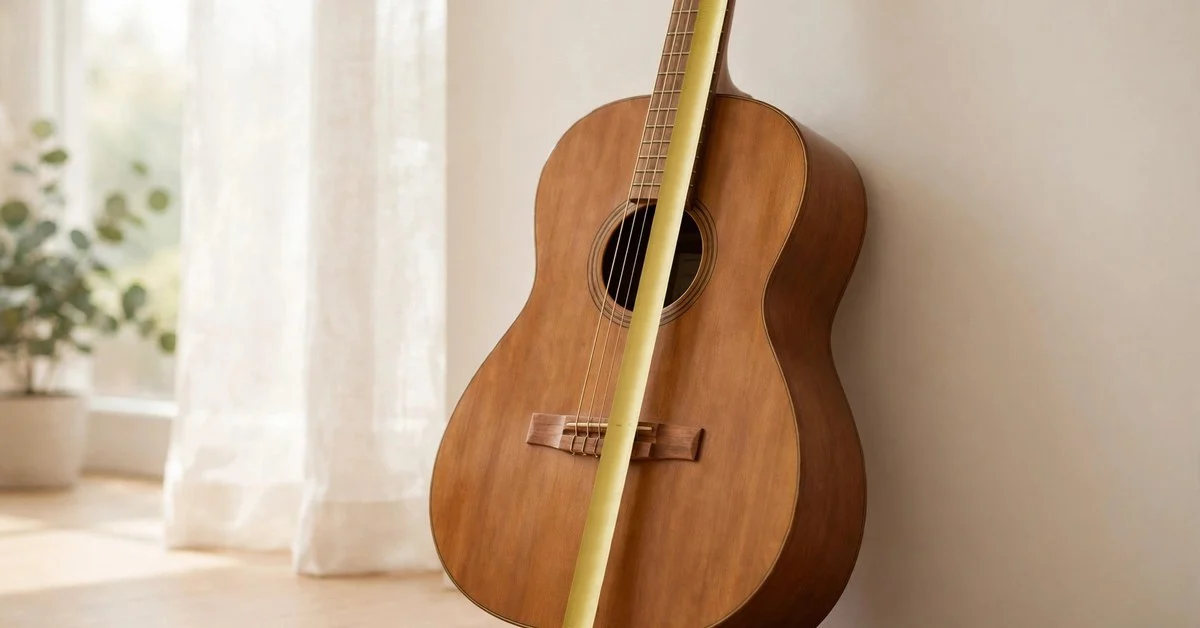
The 30-inch kids’ acoustic guitar is the literal namesake of this measurement. Music shops sell these as the standard starter size for young players, and the 30-inch figure is printed on the box. It is long enough to feel like a real instrument but short enough for small arms. If you want one perfect mental image of what 30 inches looks like, stand one of these upright and look at it. Music teachers recommend this size for players roughly 8 to 10 years old. Full-size acoustics run about 40 inches, so the 30-inch version is genuinely three-quarters of the real thing — the nickname “three-quarter guitar” comes from exactly this math.
2. Standard Skateboard
A standard skateboard deck runs 28 to 32 inches long, clustering right around 30 inches. Street and park decks vary a little by style, but the classic popsicle shape lands near the middle of that range. Anyone who has carried a board under one arm knows the length instinctively — it spans from fingertips to elbow and beyond. Longboards run longer, but the classic street deck is the 30-inch reference. It is a great reference because the shape is so distinctive.
3. Youth Baseball Bat
A youth baseball bat in the 30-inch size is one of the most common lengths in Little League. Bat sizing charts pair 30-inch bats with young players of average height, so sporting-goods stores stock them by the dozen. The number is stamped on the barrel, which removes all guesswork. Step up to a 32-inch bat and you can feel exactly how much two extra inches matter in a swing — bat speed drops noticeably with every added inch.
4. Interior Door (Width)
A standard interior door is 30 inches wide — the most common width for bedroom and bathroom doors. Builders settled on this size because it fits furniture through while saving wall space. You walk through 30 inches every time you enter a bedroom. Movers love this standard: if a sofa fits through a 30-inch doorway, it will fit through nearly any interior door in the house.
5. Standard Desk (Height)
A standard desk is 30 inches tall. Office furniture settled on this height because it puts a keyboard at a comfortable level for seated adults. If you work at a desk, you spend hours beside a 30-inch measurement without realizing it. Stand up next to your desk and note where the surface hits your body — usually mid-thigh — and you will remember the height. Adjustable standing desks move away from it, but every fixed desk keeps the faith.
6. 26-Inch Bicycle Wheel
A 26-inch bicycle wheel — the classic mountain-bike size — is four inches shy of 30 inches. Wheel sizing is standardized, so the 26-inch figure is exact for the rim. It works as the “smaller” reference: picture the wheel, then add about a hand’s width to the diameter. Most garages have one leaning against a wall, ready to serve as a gauge. Road bikes use bigger 700c wheels, but the trusty 26-inch mountain bike wheel is the household classic.
7. Yardstick
A yardstick is 36 inches long — six inches more than 30 inches. Hardware stores and classrooms keep these everywhere, and the number is printed in big type along the edge. Folding rulers show the same 36 inches in a pocketable form, but the rigid yardstick is easier to picture. It is the ideal “larger” reference because the math is clean: 30 inches is a yardstick minus half a foot. Hold one and imagine the last six inches folded away. Carpenters reach for yardsticks over tape measures for exactly this kind of quick visual math.
8. Tennis Racket
A standard adult tennis racket is 27 inches long. The sport’s rules cap the length, so every racket is the same. Three inches short of 30, it is another good “just under” marker. Players feel the length on every swing. Junior rackets run 23 to 26 inches, so be sure you are picturing the full adult 27-inch frame. Picture the racket, then add the length of a credit card diagonally — roughly three inches — to reach 30.
9. Refrigerator (Width)
A standard top-freezer refrigerator is 30 to 33 inches wide. Appliance makers build to this width because it fits the standard 30-inch kitchen cabinet opening. Delivery crews measure doorways against it constantly. Your kitchen likely has one: stand in front of it with arms slightly out and you are spanning about 30 inches. French-door models run wider, but the classic top-freezer keeps the standard. When kitchen designers plan a layout, they block out 30-inch squares for the fridge before anything else goes in.
10. Baritone Ukulele
A baritone ukulele measures about 30 inches from end to end. It is the largest common ukulele size, tuned like the top four strings of a guitar. Music shops hang them in a row, each one a 30-inch reference with strings. The instrument’s small body makes the full length easy to take in at a glance. Soprano and concert ukuleles run 21 to 23 inches, noticeably shorter.
11. Washing Machine (Width)
A standard top-load washing machine is 27 inches wide — three inches under 30. Laundry rooms are built around this dimension, so the size is consistent across brands. Like the tennis racket, it is a dependable “just under” gauge. Picture the machine, add a soda can’s width, and you are at 30 inches. Front-loaders share the same 27-inch width, so the reference works in any laundry room.
12. 32-Inch TV
A 32-inch TV measures 32 inches diagonally — just two inches more than our target. It is one of the most popular bedroom-TV sizes, so millions of homes have one on a wall or dresser. The diagonal measurement makes it a slightly different kind of reference, but the overall presence of the screen reads as “a bit more than 30 inches.” A useful upper bookend. Measure corner to corner with a tape and the 32-inch spec checks out exactly.
13. Medium Suitcase
A medium checked suitcase stands about 26 to 28 inches tall. Luggage makers size these to maximize airline weight limits, which keeps the height consistent. Travelers wrestle these through airports regularly. It is a touch under 30 inches — picture your suitcase, then add the height of a paperback book to top it out at 30. Hard-shell and soft-side versions share the same height range.
14. Golf Putter
A standard golf putter is 33 to 35 inches long. Club fitters match putter length to the player’s height and posture, but the standard off-the-rack length overshoots 30 inches by a few. Golfers know the feel of the club against their body. It gives you a “slightly longer” reference from the world of sports, pairing well with the tennis racket’s “slightly shorter.” Belly putters run much longer at 41 inches and up, so picture the standard model for this estimate.
15. Bar-Height Stool (Seat)
A bar-height stool has its seat about 30 inches off the floor. Bars and kitchen islands use this height to pair with 40-inch counters. Sit on one and your feet dangle or rest on the footrail — that dangling distance is the point. Next time you perch on a bar stool, remember: the seat you are on is a 30-inch gauge. Counter-height stools sit lower at 24 inches, so check that you are on the taller bar version.
Frequently Asked Questions
What does 30 inches look like in feet?
Thirty inches is exactly 2.5 feet, or two and a half feet. Divide inches by 12: 30 ÷ 12 = 2.5.
Is 30 inches bigger than a yard?
No. A yard is 36 inches, so 30 inches is 6 inches (half a foot) shorter than a yard. Think of it as a yardstick with the last six inches removed.
What household item is closest to 30 inches?
A standard interior door at 30 inches wide is the closest common household item — it matches exactly. A standard desk at 30 inches tall is equally exact.
How many centimeters is 30 inches?
Thirty inches equals 76.2 centimeters. Multiply inches by 2.54: 30 × 2.54 = 76.2.
How can I measure 30 inches without a tape measure?
Use your body: the distance from your armpit to your fingertips is roughly 28 to 30 inches on most adults. Or take one natural walking step — heel to heel is about 30 inches. A standard interior doorway (30 inches wide) also gives you an exact reference to compare against.
See also: how long 32 inches is.
Final Thoughts
How long is 30 inches? It is two and a half feet of thoroughly familiar territory — a doorway’s width, a desk’s height, a kid’s guitar laid end to end. Because the number lands on so many standard sizes, from skateboards to bar stools, you are never far from a reference. Your own body carries one too: armpit to fingertip is roughly 30 inches, and a single walking step covers about the same ground. With a 26-inch bike wheel as your “smaller” marker and a yardstick as your “larger” one, estimating 30 inches becomes a matter of picturing rooms and objects you already know by heart. Walk through your next doorway slowly and feel the 30 inches you pass through every day. See also: how long 23 inches is.

I’m Owen Reeves, a content writer at MeasureZit.com, specializing in measurements, unit conversions, and mathematical concepts. I turn technical topics into clear, accurate content that’s easy to understand. My focus is precision, clarity, and genuinely useful information.










