TITLE TAG
How Big Is 10CM? 15 Everyday Items Compared for Scale
META DESCRIPTION
How big is 10cm? It is about 3.94 inches — just under 4 inches, like a drink coaster or coffee mug. See 15 everyday items that measure about 10 cm.
Ten centimeters is one of the handiest sizes to know because it shows up constantly in metric life. 10 cm is about 3.94 inches — just a hair under 4 inches, and exactly half of 20 cm. Picture a drink coaster or the height of a coffee mug, and you are basically there.
Shoppers meet 10 cm in product listings for phone accessories, kitchen tools, and craft supplies. Students use it in science class when measuring specimens or drawing scale diagrams. Home cooks see it when a recipe calls for dough rolled to a certain thickness or vegetables cut to a length. Gardeners, too — seed packets often say to plant at 10 cm spacing. Once you can see 10 cm in your mind, metric measurements stop feeling foreign.
Ten centimeters is also the natural “unit” of the metric system in daily life. Rulers highlight it, notebooks are ruled in fractions of it, and many product dimensions cluster around multiples of 10 cm. Learning to see it is like learning to see an inch: after a while you stop converting and simply know. The objects below will get you there faster than any conversion app.
10 CM Conversion Chart
| Unit | Converted Value |
|---|---|
| Inches | ≈ 3.94 |
| Feet | ≈ 0.33 |
| Yards | ≈ 0.11 |
| Millimeters | 100 |
| Centimeters | 10 |
| Meters | 0.1 |
Common Objects That Are About 10 CM Long
| Object | Approximate Length |
|---|---|
| Drink coaster | 10 cm |
| Coffee mug (height) | 9.5 cm |
| Paperback book (width) | 10.8 cm |
| Jumbo sticky note (short edge) | 10.2 cm |
| Postcard (short edge) | 10.2 cm |
| Glazed donut (diameter) | 9–10 cm |
| Computer mouse (length) | 10–11 cm |
| Playing-card box | 9.5 cm |
More Everyday Items Around 10 CM
| Object | Approximate Length |
|---|---|
| Standard light bulb (length) | 11 cm |
| Credit card (long edge) | 8.56 cm |
| Hockey puck (diameter) | 7.62 cm |
| Soda can (height) | 12.2 cm |
| Baseball (diameter) | 7.4 cm |
| Bagel (diameter) | 10 cm |
| #10 envelope (width) | 10.5 cm |
How Big Is 10CM?
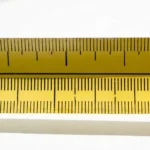
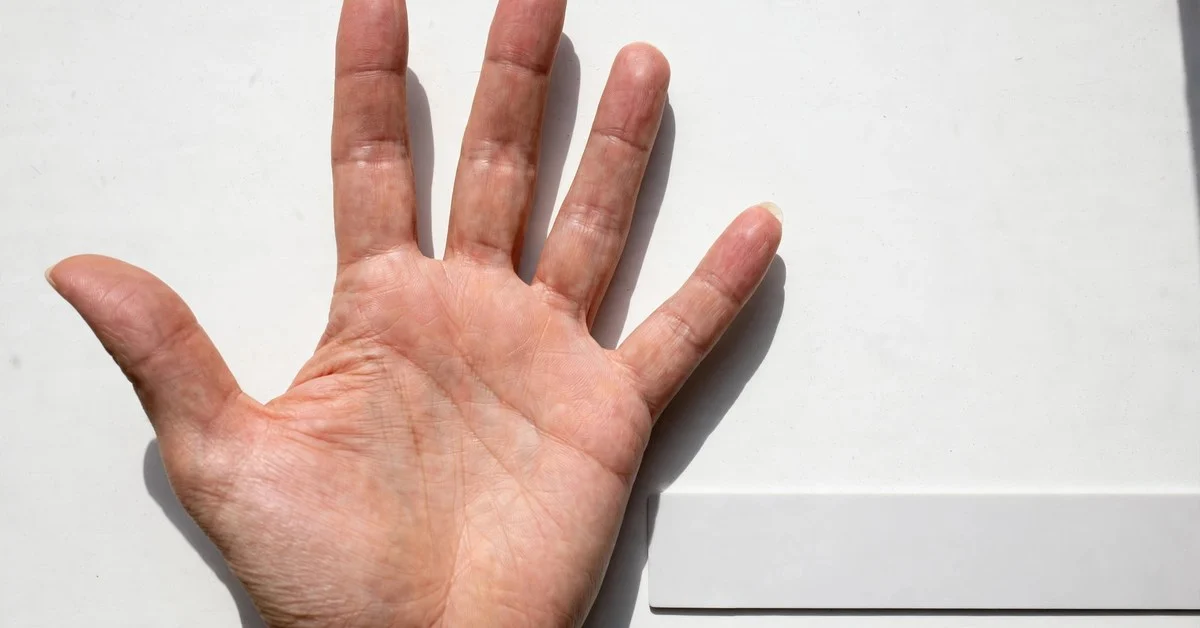
Ten centimeters is about the width of your palm. Press your hand flat on a table and measure from the base of your thumb to the far edge of your palm — most adults land very close to 10 cm. It is also the length of a standard metric ruler’s first big section: on any school ruler, the 10 cm mark is the bold line with the “10” printed beside it.
For a smaller reference, take a credit card’s long edge at 8.56 cm. Ten centimeters is about a finger-width longer than the card. For a larger reference, stand a 12 oz soda can upright: at 12.2 cm tall, it overshoots 10 cm by roughly the width of two fingers.
A third anchor helps lock it in: the span from the tip of your thumb to the tip of your index finger, stretched into an “L,” is close to 10 cm for many adults. Try it against a ruler once to calibrate your own hand. After that, your hand becomes a 10 cm gauge you never forget at home.
Easy ways to estimate 10 cm in everyday life
- Use your palm: Lay your hand flat. The width of an adult palm, thumb excluded, is roughly 10 cm.
- Use a fist: A loosely closed adult fist measures about 10 cm across the knuckles.
- Use a banknote: Many banknotes are close to this size — a US dollar bill is 15.6 cm, so two-thirds of its length is about 10 cm.
- Use your phone: Most smartphones are 14 to 16 cm tall, so 10 cm is roughly two-thirds of your phone’s height.
- Use a mug: Wrap your hand around a standard coffee mug. Its height of about 9.5 cm is nearly 10 cm — just add a sliver.
- Use a paperback: The width of a mass-market paperback is about 10.8 cm. Trim a little off in your mind to land on 10.
1. Drink Coaster
A drink coaster is the textbook 10 cm object. Most coasters measure about 3.5 to 4 inches across — 9 to 10 cm — because they are sized to hold a standard glass with a little margin. Bars, restaurants, and living-room coffee tables are full of them. Next time you set down a drink, look at the coaster: that circle is essentially 10 cm in diameter. Keep one on your desk and you have a permanent, spill-tested gauge.
2. Coffee Mug (Height)
A standard coffee mug stands about 9.5 cm tall, just half a centimeter under 10 cm. Mug heights are consistent because they are designed around a comfortable grip and a standard 8–12 oz capacity. Your kitchen cabinet likely holds several near-identical examples. The tiny shortfall is invisible to the eye, so a mug works as a practical 10 cm gauge. Wrap your fingers around one and the height from base to rim is the measurement in your palm.
3. Paperback Book (Width)
A mass-market paperback book is about 10.8 cm wide (4.25 inches). The publishing industry has used this trim size for decades, so millions of books share it. It overshoots 10 cm slightly, which makes it a good “just over” reference. Hold a paperback sideways and the width gives you a reliable sense of what 10 cm plus a little looks like. Bookstores are full of them, so you can calibrate your eye on your next visit.
4. Jumbo Sticky Note (Short Edge)
The short edge of a jumbo sticky note (the 4×6 inch size) measures 10.2 cm. Offices everywhere stock these, and the dimensions are printed right on the packaging. It is almost exactly 10 cm — close enough that the difference disappears in everyday estimating. Peel one off the pad and you are holding a 10 cm square-ish reference. The smaller 3×3 inch notes are 7.6 cm, so reach for the jumbo size for this estimate. Lined and grid versions share the same 10.2 cm short edge.
5. Postcard (Short Edge)
A standard postcard is 4×6 inches, so its short edge is 10.2 cm. Postcards follow postal regulations, which keeps the size uniform worldwide. The rack of postcards in any gift shop is a rack of 10 cm references. Because the card is rigid, it is easy to hold against an object you are measuring. Tourist shops practically hand you a free 10 cm gauge with every purchase.
6. Glazed Donut
A standard glazed donut is about 9 to 10 cm across. Bakery donuts are cut with uniform cutters, so the size barely varies from shop to shop. This is the most delicious reference on the list. The hole in the middle does not change the outer measurement — span the full width and you have got roughly 10 cm. Bakery boxes are sized to fit them snugly, which tells you the size barely varies.
7. Computer Mouse
A typical computer mouse is 10 to 11 cm long. Manufacturers size mice to fit the average adult hand, which keeps the length remarkably stable across brands. Your desk already has one. Rest your hand on it the way you normally would: the distance from wrist to fingertip contact is about 10 cm of familiar territory, and gamers feel it for hours daily.
8. Playing-Card Box
A playing-card box measures roughly 9.5 cm tall. Card dimensions are standardized (poker size is 8.9 cm long), and the tuck box adds just enough clearance to land near 9.5 cm. Game nights and desk drawers keep these within reach. It is a compact, rigid 10 cm stand-in that is easy to picture. Bridge-size cards run a touch narrower, so picture the standard poker-size box for the truest 9.5 cm.
9. Standard Light Bulb
A standard A19 light bulb is about 11 cm long from base to tip. It overshoots 10 cm by a centimeter — roughly the width of a fingernail. Bulbs follow an international sizing standard, so the length is dependable. When you change a bulb, take a second to note its length: you have just handled a “10 cm plus a little” reference.
10. Credit Card (Long Edge)
The long edge of a credit card is exactly 8.56 cm. It undershoots 10 cm by about 1.4 cm — close to the width of an adult fingertip. Because the size is set by an international standard, your wallet carries a calibrated gauge everywhere. Add a fingertip’s width to the card’s length in your mind and you arrive at 10 cm. Bank-issued and store gift cards alike follow the same ISO standard, so the 8.56 cm figure never varies no matter whose logo is on the front.
11. Hockey Puck
A regulation hockey puck is 7.62 cm across (3 inches) — clearly smaller than 10 cm, which makes it a solid lower bookend. The dimensions are fixed by the rules of the sport, so every puck is identical. Picture the puck, then add about a third of its diameter again. That mental stretch lands you at 10 cm. Street hockey pucks match the ice hockey size, so either version works.
12. Soda Can (Height)
A 12 oz soda can stands 12.2 cm tall (4.83 inches), about 2 cm more than 10 cm. Every can shares this height, making it one of the most consistent references in daily life. It works as the upper bookend: picture the can, then chop roughly a thumb’s width off the top in your mind. What remains is 10 cm — a trick that also works for estimating the height of jars and bottles.
13. Baseball
A regulation baseball is about 7.4 cm in diameter — smaller than 10 cm, like the puck. League rules fix the size, so it never varies. The ball fits neatly inside a 10 cm square with room to spare on every side. Use it alongside the puck as a “smaller than” anchor when you are calibrating your eye. A softball, at about 9.7 cm across, would land even closer to 10 cm.
14. Bagel
A standard bagel is about 10 cm across. Bakeries aim for a consistent size that toasts evenly and fits standard packaging. It is the breakfast equivalent of the donut reference — round, familiar, and almost exactly on target. Span a bagel with your thumb and forefinger and you are spanning 10 cm. The cream-cheese tubs sold alongside them are often 10 cm across too, doubling your breakfast-table gauges.
15. #10 Envelope (Width)
A #10 envelope — the classic business envelope — is 10.5 cm wide (4⅛ inches). The size is set by postal standards, so every one is the same. Mailrooms and office supply closets are full of them. It overshoots 10 cm by just half a centimeter, making it one of the closest paper references you can find. Windowed and plain versions share the identical 10.5 cm width.
Frequently Asked Questions
What household item is closest to 10 cm?
A drink coaster is the closest common household item at about 10 cm across. A coffee mug’s height (9.5 cm) and a bagel’s diameter (10 cm) are nearly as close.
Is 10 cm the same as 4 inches?
Almost, but not exactly. Four inches equals 10.16 cm, so 10 cm is about 0.16 cm (roughly 1/16 of an inch) shorter than 4 inches. For everyday purposes, they are interchangeable.
How many inches is 10 cm?
Ten centimeters equals about 3.94 inches. Divide centimeters by 2.54 to convert: 10 ÷ 2.54 ≈ 3.94.
What does 10 cm look like compared to a hand?
Ten centimeters is about the width of an adult palm or the span across loosely closed knuckles. Spread your thumb and index finger into an “L” shape and the gap is often close to 10 cm as well.
How do I picture 10 cm when shopping online?
Look for the credit-card trick: 10 cm is a credit card’s long edge plus about a fingertip’s width. If a product photo shows the item next to a coin or a hand, compare against that — and remember that most phone screens are about 15 cm tall, so 10 cm is two-thirds of the screen.
See also: how big 12 cm is.
Final Thoughts
How big is 10cm? It is the width of your palm, the height of your coffee mug, the diameter of a bagel — a thoroughly everyday size. At just under 4 inches, it bridges the gap between small objects and genuinely sizable ones, which is why recipes, seed packets, and product listings use it so often. Calibrate your hand once — the thumb-to-index “L” — and you will carry a 10 cm gauge everywhere. With a credit card as your “smaller” marker and a soda can as your “larger” one, you can estimate 10 cm confidently anywhere, no ruler in sight. Give it a week of noticing, and 10 cm will feel as natural as an inch.

I’m Dane Whitfield, a content writer at MeasureZit.com, where I specialize in creating clear, accurate articles on measurements, unit conversions, and mathematical concepts. I enjoy breaking down complex numerical topics into simple, practical explanations that readers can actually use. My goal is always precision and clarity helping people make sense of the numbers around them.