Introduction
Some questions have answers so basic they feel like trick questions. There are exactly 12 inches in a foot, by definition. The foot is literally defined as 12 inches, which is why the number never changes and never needs rounding.
This is the foundation of the entire imperial length system. Rulers are 12 inches long because they are one foot. Room dimensions, human height, and furniture sizes all build upward from this unit. Once this number is locked in, feet, yards, and miles all fall into place.
So how many inches in a foot, and what does a foot actually look like? Below is the exact answer, a conversion chart, 15 everyday objects that measure about a foot, and easy ways to estimate it.
1 Foot Conversion Chart
| Unit | Converted Value |
|---|---|
| Inches | 12 in |
| Feet | 1 ft |
| Yards | ≈ 0.33 yd |
| Millimeters | 304.8 mm |
| Centimeters | 30.48 cm |
| Meters | ≈ 0.3 m |
One foot is defined as exactly 12 inches, or 30.48 cm.
Table A: Common Objects That Are About a Foot (12 Inches)
| Item | Approximate Length |
|---|---|
| 1. Standard Ruler | 12 in |
| 2. 12-Inch Vinyl Record | 12 in diameter |
| 3. Footlong Sub Sandwich | 12 in |
| 4. Dinner Plate | ≈ 10–12 in diameter |
| 5. 2-Liter Bottle (Height) | ≈ 12 in |
| 6. Frisbee | ≈ 10.75 in diameter |
| 7. Clipboard | ≈ 12.5 × 9 in |
| 8. US Letter Sheet (Length) | 11 in (slightly shorter) |
Table B: More Everyday Items Near a Foot
| Item | Approximate Length |
|---|---|
| 9. A4 Sheet (Length) | 11.7 in (slightly shorter) |
| 10. Wall Clock (Diameter) | ≈ 12 in |
| 11. Shoebox (Length) | ≈ 13 in (slightly longer) |
| 12. 13-Inch Laptop | 13 in diagonal (slightly longer) |
| 13. Steering Wheel (Diameter) | ≈ 14–15 in (longer) |
| 14. Basketball (Diameter) | ≈ 9.55 in (shorter) |
| 15. Backpack (Height) | ≈ 18 in (longer) |
How Long Is a Foot?
A foot is the length of a standard ruler, a vinyl record, a Subway sandwich. At 12 inches it is also 30.48 cm, just a hair over 30 centimeters. For the full visual story of this unit, see our guide on how long 12 inches is. One inch less gives you 11 inches, the length of a sheet of paper.
For a smaller comparison, a basketball at 9.55 inches in diameter is clearly shorter. On the larger side, a standard backpack at 18 inches is half again as tall. The foot sits in the sweet spot of human scale: roughly the length of an adult’s foot, which is exactly where the name comes from. Ancient Romans standardized it, English kings redefined it, and the 1959 international agreement fixed it at exactly 30.48 cm. Three millennia of history, one unchanging length.
Easy ways to estimate a foot in everyday life
- Use a ruler: A standard school ruler is exactly 12 inches. It is the definition made physical.
- Picture a vinyl record: A 12-inch LP is exactly a foot across. Music fans have the reference memorized.
- Think sub sandwich: A footlong is 12 inches by name. The sandwich is the measurement.
- Span your hand: For many adults, the spread from thumb to pinky is 8 to 9 inches; add a few fingers.
- Check a sheet of paper: US letter paper is 11 inches long, just one inch shy of a foot.
- Use a dinner plate: A standard dinner plate at 10 to 12 inches is a table-ready gauge.
1. A Standard Ruler
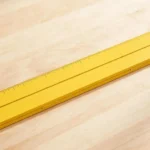
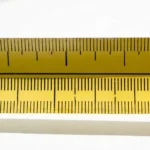
The ruler is the foot made visible. A standard school ruler measures exactly 12 inches, no more and no less. The inch marks, the centimeter scale on the back, the metal edge: everything about it exists to embody this unit. Desk drawers, classrooms, and workshops everywhere contain one. Lay it on the table and you are looking at the definition of a foot. There is no better reference because there is no more literal one. The inch marks divide it into twelve equal parts, and the centimeter scale on the reverse shows 30.48 cm for the full length. Folding rulers and tape measures carry the same twelve inches in more portable forms.
2. A 12-Inch Vinyl Record
Music lovers own a foot in black wax. A standard LP record measures exactly 12 inches in diameter, a specification the recording industry has held for decades. The size was chosen to hold enough music per side, and it became iconic in the process. Hold one by the edges and feel the full foot span. Album art is even designed around this square. Crate diggers have measured thousands of feet without realizing it. The 7-inch single, at nearly half the diameter, makes a nice smaller companion reference.
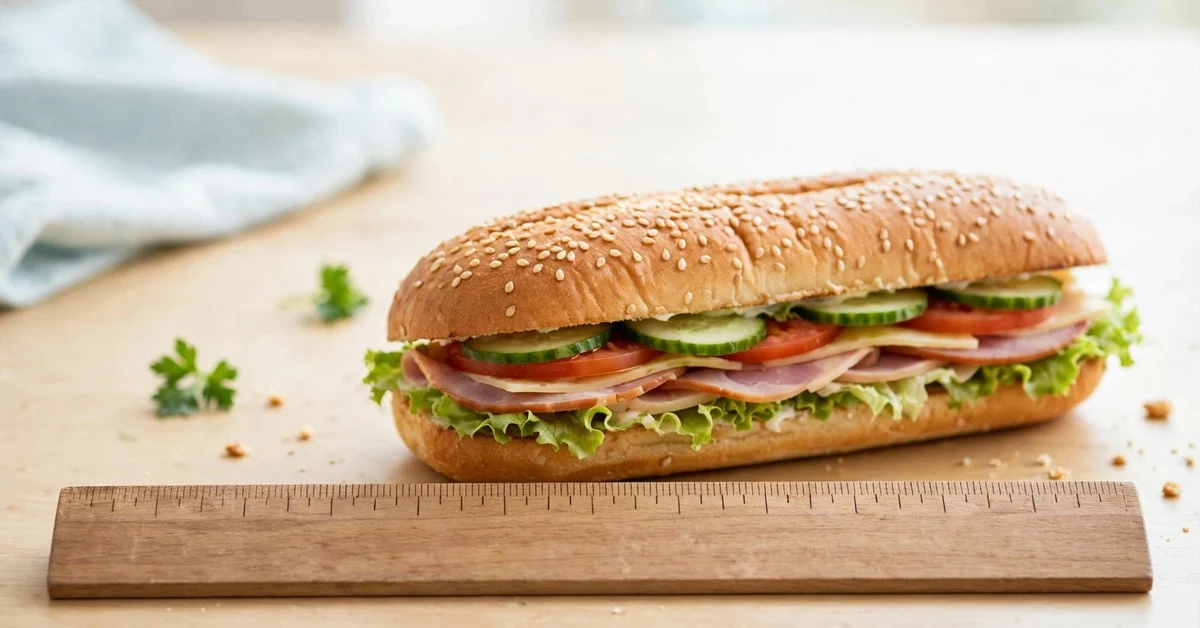
3. A Footlong Sub Sandwich
Sandwich shops sell the foot by name. A footlong sub measures 12 inches long, a marketing term that became a unit of its own. The bread is baked to this length deliberately. Unwrap one and lay it on the paper: end to end, it is a ruler you can eat. Lunch crowds handle this reference daily. It is the tastiest embodiment of 12 inches ever devised. The six-inch version, exactly half, is the built-in fraction lesson. Flatbreads and wraps at most shops run the same 12-inch standard.
4. A Dinner Plate
Table settings hide a circular gauge. A standard dinner plate measures 10 to 12 inches in diameter, with many full-size plates hitting the 12-inch mark. The rim gives your eye a clear boundary to read. Clear the table after dinner and note the plate’s span. Charger plates underneath often run a full 13 inches. Your dining room has been serving foot references with every meal. Salad plates, at 8 to 9 inches, give you the smaller place-setting comparison.
5. A 2-Liter Bottle (Height)
The soda aisle stands a foot tall. A 2-liter bottle measures about 12 inches in height, a surprisingly exact match. The bottle’s proportions are engineered for shelf space and grip, landing it right on the foot. Stand one on the counter and mark the top with your eye. Party hosts and grocery shoppers pass this reference constantly. It is carbonated proof that a foot is everywhere. The 1-liter bottle beside it, at about 8 inches, shows the shorter sibling.
6. A Frisbee
Parks fly the “slightly under” disc. A standard Frisbee measures about 10.75 inches in diameter, a little over an inch short of a foot. The aerodynamic rim makes the size easy to see in flight. Catch one and feel how close to a foot it spans in your hands. Add a thumb’s width to the diameter and you have it. Ultimate players handle this near-foot hundreds of times per game. The heavier ultimate disc and the lighter recreational versions share the same diameter standard.
7. A Clipboard
Offices and coaches carry the “slightly over” board. A standard clipboard measures about 12.5 × 9 inches, just half an inch beyond a foot in length. The clip at the top marks a clear endpoint. Hold one like a teacher taking attendance and you are holding just over 12 inches. The 9-inch width is three-quarters of a foot, a useful fraction. It is bureaucracy’s contribution to measurement. Legal pads, at 14 inches long, overshoot the foot from the other direction. The clipboard’s metal clip itself is about 4 inches wide, a third of a foot.
8. A US Letter Sheet (Length)
Paperwork provides the “one inch shy” sheet. US letter paper measures 8.5 × 11 inches, exactly one inch short of a foot on its long side. The missing inch is easy to account for: picture the sheet with a thumb’s width added. Printers, offices, and schools consume these by the ream. Hold a sheet by its short edge and feel the 11-inch length. Add one inch in your mind. Done. Three sheets laid end to end make a yard, which is why paper sizes and imperial units get along so well.
9. An A4 Sheet (Length)
International paperwork runs a touch longer. An A4 sheet measures 210 × 297 mm, or 8.27 × 11.7 inches, just 0.3 inches shy of a foot. The metric-based size nearly converges with the imperial foot by coincidence. Hold one and the gap from a true foot is imperceptible. Offices outside the US handle these daily. It is globalization’s near-miss: two systems almost agreeing on a page.
10. A Wall Clock (Diameter)
Walls display the circular foot. A standard wall clock measures about 12 inches in diameter, matching the foot exactly in many models. The numbered face makes the size feel authoritative. Glance at yours and trace the diameter with your eye. Time itself is being measured on a foot-wide stage. It is a reference you check dozens of times a day without noticing. Smaller 10-inch clocks, common in kitchens, give you the slightly-under version.
11. A Shoebox (Length)
Closets stack the “slightly longer” box. A standard adult shoebox measures about 13 inches long, one inch beyond a foot. The extra inch accommodates the shoe’s length plus packaging. Line up your shoeboxes and each one overshoots the foot by a thumb’s width. Subtract that and you have it. Sneakerheads own dozens of these near-foot boxes. Kids’ shoeboxes, at about 10 to 11 inches, show the smaller end of the range.
12. A 13-Inch Laptop
Tech specs give you the “diagonal” foot-plus. A 13-inch laptop screen measures 13 inches diagonally, one inch beyond a foot. The body runs slightly larger still. Open yours and the screen’s corner-to-corner span is a handy gauge. Students and remote workers stare at this reference all day. It is the foot, plus a little extra screen real estate.
13. A Steering Wheel (Diameter)
Drivers grip the “longer” circle. A standard car steering wheel measures 14 to 15 inches in diameter, clearly exceeding a foot. Wrap your hands at ten and two and feel the span. The wheel’s size is set by leverage needs, not measurement convenience. Still, every driver knows this circle intimately. Shrink it mentally by a couple of inches per side. That is your foot.
14. A Basketball (Diameter)
Courts bounce the “shorter” sphere. A regulation basketball measures about 9.55 inches in diameter, roughly 2.5 inches shy of a foot. Hold one with both hands and the gap is clear. The ball’s size is set by the sport’s rules, making it a reliable standard. Players judge this diameter with every dribble. Add two finger widths all around and you reach a foot. A volleyball, at about 8.5 inches, is the smaller court-sport cousin.
15. A Backpack (Height)
School hallways carry the “half again” tower. A standard backpack measures about 18 inches tall, exactly 1.5 feet. The proportion is no accident: bags are sized to backs, and backs scale with feet. Hoist yours and picture it with the top third removed. What remains is a foot. Students wear this reference every day. It is the foot, stretched by fifty percent. Daypacks at 16 inches and hiking packs at 24 inches bracket it on both sides. Rolling cabin bags at 22 inches tall give travelers another familiar data point. A standard pillow at 20 inches long sits just under two-thirds of a yard of fabric thinking.
FAQs About How Many Inches in a Foot
How many inches in a foot exactly?
Exactly 12 inches. The foot is defined as 12 inches, so the answer never varies.
How many inches in 2 feet?
There are 24 inches in 2 feet. Just multiply the number of feet by 12.
Why are there 12 inches in a foot?
The 12-inch foot comes from ancient Roman and English systems, where 12 was favored because it divides evenly by 2, 3, 4, and 6. The name comes from the average human foot length.
How many cm in a foot?
One foot equals exactly 30.48 cm, since 12 × 2.54 = 30.48.
See also: how to convert inches to cm. See also: how many feet are in a yard.
Final Thoughts
So how many inches in a foot? Twelve, exactly: the ruler, the record, the footlong sub. It is the cornerstone the whole imperial system is built on, and it hides in plain sight everywhere you look.
Twelve is worth memorizing because everything multiplies from it. Twelve inches to the foot, three feet to the yard, thousands of feet to the mile. With a ruler’s worth of everyday objects now in your mental toolkit, the foot is a unit you will recognize on sight. Teach a child this one and the rest of measurement follows: 24 inches in two feet, 36 in a yard, 63,360 in a mile. It all starts with twelve, the most useful dozen in the measuring world.

I’m Priya Sharma, a content writer at MeasureZit.com, specializing in measurements, unit conversions, and mathematical concepts. I turn technical topics into clear, accurate content that’s easy to understand. My focus is precision, clarity, and genuinely useful information.