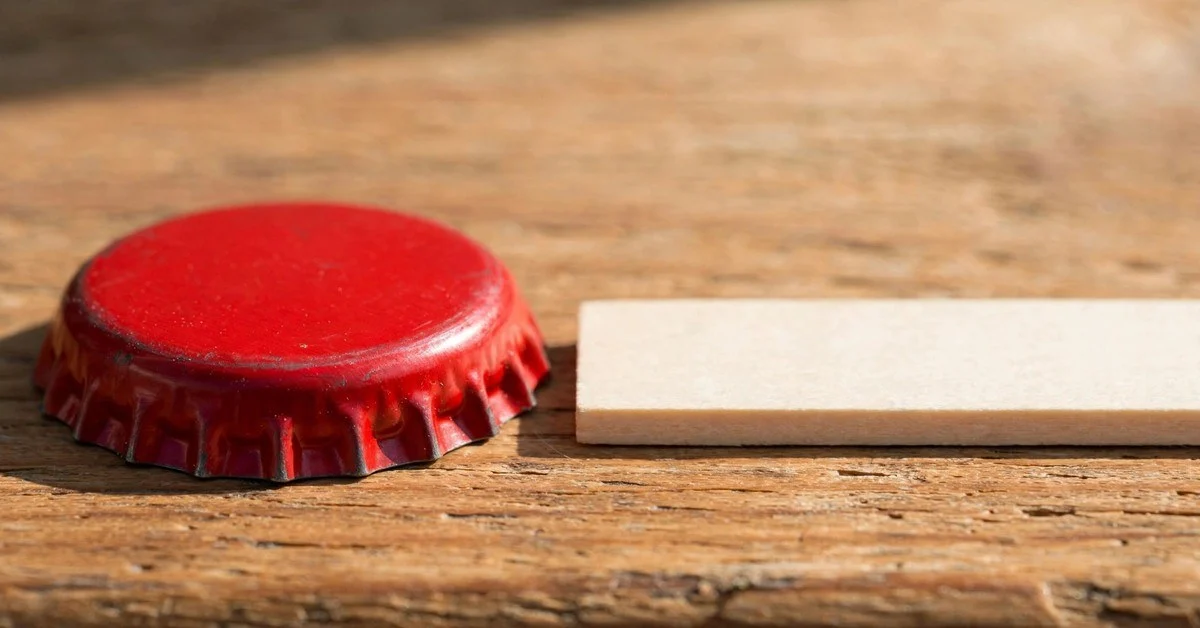
Watch listings say 40 mm, cookie cutters say 4 cm, and sports balls are measured in it — yet few people can picture four centimeters on demand. Four centimeters is about 1.57 inches — roughly the diameter of a golf ball, a ping pong ball, or the height of a LEGO minifigure. If you have ever wondered how big 4 cm is while shopping online or reading a pattern, this guide translates it into objects you already know. This size comes up in shopping, where watch faces and cookie cutters are sold by the centimeter; in crafts, where small parts are measured in cm; and in sports, where ball sizes are standardized. Below are 15 everyday things about 4 cm wide, a conversion chart, and simple tricks for judging this handy little length.
4 cm Conversion Chart
| Unit | Converted Value |
|---|---|
| Millimeters | 40 mm |
| Centimeters | 4 cm |
| Meters | 0.04 m |
| Inches | ≈ 1.57 in |
| Feet | ≈ 0.13 ft |
| Yards | ≈ 0.04 yd |
Common Objects That Are About 4 cm
| Object | Approximate Size |
|---|---|
| A golf ball | 4.27 cm diameter |
| A ping pong ball | 4 cm diameter |
| A LEGO minifigure | 4 cm tall |
| A poker chip | 3.9 cm diameter |
| A AAA battery | 4.45 cm long |
| A wine cork | ≈ 4.4 cm long |
| A tea light candle | ≈ 3.8 cm wide |
| A wristwatch face | ≈ 4 cm across |
More Everyday Items Around 4 cm
| Object | Approximate Size |
|---|---|
| An Oreo cookie | ≈ 4.5 cm across |
| A walnut | ≈ 3.5 cm wide |
| A large strawberry | ≈ 4 cm long |
| A Brussels sprout | 3–4 cm wide |
| A chicken egg’s width | ≈ 4.4 cm |
| A small garlic bulb | ≈ 4–5 cm wide |
| A domino tile | ≈ 4.8 cm long |
How Big Is 4 cm, Really?
Four centimeters fits comfortably between your thumb and forefinger — bigger than a coin, smaller than a credit card’s short side. To bracket it, a US quarter at 2.4 cm is clearly smaller, while a credit card’s short edge at 5.4 cm is clearly bigger. Four centimeters lands right in the middle, about one and a half times the quarter.
It also helps to think in fractions: 4 cm is exactly one-fifth of 20 cm (see how big 20cm is for the full-scale view), so five of them laid end to end make a 20 cm stretch. And for imperial thinkers, 4 cm is about 1.6 inches — noticeably less than two inches, which runs about 5.1 cm (see how long 2 inches is). Once you anchor 4 cm to a golf ball, the number stops being abstract.
Easy ways to estimate 4cm in everyday life
- Hold a golf ball: At 4.27 cm across, a golf ball is the closest manufactured match. If you golf, you already carry this reference in your bag.
- Picture a watch face: Men’s watch faces run about 38 to 42 mm — roughly 4 cm. Glance at your wrist for an instant gauge.
- Use a ping pong ball: Regulation table tennis balls are exactly 40 mm. If you play, you handle 4 cm every rally.
- Think of a wine cork: The classic 44 mm cork is just over 4 cm long. Save one from your next bottle as a desk-drawer ruler.
- Compare with an inch: Four centimeters is about 1.6 inches (see how long an inch is). Picture an inch and add a generous half.
- Measure against a credit card: A card’s short side is 5.4 cm. Four centimeters is about three-quarters of that edge.
1. A Golf Ball
The golf ball is the champion reference for 4 cm. The rules of golf set a minimum diameter of 1.68 inches — 42.67 mm — and manufacturers stay extremely close to that floor, so every ball is essentially 4.3 cm. Golfers handle them by the dozen, feeling the dimpled surface every round. The hard, perfectly round shape makes the diameter easy to judge and impossible to forget. Even non-golfers recognize the size from driving ranges and mini-golf courses. Hold one in your palm and you are holding the definitive 4 cm.
2. A Ping Pong Ball
A regulation table tennis ball is exactly 40 mm in diameter — 4 cm on the nose, by international rule. Few everyday objects match a measurement this perfectly. The lightweight orange or white sphere is familiar to anyone who has played the game, and its hollow bounce is part of the sensory memory. Because the size is fixed by the sport’s governing body, it never varies between brands. If you want one flawless mental image for 4 cm, the ping pong ball is it.
3. A LEGO Minifigure
The classic LEGO minifigure stands exactly 4 cm tall — a deliberate design choice that has held for decades. These little figures are among the most recognized toys on Earth, living in toy boxes, on desks, and stepped on by parents everywhere. Their blocky proportions make the height easy to see: four stacked centimeters of smiling plastic. Because LEGO manufactures to famously tight tolerances, every minifigure is identical. Line one up next to whatever you are measuring and you have a charming, exact 4 cm gauge.
4. A Poker Chip
A standard casino poker chip is about 39 mm across — 3.9 cm, a hair under our mark. Chips are manufactured to uniform size so they stack and shuffle properly, which makes them reliable references. Anyone who has played poker — or even handled chips at a charity casino night — knows the feel of that familiar disc. The edge spots and embossed patterns help your eye take in the full diameter. Keep a chip from your next game night: it is a pocket-sized 4 cm reminder.
5. A AAA Battery
A AAA battery is 44.5 mm long — about 4.4 cm, just over our target. These slim batteries power TV remotes, flashlights, and countless gadgets, so nearly every household has a drawer full of them. The cylindrical shape and labeled wrapper make the length easy to read at a glance. Because battery sizes are set by international standard, every AAA is the same length worldwide. Grab one from the remote and you are holding a 4 cm ruler with a tiny margin to spare.
6. A Wine Cork
The most popular wine cork size is 44 mm long — 4.4 cm — with a diameter of about 24 mm. Corks are familiar from dinners, celebrations, and craft projects, and their natural texture makes them pleasant to handle. The cylindrical shape is ideal for comparing lengths: roll it next to a battery, a cookie, or a watch face and the differences show clearly. Since corks come in a few standard lengths, stick to the common 44 mm kind for this reference. Your next bottle of wine comes with a free 4 cm gauge.
7. A Tea Light Candle
A standard tea light candle is about 38 mm across — 3.8 cm, just under our mark. These little aluminum-cupped candles are sold in bags of dozens for dinners, holidays, and power outages, so most homes have them. The squat cylinder shape makes the diameter the obvious dimension to picture. Because they are manufactured uniformly, every tea light in the bag is the same size. Light one for ambiance and note its width: you are looking at roughly 4 cm of candle.
8. A Wristwatch Face
A typical men’s wristwatch face measures about 38 to 42 mm across — right around 4 cm. Watch sizes are printed in every product listing, usually as “40 mm case,” which trains shoppers to think in these numbers. The round face, framed by the bezel, gives your eye a clean circle to judge. Millions of people wear one daily, making it a reference that is literally always at hand. Check your own watch: that familiar dial is showing you 4 cm every time you check the time.
9. An Oreo Cookie
An Oreo cookie is about 45 mm across — 4.5 cm, slightly over our target. These iconic sandwich cookies are sold in the same size in dozens of countries, making them a genuinely global reference. Everyone knows the ritual: twist, lick, dunk — and each step reinforces the cookie’s size in memory. The flat disc shape is perfect for judging diameters. Next time you twist one open, look at it before you eat it: that 4.5 cm circle is your slightly-generous 4 cm anchor.
10. A Walnut
A walnut in its shell is about 3.5 cm across — the smaller end of our range. Walnuts appear in baking, trail mixes, and holiday nut bowls, so their knobby round shape is widely familiar. The hard shell makes the size consistent and easy to handle; it does not squish or vary like soft fruit. Natural variation means some walnuts run a little larger, right up to 4 cm. Crack one open for a snack and study the shell first — it is a tasty lesson in the 4 cm neighborhood.
11. A Large Strawberry
A large strawberry runs about 4 cm long, not counting the leafy top. Strawberries are sold by the basket in every grocery store, and their heart shape is universally recognized. Size varies with variety and season, so think of the biggest berries in the box as your reference — the small ones will fall short. Because you eat them fresh and handle them gently, the size registers in a hands-on way. Pick the largest berry from the basket and you are holding roughly 4 cm of fruit.
12. A Brussels Sprout
A Brussels sprout is typically 3 to 4 cm across — a compact green ball about the size of a walnut. These little cabbages are roasted by the trayful in home kitchens, so cooks know their size well. Their near-spherical shape makes the diameter easy to judge, and they are remarkably uniform within a bag. Whether you love them or push them aside, their size is memorable. Line a few up on the cutting board and you have a row of natural 4 cm gauges.
13. A Chicken Egg’s Width
A standard chicken egg is about 4.4 cm at its widest point. Eggs are the ultimate everyday object — handled daily in kitchens around the world — and their oval shape is instantly familiar. The width is the dimension to picture: the plump middle rather than the pointed ends. Egg sizes are graded and fairly consistent within a carton. Crack one for breakfast and give it a glance first; that 4.4 cm waistline is just over our 4 cm mark.
14. A Small Garlic Bulb
A small head of garlic measures about 4 to 5 cm across. Garlic bulbs sit in nearly every kitchen, their papery white shape recognizable to every cook. The round, slightly flattened form makes the width easy to see, and bulbs are sold individually so you handle them one at a time. Size varies, so choose a modest bulb as your reference rather than the jumbo ones. Break off a clove for dinner and note the bulb’s width — you have just measured roughly 4 cm.
15. A Domino Tile
A standard domino tile is about 48 mm long — 4.8 cm, the upper edge of our range. Dominoes are classic game pieces, their black rectangles with white pips familiar across cultures. The size is standardized so tiles shuffle and stack properly, which keeps the reference honest. The rectangular shape gives you a clear length to picture, longer than our target but close enough to bracket it. Lay one next to a golf ball and the comparison teaches you exactly where 4 cm sits.
Frequently Asked Questions
How many inches is 4 cm?
Four centimeters equals about 1.57 inches. For quick mental math, think “about one and a half inches” — close enough for shopping and crafting decisions.
Is 4 cm bigger than 2 inches?
No. Two inches equals about 5.08 cm, so 2 inches is roughly a centimeter bigger than 4 cm. If something is listed at 2 inches, picture a 4 cm object plus a little extra.
What does 4 cm look like on a ruler?
Find the 40 mm mark on the metric side — that is exactly 4 cm. On the inch side, it falls just past the 1.5-inch line, a little more than halfway between 1 and 2 inches.
What household item is 4 cm?
A golf ball (4.27 cm), a ping pong ball (exactly 4 cm), and a LEGO minifigure (4 cm tall) are the closest matches. A watch face and a poker chip are within millimeters too.
See also: how big 5 cm is.
Final Thoughts
Four centimeters turns out to be one of the friendliest measurements to learn because the world keeps manufacturing objects at exactly this size — golf balls, ping pong balls, minifigures, poker chips. Once you connect the number to two or three of them, 4 cm stops being a line on a ruler and becomes something you can see in your mind’s eye. That matters more than it sounds: product listings, patterns, and recipes all assume you can picture it. Now you can. The next time a label says 4 cm, skip the conversion math and reach for the golf ball in your memory — your eyes already know how big 4 cm is. See also: how big 6 cm is.

I’m Dane Whitfield, a content writer at MeasureZit.com, where I specialize in creating clear, accurate articles on measurements, unit conversions, and mathematical concepts. I enjoy breaking down complex numerical topics into simple, practical explanations that readers can actually use. My goal is always precision and clarity helping people make sense of the numbers around them.










