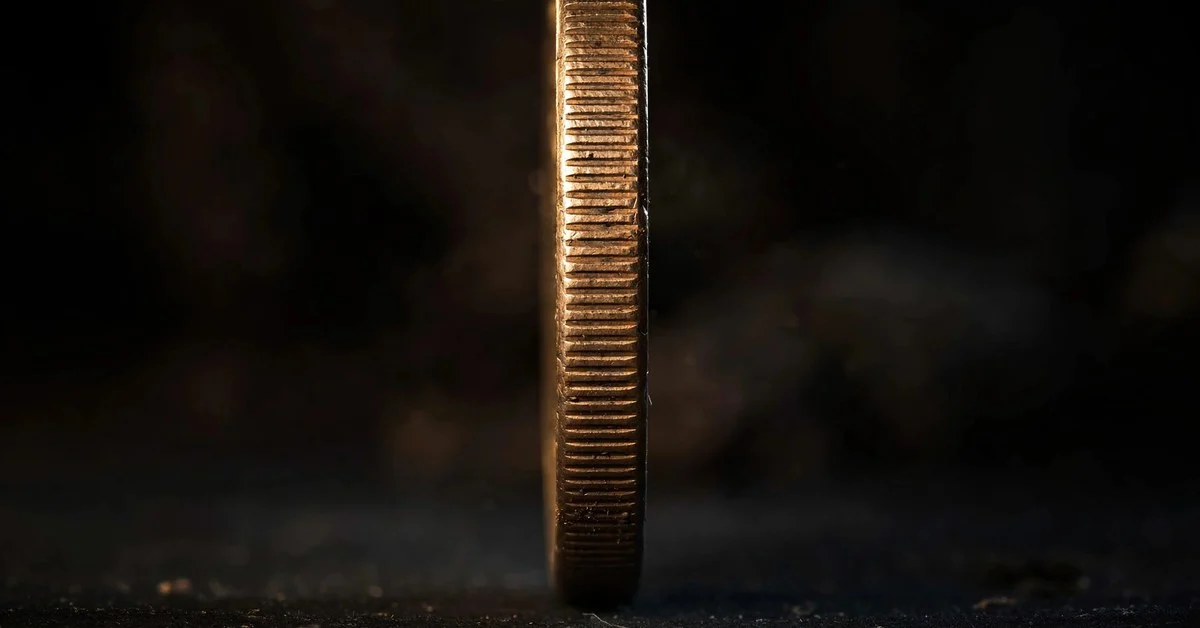
Seed packets prescribe it, glasses repair kits depend on it, and phone manuals mention it — yet two millimeters is so small that most of us just squint and guess. Two millimeters is about 0.08 inches — roughly the thickness of a US nickel, which measures 1.95 mm. If you have ever wondered how big 2mm really is, the answer is: thinner than a grain of rice is long, thicker than a sheet of paper, and right in the zone where DIY projects succeed or fail. This tiny measurement matters in home repair, where screw and drill sizes step in millimeters; in gardening, where seed depth decides germination; and in crafts like beading and model-making. Below are 15 everyday things about 2mm thick, a conversion chart, and tricks for judging this miniature measurement by eye.
2mm Conversion Chart
| Unit | Converted Value |
|---|---|
| Millimeters | 2 mm |
| Centimeters | 0.2 cm |
| Meters | 0.002 m |
| Inches | ≈ 0.08 in |
Common Objects That Are About 2mm
| Object | Approximate Thickness |
|---|---|
| A US nickel’s thickness | 1.95 mm |
| A standard SD card | 2.1 mm thick |
| A pencil’s graphite core | 2 mm across |
| A wooden matchstick | ≈ 2 mm thick |
| A toothpick | ≈ 2 mm thick |
| Dry spaghetti | ≈ 2 mm thick |
| A house key’s blade | ≈ 2 mm thick |
| 20 sheets of printer paper | ≈ 2 mm stacked |
More Everyday Items Around 2mm
| Object | Approximate Thickness |
|---|---|
| A mustard seed | 1–2 mm wide |
| A chia seed | ≈ 2 mm long |
| A grain of coarse sand | 1–2 mm wide |
| A grain of rice’s width | ≈ 2 mm |
| A red lentil | ≈ 2 mm thick |
| A pin’s head | 1–2 mm wide |
| A sesame seed | ≈ 2 mm wide |
How Thick Is 2mm?
Two millimeters is the thickness of a coin’s edge, the width of a matchstick, the plumpness of a sesame seed. To place it, think smaller first: a single sheet of printer paper is about 0.1 mm, so 2mm is twenty sheets stacked — a surprisingly visible little pile. Think slightly larger next: three credit cards stacked reach about 2.3 mm, just a hair beyond our mark. Two millimeters sits between them, closer to the cards.
Because 2mm is less than a tenth of an inch, imperial-unit thinkers often have no feel for it at all — an inch is more than twelve times as thick (see how long an inch is for the bigger picture). That is why coin edges and matchsticks are such good teachers. They turn an abstract sliver into something you can roll between your fingers.
Easy ways to estimate 2mm in everyday life
- Feel a nickel’s edge: Run your fingertip along the edge of a nickel. At 1.95 mm, that ridge is essentially 2mm — your most exact reference.
- Stack twenty sheets: One sheet of printer paper is about 0.1 mm thick. Count out twenty sheets and pinch the stack: that is 2mm.
- Look at a matchstick: A standard wooden matchstick is about 2 mm square. Strike one (safely) and study its thickness before it burns.
- Check a grain of rice: A grain of rice is about 2 mm wide. Look at it from the side rather than end to end.
- Use an SD card: A standard SD camera card is 2.1 mm thick. If you have one in a drawer, you have a manufactured 2mm gauge.
- Picture a sesame seed: Sesame seeds are about 2 mm across. Next time one sticks to a bun, note its size — that is 2mm.
1. A US Nickel’s Thickness
Here is the gold standard for 2mm. The US Mint strikes every nickel at exactly 1.95 mm thick — so close to two millimeters that the difference is invisible to the human eye. Unlike natural objects, coins never vary: every nickel in circulation is identical. You can also feel the measurement, which matters at this scale — roll the coin’s edge between your fingers and the thickness registers physically. For DIY work, keep a nickel in your toolbox. When a manual calls for a 2mm gap or drill bit, the coin’s edge is your instant go/no-go gauge.
2. A Standard SD Card
The SD memory card in your camera is 2.1 mm thick by international specification — essentially 2mm with a rounding error. These cards are manufactured to exact tolerances on every continent, so the reference works worldwide. Photographers handle them constantly, sliding them in and out of cameras and readers, which builds a tactile memory of the thickness. The flat, rigid rectangle is also easy to hold against small gaps to test a fit. If you have an old card in a drawer, label it: you own a precision 2mm gauge.
3. A Pencil’s Graphite Core
Snap a pencil and look at the dark core inside: standard pencil lead is 2 mm in diameter. This is a manufacturing standard, not a coincidence — pencil cores are extruded to this size across brands. Everyone has seen a broken pencil tip, and the little gray cylinder is surprisingly chunky once you look closely. Because the core runs the full length of the pencil, you can view it from any angle. Next time a pencil breaks, pause before sharpening: that exposed core is showing you exactly how big 2mm is.
4. A Wooden Matchstick
A standard wooden matchstick measures about 2 mm on each side of its square shaft. Matchbooks and matchboxes are everyday objects in kitchens, workshops, and camping kits, so the size is familiar worldwide. The matchstick has a real advantage as a reference: you can hold it, roll it, and compare it directly against the gap or hole you are measuring. Just be sensible and compare before striking, not after. For estimating small thicknesses around the house, the matchstick is hard to beat.
5. A Toothpick
A round wooden toothpick is about 2 mm in diameter — the same as a matchstick, in a rounder package. Toothpicks live in kitchen drawers and restaurant tables everywhere, making them one of the most accessible tiny rulers on Earth. Their smooth, uniform shape means the thickness is the same along the whole length, which simplifies comparisons. Dentists and cooks handle them daily without ever thinking of them as measuring tools. Pick one up and roll it between your fingers: that diameter is 2mm.
6. Dry Spaghetti
An uncooked strand of standard spaghetti is about 2 mm thick. Pasta is a kitchen staple across the globe, and the dry strands are rigid enough to use as actual measuring sticks for tiny gaps. Hold one up to the light and its thickness is easy to see against a contrasting background. Cooks break spaghetti by the handful, so the size is deeply familiar even if it was never consciously measured. Snap a strand and look at the cross-section — that little circle is your 2mm reference, ready for the pot.
7. A House Key’s Blade
The flat blade of a standard house key is about 2 mm thick. You handle keys every day, sliding them into locks where a fraction of a millimeter matters — which is exactly why they are manufactured to such consistent thickness. The metal edge is easy to feel and easy to see, and the key’s rigidity makes it a practical gap gauge: if a key slides into a crack snugly, the gap is around 2mm. It is a reference you already carry in your pocket everywhere you go.
8. Twenty Sheets of Printer Paper
A single sheet of standard printer paper is about 0.1 mm thick, so twenty sheets stacked reach 2mm. This is the most mathematical reference on the list, and a satisfying one — you can build 2mm yourself, sheet by sheet. Office workers and students handle paper constantly, and a 20-sheet stack is a familiar handful: roughly the thickness of a slim pamphlet. Fan the edges and you can even see the individual layers. When someone asks how thick 2mm is, hand them twenty sheets and let them pinch it.
9. A Mustard Seed
A mustard seed is about 1 to 2 mm across — the small end of our range, and famous for it. These tiny round seeds show up in Indian cooking, pickling spices, and whole-grain mustards, so they are familiar in kitchens worldwide. Their near-perfect spherical shape makes the size easy to picture: a tiny ball, barely bigger than a pinhead. The biblical “mustard seed” metaphor exists precisely because the seed is proverbially small. Pour a few into your palm and you are holding a handful of 2mm spheres.
10. A Chia Seed
A chia seed measures about 2 mm long. These speckled little seeds have become pantry staples thanks to puddings, smoothies, and health-food trends, so millions of people see them daily. Each seed is an elongated oval, and its length is remarkably consistent from seed to seed. Because they are often eaten by the spoonful, the size is familiar to anyone who cooks with them. Look closely at your next chia pudding: every one of those dots is roughly 2mm long.
11. A Grain of Coarse Sand
A grain of coarse sand is about 1 to 2 mm across — right at the boundary where you can still see individual grains clearly. Beachgoers know the difference between powdery fine sand and the chunky grains that get stuck between toes; the chunky kind is our reference. Geologists actually classify sand by grain size, and coarse sand sits in the 1 to 2 mm band. Next time you are at the beach, pick up a few of the largest grains you can find. Each one is a natural, free demonstration of 2mm.
12. A Grain of Rice’s Width
A grain of long-grain rice is about 7 mm long but only about 2 mm wide. Rice is cooked in nearly every cuisine on Earth, so its dimensions are globally familiar. The trick is to look at the grain from the side: the plump middle, not the long axis. Because rice grains are so uniform within a bag, any single grain works as the reference. Pour some into a bowl and study one grain’s width — that modest 2mm span is the measurement in question.
13. A Red Lentil
A red lentil is about 2 mm thick — a tiny disc that plumps up when cooked. Lentils are everyday food across South Asia, the Middle East, and beyond, sold in bags where you can see their size clearly. Their flat, lens-like shape makes thickness the natural dimension to notice: they are much wider than they are thick. Dry lentils are the best reference since cooking swells them. Scoop a spoonful from the bag and look at one lentil edge-on — that thin profile is 2mm.
14. A Pin’s Head
The head of a standard dressmaker’s pin is about 1 to 2 mm across. Sewers handle pins by the hundred, and the little round head — often colored plastic or plain metal — is designed to be gripped by fingertips. That grip-ability is exactly what makes it a good reference: the size is tuned to human fingers. The shaft is far thinner, so be sure to picture the head, not the point. If you sew, your pincushion is full of 2mm gauges waiting to be noticed.
15. A Sesame Seed
A sesame seed is about 2 mm across — the teardrop that tops burger buns and bagels worldwide. Nearly everyone has picked one off a bun or found one stuck to their lip, which makes the size viscerally familiar. Sesame seeds are flattish ovals, very uniform within a batch, and pale enough to see clearly against dark surfaces. Shake a few from a bun onto the table and study them. Each tiny seed is demonstrating 2mm with delicious clarity.
Frequently Asked Questions
How thick is 2mm in inches?
Two millimeters equals about 0.08 inches (0.0787 to be precise). That is less than one-tenth of an inch — roughly the thickness of a nickel’s edge.
What common object is closest to 2mm thick?
A US nickel at 1.95 mm thick is the closest match, and every nickel is identical. A standard SD card at 2.1 mm and a wooden matchstick at about 2 mm are nearly as good.
Is 2mm bigger than 1mm?
Yes — 2mm is exactly twice as thick as 1mm. On a ruler the difference looks small, but when you are choosing a drill bit or a screw, doubling the size changes everything.
How many sheets of paper make 2mm?
About twenty sheets of standard printer paper stacked together measure 2mm, since each sheet is roughly 0.1 mm thick. It makes a slim little pile you can pinch between your fingers.
Final Thoughts
Two millimeters is easy to dismiss as too small to matter — until a screw does not fit, a seed fails to sprout, or a gap will not close. The reassuring news is that your world is already full of 2mm references: the nickel in your pocket, the matchstick in the kitchen, the sesame seed on your lunch. Once you link the number to two or three of these tiny objects, you will estimate small thicknesses with real confidence instead of guessing. That is the quiet power of learning how big 2mm is. It takes a measurement most people cannot picture at all and turns it into something you can feel between your fingertips — no magnifying glass required. See also: how big 6 mm is.

I’m Priya Sharma, a content writer at MeasureZit.com, specializing in measurements, unit conversions, and mathematical concepts. I turn technical topics into clear, accurate content that’s easy to understand. My focus is precision, clarity, and genuinely useful information.










