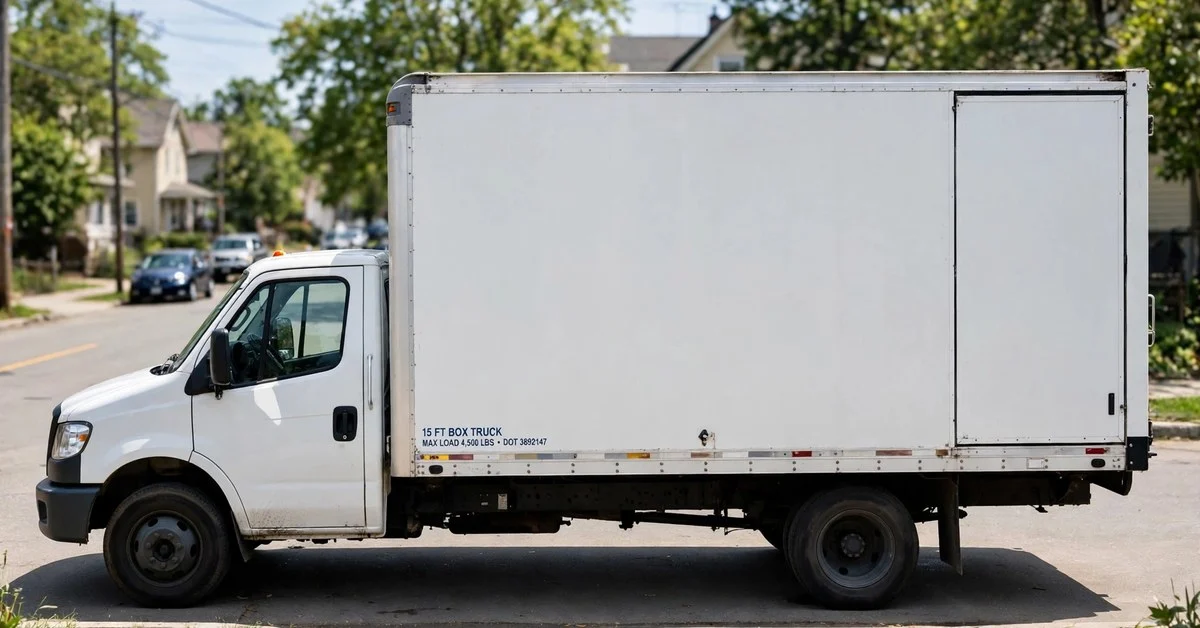
The rental agent slides two sets of keys across the counter — one for a 10-foot truck, one for a 15-foot truck — and suddenly five feet feels like a canyon. Which one swallows a one-bedroom apartment without a second trip? That is the moment most people first ask how long 15 feet is, and it is worth having the answer before the meter is running on moving day. Fifteen feet is exactly 180 inches, exactly 5 yards, and about 4.57 meters. It is the length the rental industry settled on for the classic one-bedroom move, the size of a proper family trampoline, and the span of a canoe built for two. Learn it once, and parking spaces, garages, and backyards read differently.
What makes 15 feet tricky is that it sits in a blind spot: too long to pace off, too short to feel like real distance. The fix is to anchor it to things you have stood next to — a box truck at the curb, a sedan in the driveway, a bus pulling away from the stop. Below: hard numbers first, then a traffic-based test you can run anywhere, then fifteen real things at about fifteen feet.
What 15 Feet Works Out To
The arithmetic for 15 feet is unusually friendly, because 15 divides cleanly by both 3 and 12. Multiply by 12 and you get exactly 180 inches — no decimals, no rounding. Divide by 3 and you get exactly 5 yards. Those round numbers are why builders, rental companies, and boat makers all love this length: it converts without a calculator.
| Unit | 15 feet equals |
|---|---|
| Inches | 180 in exactly |
| Yards | 5 yd exactly |
| Centimeters | 457.2 cm |
| Meters | about 4.57 m |
| Millimeters | 4,572 mm |
For a quick mental picture, think of it as five meter sticks laid end to end, minus a hand’s width — or five 3-foot sticks with nothing to subtract at all. In inches, it is fifteen 12-inch rulers in a row. If you work in metric, 4.57 meters puts it between four and five meter sticks, closer to four and a half. Keep whichever of those clicks for you; the rest of this guide gives you the real-world scenes to match.
The Bus-Length Test: Reading 15 Feet in Traffic
Here is the signature trick for this length: use the vehicles around you as a ruler. A standard city transit bus runs about 35 to 40 feet long, which makes 15 feet just over a third of a bus pulling away from the curb. Next time one passes, slice it into thirds in your mind — one of those thirds is fifteen feet, close enough for any estimate you will ever need to make. It is a test you can run in any downtown, no tape measure required.
Now shrink the vehicle. The 15-foot rental box truck — the one with the size painted on its side in letters a foot tall — is fifteen feet of cargo box, by definition. Rental fleets standardized on it decades ago because it matches a one-bedroom apartment’s worth of furniture. When you see one parked on your street, you are looking at the definition of this length with wheels on it.
Go smaller still and the fractions stay useful. A crew-cab pickup with a short bed stretches about 19 to 20 feet, so fifteen feet is roughly three-quarters of that truck — picture the pickup with its tailgate section lopped off. A minivan runs about 17 feet, just two feet longer than our mark. And a typical two-car garage is about 20 feet deep, which means anything fifteen feet long parked inside leaves you five feet of walking room at the front — enough to open a door and carry groceries past. Run this test a few times in real parking lots and fifteen feet stops being a number. It becomes the space between the vehicles you already know.
Fifteen Things That Run About 15 Feet
Below are fifteen real-world anchors, from highways to backyards to the savanna. Each one lands at or very near fifteen feet.
- A 15-foot rental box truck. The cargo box measures 180 inches wall to wall, and the size is printed on the side so there is no guessing. It is the default choice for a one-bedroom move: bed, dresser, couch, and a few dozen boxes fit with room to spare. It drives on a regular license and parks in a standard-length space.
- A midsize sedan. Cars like the Toyota Camry and Honda Accord run about 15 to 16 feet bumper to bumper. You park beside one — or drive one — nearly every day, which makes it the most available fifteen-foot reference most people own. Picture your own car, then add or subtract a few inches.
- A classic VW camper bus. The beloved Type 2 measures just under 15 feet long, about 14.8 feet. It is shorter than a modern minivan but unmistakable, and its boxy shape makes the length easy to read at a glance. Festival parking lots are full of them.
- A four-door Jeep Wrangler. The Unlimited models stretch about 15.5 to 16 feet, putting them right in our neighborhood. Their upright, squared-off shape shows the length honestly — no sloping trunk to fool your eye.
- A compact travel trailer. The small campers that sleep two to four typically run about 15 feet in box length. They fit standard campsites and tow behind many midsize SUVs, which is exactly why the size caught on: it is the biggest trailer that still feels easy.
- A two-horse trailer. The classic bumper-pull horse trailer runs about 14 to 16 feet in the box, before the hitch. Horse people know this length by feel, because backing one into a barn aisle is an exercise in judging fifteen feet precisely.
- A 15-foot canoe. This is a classic tandem canoe length — stable enough for two paddlers plus a weekend of gear, short enough to portage without misery. Outfitters rent them by the dozen, and dawn on a still lake is their natural habitat.
- A 15-foot daysailer. Small sailboats built for afternoon outings cluster right at this length: big enough to feel like a real boat, small enough to rig solo and trailer home. Sailing schools teach beginners on them for exactly that reason.
- A 15-foot trampoline. Measured across the mat, 180 inches is the big family size — the one that dominates the yard and needs a serious safety net. From an upstairs window it reads as an enormous blue circle; that circle is fifteen feet.
- A 15-foot round above-ground pool. The generous family size, 180 inches across, with room for actual swimming rather than just bobbing. The round wall of blue is a backyard landmark all summer, and ladder included, it is a fifteen-foot commitment.
- A 15-foot flagpole. The standard residential flagpole stands about 180 inches tall, lifting a 3-by-5-foot flag well above a ranch home’s roofline. Holiday weekends make them easy to spot — and to measure with your eyes.
- A 15-foot shuffleboard table. The longer tournament-style tables run about 180 inches, found at lodges, resorts, and clubs with room to spare. The puck’s long glide down the polished wood is a fifteen-foot journey.
- A 15-foot commercial Christmas tree. Plaza and mall display trees are often built to about 180 inches — the size that needs a crane, a crew, and ornaments the size of beach balls. Town-square tree lightings are fifteen-foot spectacles.
- A female giraffe. She stands about 15 feet tall, browsing acacia leaves far above every other animal on the savanna. Males grow taller, but fifteen feet is the classic figure — nature’s own towering ruler.
- A green anaconda. Among the world’s longest snakes, a big female stretches about 15 to 20 feet. Stretched along a riverbank, fifteen-plus feet of muscle is a measurement you would never forget.
Pacing It Off: Feeling 15 Feet With Your Body
No truck, no bus, no canoe in sight? Your body is a backup ruler. An average adult walking step covers about 2.5 feet, which means fifteen feet is roughly six normal paces — count them off heel to toe and you will land within a foot of the mark. It is not survey-grade, but for judging whether the couch fits the wall or the pool fits the yard, six paces is honest information.
For shorter checks, use your feet literally: an adult foot is about 10 to 11 inches long, so fifteen feet is roughly sixteen to eighteen foot-lengths laid heel to toe. Walk it slowly, counting, and the number you get is good enough for furniture day. Taller measurers get a bonus tool: arm span roughly equals height, so a six-foot person spans about six feet fingertip to fingertip — fifteen feet is two and a half arm spans, or two spans plus one half. Mark the half by folding your visualization at the elbow.
The real skill is combining methods. Pace the room first for the rough number, then check the critical dimension — the doorway the couch must pass, the gap the truck must clear — against a vehicle you know. Six paces says the wall is about fifteen feet; the sedan parked outside confirms what fifteen feet looks like. Two independent estimates that agree are worth more than one precise measurement you do not trust. Practice on your own street and the body-ruler becomes automatic.
Moving-Day Questions About 15 Feet
Will a 15-foot truck fit in a standard parking space?
Yes, comfortably in most cases. A standard parking stall is about 18 feet long, which gives a 15-foot truck roughly three feet of margin. You will still want to swing wide and watch the mirrors, but length-wise you are not the oversized vehicle in the lot. Street parking works the same way wherever cars are allowed.
Do I need a special license to drive a 15-foot box truck?
No. In the United States, a regular driver’s license covers rental box trucks up to 26,000 pounds gross vehicle weight, and a loaded 15-footer stays well under that. It drives like a tall, heavy pickup: the differences are the blind spots, the wide turns, and the low bridges you now have to notice. Take the first few corners slow and you will be fine.
How much furniture fits in 15 feet of truck?
Rental companies size it for a one-bedroom apartment: a queen bed, a dresser, a couch, a coffee table, and several dozen boxes, loaded floor to ceiling. The failure mode is almost always the couch — sectionals and deep reclining sofas eat length fast. Measure your two biggest pieces before you reserve, and the truck will do the rest.
Is a 15-foot canoe really enough for two adults plus gear?
Yes — that is the sweet spot this length was designed around. Fifteen feet gives a tandem canoe the waterline it needs to track straight and carry roughly 600 to 800 pounds of paddlers and packs. Shorter canoes turn easier but wander; longer ones glide farther but fight you at every portage. Fifteen is the compromise the whole industry landed on.
How This Length Compares Up and Down
It helps to know the neighbors. Twelve feet — the step down — is a small box truck or a compact car and a half; picture our length minus one 3-foot stick plus a bit. Twenty feet stretches five feet longer: a shipping-container increment, a full-size crew-cab pickup, a different class of commitment. Nine feet is three-fifths of fifteen, about the length of a small kayak. And five feet is exactly one-third — a third of a box truck, a third of a canoe, a third of a giraffe’s view of the world. Because fifteen divides so cleanly, every one of these comparisons is exact, not approximate.
See also: how long 12 feet is.
See also: how long 9 feet is.
Picture the Truck, Then Measure Everything Else
Fifteen feet earns its keep on the busiest days of life — moving day, lake day, the day the pool goes up — and it hides in the vehicles parked on every street. Start with the box truck: 180 inches, five yards, a third of a city bus, three-quarters of a pickup. Once that picture is solid, the rest follows: the canoe at the dock, the sedan in the driveway, the giraffe on the nature documentary. Keep two or three of these anchors ready and you will never again stand in a rental lot guessing. Next time a label, a listing, or a lake beckons with “15 feet,” you will see it before you measure it.

I’m Dane Whitfield, a content writer at MeasureZit.com, where I specialize in creating clear, accurate articles on measurements, unit conversions, and mathematical concepts. I enjoy breaking down complex numerical topics into simple, practical explanations that readers can actually use. My goal is always precision and clarity helping people make sense of the numbers around them.










