Title: How Big Is 9mm? 15 Everyday Size Comparisons Explained
Meta Description: Wondering how big 9mm is? It’s about 0.35 inches — a pea-sized measurement. See 15 everyday objects that are about 9mm long, plus quick size comparisons.
Introduction
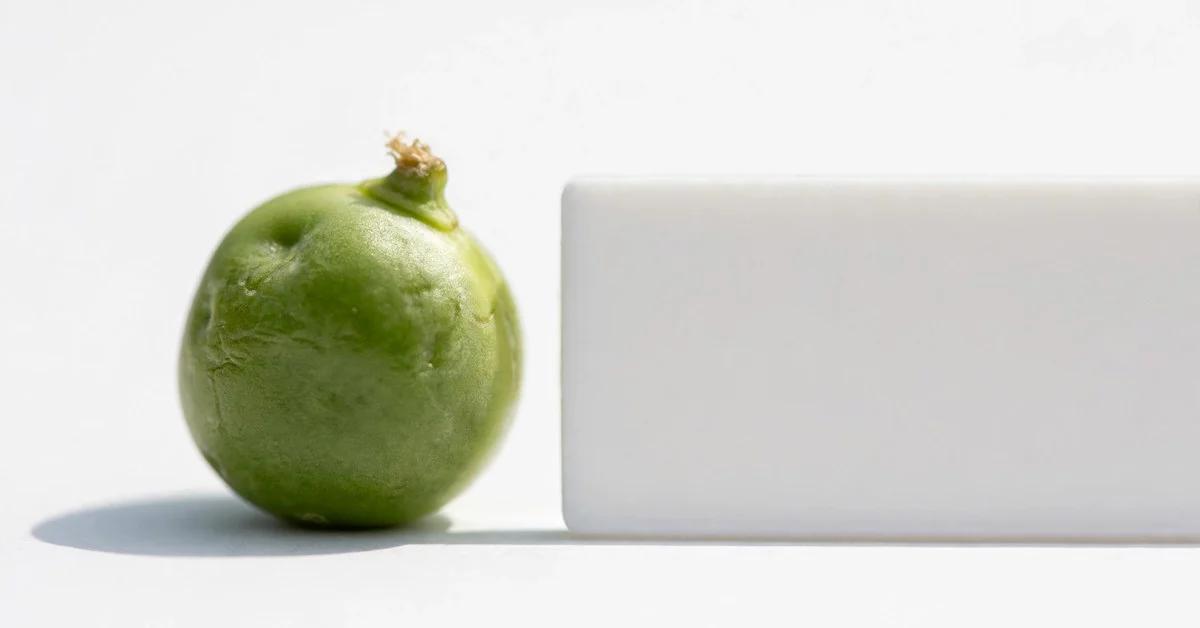
Picture a green pea resting on your fingertip. That little sphere is almost exactly the answer to “how big is 9mm” — 9mm is about 0.35 inches, or 0.9 centimeters, roughly the diameter of a pea. It is a measurement that shows up more often than you might expect, from craft projects to hardware shopping to product specs online.
Knowing what 9mm looks like helps in practical moments. You might be choosing the right drill bit, comparing the thickness of a phone case, or reading a jewelry size chart. Hobbyists meet it in model building and 3D printing, where a millimeter off can ruin a fit. Instead of hunting for a ruler with millimeter marks, you can estimate with objects you already know.
Below you will find a quick conversion chart, two tables of 15 everyday things that are about 9 mm long, and simple tricks for estimating 9mm without any tools.
Conversion Chart
| Unit | Converted Value |
|---|---|
| Millimeters | 9 mm |
| Centimeters | 0.9 cm |
| Meters | 0.009 m |
| Inches | ≈ 0.35 in |
| Feet | ≈ 0.03 ft |
| Yards | ≈ 0.01 yd |
Common Objects That Are About 9 mm Long
| Object | Approximate Length |
|---|---|
| 1. A 9×19mm bullet | 9.01 mm bullet diameter |
| 2. A green pea | About 7–9 mm across |
| 3. A modern smartphone’s thickness | About 8–9 mm |
| 4. A USB-C plug | 8.4 mm wide |
| 5. A cherry pit | About 8 mm across |
| 6. A corn kernel | About 8 mm long |
| 7. Seven dimes stacked | About 9.5 mm tall |
| 8. A standard LEGO brick | 9.6 mm tall |
More Everyday Items Around 9 mm
| Object | Approximate Length |
|---|---|
| 9. Your pinky fingernail | About 10 mm wide |
| 10. A watermelon seed | About 10 mm long |
| 11. A thumbtack head | About 10–11 mm wide |
| 12. Twelve credit cards stacked | About 9.1 mm tall |
| 13. An apple seed | About 7–8 mm long |
| 14. A standard pencil’s width | About 7 mm |
| 15. A ladybug | About 6–7 mm long |
How Big Is 9mm?
Nine millimeters sits in a sweet spot of small measurements: bigger than a grain of rice, smaller than a dime’s width. If you hold your thumb and index finger a hair apart, that gap is close to 9mm. It is just over one-third of an inch — for reference, a full inch is 25.4mm, so 9mm sits a little more than a third of the way along any inch-marked ruler. You can read more about the inch itself in our guide to how long an inch is.
Compared with nearby sizes, 9mm is a touch larger than 6mm (about the width of a pencil eraser) and a touch smaller than 10mm, which is exactly one centimeter and roughly the width of your pinky fingernail. Once you can picture 9mm, both neighbors fall into place too.
Another way to feel the scale: line up eleven 9mm segments and you have covered about 10 centimeters, or roughly the width of your palm. Shrink that to a single segment and you are back at our pea-sized unit. Small as it is, 9mm is big enough to see clearly without squinting, which is why it works so well as a visual anchor — unlike 1 or 2mm, you can judge it at arm’s length. Jewelers, hobbyists, and hardware shoppers all rely on this “see it clearly” quality when they estimate without tools.
Easy ways to estimate 9 mm in everyday life
- Use a pea: A single green pea is the classic stand-in. If the object matches a pea, it is about 9mm.
- Check your phone: Lay the object against the side edge of your smartphone. Most phones are 8–9mm thick, so the edge makes a handy gauge.
- Stack dimes: Seven US dimes stacked reach about 9.5mm. Six dimes get you to roughly 8mm.
- Look at a USB-C plug: The metal end of a USB-C charging cable is 8.4mm wide — just under 9mm.
- Use your pinky nail: Most pinky fingernails are about 10mm wide, so picture something a fraction narrower.
- Grab a LEGO brick: A standard LEGO brick (without the studs) stands 9.6mm tall — only slightly more than 9mm. Keep one on your desk and you have a permanent gauge.
1. A 9×19mm Bullet
The most literal reference of all: the famous 9mm pistol cartridge is named for its bullet diameter, which measures 9.01mm. This is as close to an exact 9mm object as you will find in daily life. Even if you never handle ammunition, the name itself is a memory hook — “9mm” means nine millimeters, full stop. Next time you hear the term in a movie or news report, you will know the bullet is about as wide as a pea.
2. A Green Pea
Few references are easier to picture than a pea. Green peas measure about 7–9mm across, and the plump ones from a fresh pod sit right at 9mm. Because nearly everyone has seen, held, and eaten peas, your brain already stores this size permanently. For a quick estimate, imagine one pea next to the object in question. If they look like twins, you are looking at roughly 9mm.
3. A Modern Smartphone’s Thickness
Pick up your phone and look at its edge. Most modern smartphones are between 7.5 and 9mm thick, with many popular models landing near 8.5mm. That slim slab you slide into your pocket is a surprisingly accurate 9mm gauge. Lay a small object — a bead, a seed, a screw — against the phone’s edge. If the object spans the full thickness, it is about 9mm, no ruler required.
4. A USB-C Plug
The metal tip of a USB-C charging cable measures 8.4mm wide, a specification set by the USB standard. Since you probably plug one in every day, this tiny rectangle is a reference hiding in plain sight on your desk or nightstand. Hold the plug next to anything small you want to size up. An object just a hair wider than the plug is sitting at roughly 9mm, which makes this one of the most precise everyday gauges available.
5. A Cherry Pit
After eating a cherry, the leftover pit is about 8mm across — just a whisper under 9mm. Its smooth, oval shape and familiar size make it easy to call up from memory, even months after cherry season ends. If you are in the kitchen and need a rough sense of 9mm, think of the pit you just spit into your hand. Anything slightly plumper than a cherry pit lands in 9mm territory.
6. A Corn Kernel
A single kernel of sweet corn runs about 8mm long, putting it within a millimeter of our target. Corn kernels are plump, golden, and instantly recognizable from countless meals, from summer barbecues to winter soups. Their slightly flattened shape also helps: the kernel’s width gives you a second dimension to judge by. Picture three kernels in a row and you have covered about 24mm — or picture one alone for a quick 9mm estimate.
7. Seven Dimes Stacked
A US dime is 1.35mm thick, so seven of them stacked make about 9.5mm — close enough for everyday estimating. Coins work well as measuring tools because their sizes never change, year after year. Dig seven dimes out of a jar, stack them into a tiny silver tower, and you have a physical 9mm reference in your palm. Remove one dime and the stack drops to about 8mm, giving you a simple adjustable gauge for nearby sizes too.
8. A Standard LEGO Brick
LEGO bricks are manufactured to exact tolerances, and a standard brick (not counting the studs on top) stands exactly 9.6mm tall. That is only 0.6mm more than 9mm — a difference your eye cannot detect. If you have kids, or a childhood bin of bricks in the attic, grab any classic rectangular brick. Its height is one of the most reliable 9mm stand-ins in the house, and it never changes.
9. Your Pinky Fingernail
Glance at your smallest fingernail. For most adults, the pinky nail is about 10mm wide — just one millimeter more than 9mm. Because it is literally attached to you, this reference travels everywhere. Picture the width of that nail, then shave a tiny sliver off each side in your mind. What remains is a personal, always-available picture of 9mm.
10. A Watermelon Seed
The flat, teardrop-shaped seeds inside a watermelon measure about 10mm long. They are slightly longer than 9mm, but close enough that one seed gives you the right ballpark. Summer fruit makes this a seasonal but vivid reference. Line up the object next to a watermelon seed; if the object is a touch shorter than the seed, 9mm is a fair estimate.
11. A Thumbtack Head
The round colored head of a standard push pin spans about 10–11mm. Thumbtacks are office and classroom staples, so most people have pressed one into a corkboard. Its wide, flat top is easy to visualize. Imagine an object a little narrower than a thumbtack head, and you have 9mm. As a bonus, the metal pin underneath is much thinner — about 1mm — which can help you picture smaller sizes too.
12. Twelve Credit Cards Stacked
A standard credit card is 0.76mm thick, which means twelve cards stacked reach about 9.1mm. This trick turns a precise specification into a hands-on measuring tool. Pull a dozen loyalty or expired cards from your wallet, stack them, and pinch the pile between your fingers. The thickness you feel is essentially 9mm, and you can add or remove cards to fine-tune the estimate.
13. An Apple Seed
Tucked inside every apple core are small brown seeds about 7–8mm long. They are a bit slimmer than a pea but unmistakable in shape, with their glossy teardrop form. If you have ever studied one while eating an apple, you already know this size. An object slightly plumper or longer than an apple seed sits right around 9mm. It is another kitchen reference that costs nothing and is always in season.
14. A Standard Pencil’s Width
A classic hexagonal wooden pencil is about 7mm across its flats. Hold one between your fingers and you are feeling a size just under 9mm. This is a useful “slightly smaller” anchor: if the mystery object looks a bit chunkier than a pencil’s width, 9mm is a solid guess. Since pencils live in every desk drawer and backpack, the reference is never far away.
15. A Ladybug
The familiar red-and-black ladybug measures about 6–7mm long — noticeably smaller than 9mm, which makes it a good lower-bound reference. Picture a ladybug on a leaf, then imagine something roughly half again as long. That larger shape is close to 9mm. Using a slightly-too-small reference this way trains your eye to bracket a measurement from below instead of only matching it exactly.
Frequently Asked Questions
Is 9mm bigger than a centimeter?
No. A centimeter is 10mm, so 9mm is one millimeter smaller — about the thickness of a credit card less. For most everyday estimating, though, they are close enough that people use them interchangeably, especially when eyeballing craft materials or hardware.
What household item is closest to 9mm?
A green pea is the closest common item at about 7–9mm. A standard LEGO brick at 9.6mm tall and the edge of most smartphones at 8–9mm thick are also excellent matches.
How big is 9mm compared to an inch?
Nine millimeters is about 0.35 inches, or just over one-third of an inch. On a ruler, find the 3/8-inch mark — 9mm sits just below it.
What does 9mm look like next to a coin?
A US dime is 17.9mm across, so 9mm is almost exactly half a dime’s diameter. Seven dimes stacked reach about 9.5mm in height — a handy coin tower for your desk.
Final Thoughts
How big is 9mm? Now you know: about the size of a pea, the thickness of your phone, or the width of a USB-C plug. Small measurements like this come up in crafts, repairs, online shopping, and product specs, and guessing wrong can mean a part that does not fit.
The beauty of 9mm is how many reliable references surround it. You do not need calipers or a metric ruler. A pea from dinner, a LEGO brick from the toy box, or the phone already in your hand each give you an honest estimate within a millimeter or two. Keep one or two of these mental pictures handy, and the next time 9mm appears on a label, you will see its size instantly.

I’m Priya Sharma, a content writer at MeasureZit.com, specializing in measurements, unit conversions, and mathematical concepts. I turn technical topics into clear, accurate content that’s easy to understand. My focus is precision, clarity, and genuinely useful information.