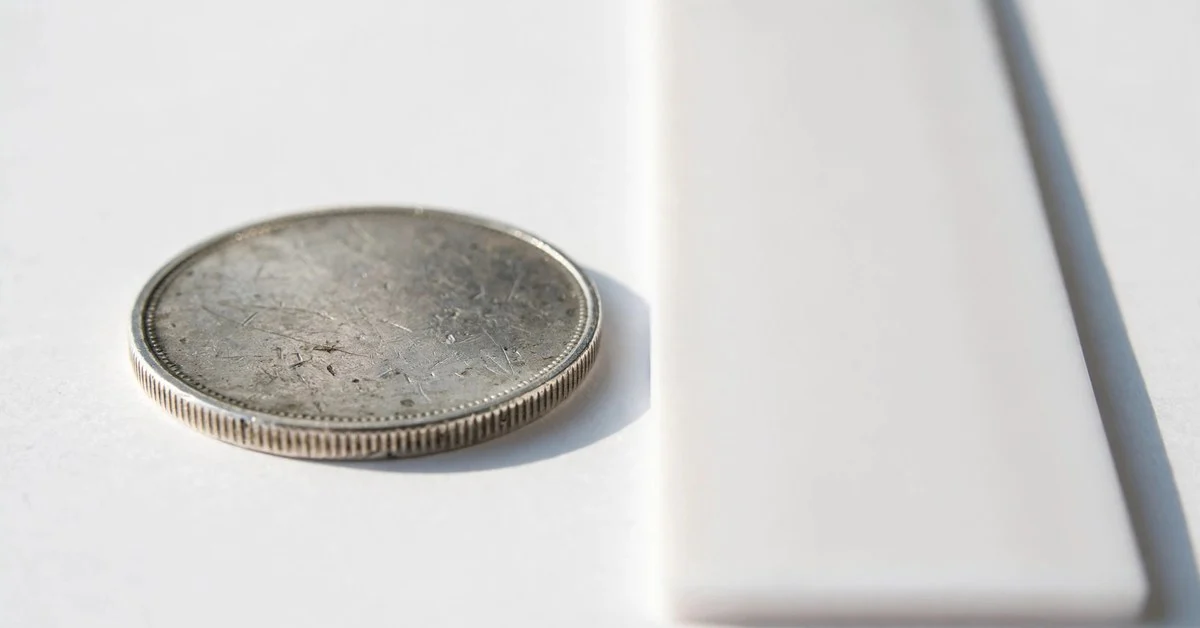
Seed packets say it, sewing patterns say it, and craft instructions say it — but when you are holding scissors or a trowel, two centimeters can be surprisingly hard to picture. Two centimeters is just under four-fifths of an inch (about 0.79 inches) — roughly the width of a grape, a postage stamp, or an adult thumbnail. If you have ever wondered how long 2cm really is, you are not alone: it sits in that awkward zone between “tiny” and “small” where guessing usually goes wrong. This length comes up constantly in sewing, gardening, and cooking, where a centimeter or two decides whether a button fits, a seed sprouts, or a slice cooks evenly. Below are 15 everyday things that are about two cm long, a conversion chart, and simple tricks for judging this little length by eye.
2cm Conversion Chart
| Unit | Converted Value |
|---|---|
| Millimeters | 20 mm |
| Centimeters | 2 cm |
| Meters | 0.02 m |
| Inches | ≈ 0.79 in |
| Feet | ≈ 0.07 ft |
| Yards | ≈ 0.02 yd |
Common Objects That Are About 2 cm
| Object | Approximate Length |
|---|---|
| A US nickel | 2.1 cm across |
| An adult thumbnail | 1.5–2 cm wide |
| A grape | ≈ 2 cm wide |
| A green olive | ≈ 2 cm long |
| A US postage stamp | ≈ 2.2 cm wide |
| A Tic Tac mint | ≈ 1.9 cm long |
| A hazelnut | 1.5–2 cm wide |
| A honeybee | 1.5–2 cm long |
More Everyday Items Around 2 cm
| Object | Approximate Length |
|---|---|
| An almond | ≈ 2 cm long |
| A cherry tomato | ≈ 2.5 cm wide |
| A US quarter | 2.4 cm across |
| A wine cork’s diameter | ≈ 2.4 cm |
| A guitar pick | 2.5–3 cm long |
| An adult pinky finger | ≈ 1.5 cm wide |
| A large round breath mint | ≈ 2.3 cm wide |
How Long Is 2cm, Really?
Two centimeters is the width of your thumbnail, the length of a grape, the span of a postage stamp — small enough to sit on your fingertip, big enough to see clearly without squinting. It helps to bracket it: a pea at about 0.8 cm is noticeably smaller, while a standard paperclip at about 3.3 cm is clearly longer. Two centimeters lands right between them.
Because it is just under an inch, many people round it to “about an inch” in their heads — and that small error matters when you are spacing buttons or planting seeds. Learning what two cm looks like in real objects fixes that. Once your eye knows the size of a nickel or a grape, you can judge 2 cm anywhere, no ruler needed. If you want the bigger picture first, see how long an inch is, then shrink it by about a fifth. For the next sizes up, see how long 3 cm is and how long 4 cm is.
Easy ways to estimate 2cm in everyday life
- Look at your thumbnail: An adult thumbnail is roughly 1.5 to 2 cm wide. Hold it up — that is your always-available ruler for two cm.
- Grab a nickel: A US nickel measures 2.1 cm across, almost exactly two cm. Keep one in mind (or in your pocket) as a pocket-sized gauge.
- Picture a grape: A plump grape is about 2 cm wide. Next time you eat one, note its size against your finger.
- Use a postage stamp: A US postage stamp is about 2.2 cm wide. If you have mail nearby, you have a 2 cm reference.
- Check a ruler: Two centimeters is exactly one-fifth of the way to the 10 cm mark. Find 10 cm first, then divide by five in your head.
- Think of a honeybee: A worker bee’s body runs about 1.5 to 2 cm long. Picture one resting on a flower and you are picturing two cm.
1. A US Nickel
The nickel is the star of this list because its size is set by law, not by nature. The US Mint strikes every nickel at 21.21 mm across — 2.1 cm — which makes it one of the most exact everyday references for two cm you will ever find. Coins are identical everywhere, they never shrink or vary, and nearly everyone in the US handles them regularly. Hold one between thumb and forefinger and you are holding 2 cm. For anyone outside the US, the principle still works: find a coin close to 21 mm across and you have the same pocket ruler.
2. An Adult Thumbnail
Your body comes with built-in measuring tools, and the thumbnail is one of the handiest. On most adults it spans roughly 1.5 to 2 cm wide — right at our target. Unlike a coin, it is always with you, which makes it perfect for quick estimates at the fabric store or in the garden. The width varies a bit from person to person, so it pays to measure your own nail once against a ruler. After that single check, your thumb becomes a calibrated gauge for how big 2 cm is, ready any time you need it.
3. A Grape
A plump table grape measures about 2 cm across, making it one of the tastiest measuring tools in the kitchen. Grapes are reassuringly consistent in size — the ones in a grocery bag rarely stray far from that 2 cm mark. Because you eat them regularly, the size is already stored in your muscle memory; you just never thought of it as a unit of length. Next time you pop one in your mouth, pause and look at it first. That little sphere is teaching you exactly how long two cm is.
4. A Green Olive
A typical green olive runs about 2 cm long, pit included. Olives show up on pizzas, in salads, and in martini glasses, so most people have a clear picture of one. Their smooth oval shape makes the length easy to judge at a glance — there are no bumps or stems to confuse the eye. If you keep a jar in the fridge, you have a permanent 2 cm reference sitting on the shelf. Fish one out and hold it against whatever you are measuring for an instant comparison.
5. A US Postage Stamp
A standard US postage stamp is about 2.2 cm wide — just a hair over two cm. Stamps are manufactured to tight tolerances, so they are nearly as reliable as coins. Most people handle mail often enough that the size feels familiar, even if they have never measured one. The rectangular shape is useful too: the short side gives you two cm, and the proportions help you judge similar small rectangles like buttons or beads. Stick one on an envelope and you have mailed yourself a measuring reference.
6. A Tic Tac Mint
One Tic Tac is roughly 1.9 cm long — a touch under two cm, close enough for everyday estimating. These little mints are famous for their consistent pill shape, and they are sold in the same tiny box all over the world. Almost everyone has shaken one out of that flip-top container. Because the mint is small and smooth, it is easy to hold against a buttonhole, a bead, or a seed to check the fit. When you need to know how big 2 cm is in a hurry, the mint in your pocket has the answer.
7. A Hazelnut
A shelled hazelnut measures about 1.5 to 2 cm across. These round nuts turn up in trail mix, chocolate spreads, and holiday nut bowls, so the size is familiar to most snackers. Their near-perfect sphere makes them easy to picture and easy to compare — roll one next to the object you are measuring and the difference is obvious. Natural items vary a little, so think of the hazelnut as the slightly-small end of the two cm range. It pairs nicely with the grape for bracketing the measurement.
8. A Honeybee
A worker honeybee’s body is about 1.5 to 2 cm long. Gardeners and anyone who has watched bees work a flower bed will recognize the size instantly. Bees are such a common summer sight that the measurement comes with a built-in mental image: the fuzzy striped body moving across a blossom. It is a living reference, so individual bees vary, but the species is remarkably consistent. If you are planting seeds at 2 cm depth or spacing, picturing a bee lying on the soil gives you the scale.
9. An Almond
An almond runs about 2 cm long, just a shade under in most cases. Almonds are one of the most widely eaten nuts on the planet, showing up in lunchboxes, baking, and snack aisles everywhere. Their teardrop shape is distinctive, and the length from tip to tip is what you want to picture. Because they are so uniform — processors sort them by size — a single almond is a dependable stand-in for two cm. Keep one from your next snack and you have a natural ruler for small measurements.
10. A Cherry Tomato
A cherry tomato is typically about 2.5 cm across — slightly over two cm, which makes it useful as the “just bigger” reference. These little tomatoes are grocery staples, sold in the same clear plastic boxes year-round. Their glossy round shape is easy to visualize, and most people halve them for salads, which reinforces the size in memory. When you are judging whether something is truly 2 cm or a bit more, hold the cherry tomato in mind as the upper boundary.
11. A US Quarter
A US quarter measures 24.26 mm across — 2.4 cm — making it the nickel’s slightly larger sibling. Like all US coins, its dimensions are fixed by the Mint, so it is exact every time. Quarters are even more common in daily life than nickels, jingling in pockets, vending machines, and laundry rooms. If the nickel is your perfect 2 cm match, the quarter is your “a little bit more” coin. Together they let you bracket small lengths precisely: nickel for 2 cm, quarter for 2.4 cm.
12. A Wine Cork’s Diameter
A standard wine cork is about 24 mm across — 2.4 cm — just over our target. Corks are familiar from dinner parties, restaurants, and craft projects, and the classic 44 mm cork has a satisfyingly chunky feel. The circular cross-section is what matters here: picture the round end of the cork and you are picturing a circle about 2.4 cm wide. It is a handy reference for round openings, bottle mouths, and anything where diameter is the question. Save your next cork and keep it in a junk drawer as a gauge.
13. A Guitar Pick
A standard guitar pick is roughly 2.5 to 3 cm long, putting it at the upper edge of our range. Picks are thin, light triangles of plastic that guitarists keep in pockets, wallets, and stuck between strings. Even non-players have seen them, and their small size makes them memorable. The pick works well as the “slightly larger than 2 cm” anchor — if your object looks a bit bigger than a pick, it is probably over two cm. Musicians get a bonus: they already carry this reference everywhere.
14. An Adult Pinky Finger
The width of an adult pinky finger is about 1.5 cm — the slightly-small end of the two cm scale. Fingers are the original measuring tools, and the pinky is perfect for small lengths because it is the narrowest digit. Like the thumbnail, it is always available and easy to press against whatever you are sizing up. Measure your own pinky once against a ruler to learn its exact width. From then on, you can estimate two cm by picturing your pinky plus a small margin.
15. A Large Round Breath Mint
A big round breath mint — the kind sold in tins — is about 2.3 cm across. These mints are manufactured to uniform size, so every tin delivers the same reference. They live in pockets, purses, and desk drawers, making them easy to grab for a quick comparison. The flat disc shape is ideal for judging diameters: buttons, beads, and holes. Pop one out and lay it next to your object — if they match, you are looking at roughly two cm.
Frequently Asked Questions
How big is 2 cm compared to an inch?
Two centimeters equals about 0.79 inches — just under four-fifths of an inch. If you picture an inch and shave off about a fifth, you have two cm. For a closer look at the larger unit, see how long an inch is.
What household item is closest to 2 cm?
A US nickel at 2.1 cm across is the closest common match, and its size never varies. A grape, a postage stamp, and an adult thumbnail are all within a millimeter or two as well.
Is 2 cm bigger than 1 cm?
Yes — two cm is exactly twice as long as one cm, or 20 millimeters versus 10. It is a small difference on paper but a clearly visible one when you are measuring something real.
How many millimeters are in two cm?
There are 20 millimeters in two cm. The metric system makes this easy: just move the decimal point, so 2 cm becomes 20 mm every time.
See also: how long 1 cm is.
Final Thoughts
Two centimeters may be small, but it shows up in big moments — the depth of a planted seed, the spacing of a button, the thickness of a slice. The good news is that your everyday life is already full of two cm references: the nickel in your pocket, the grape in your lunch, the thumbnail on your hand. Once you connect the number to two or three of these objects, you will stop reaching for a ruler for small jobs and start trusting your eyes instead. That is the real payoff of learning how long 2cm is. It turns a fiddly little measurement into something you can see, feel, and judge in seconds — whether you are in the kitchen, the garden, or the craft room.

I’m Dane Whitfield, a content writer at MeasureZit.com, where I specialize in creating clear, accurate articles on measurements, unit conversions, and mathematical concepts. I enjoy breaking down complex numerical topics into simple, practical explanations that readers can actually use. My goal is always precision and clarity helping people make sense of the numbers around them.