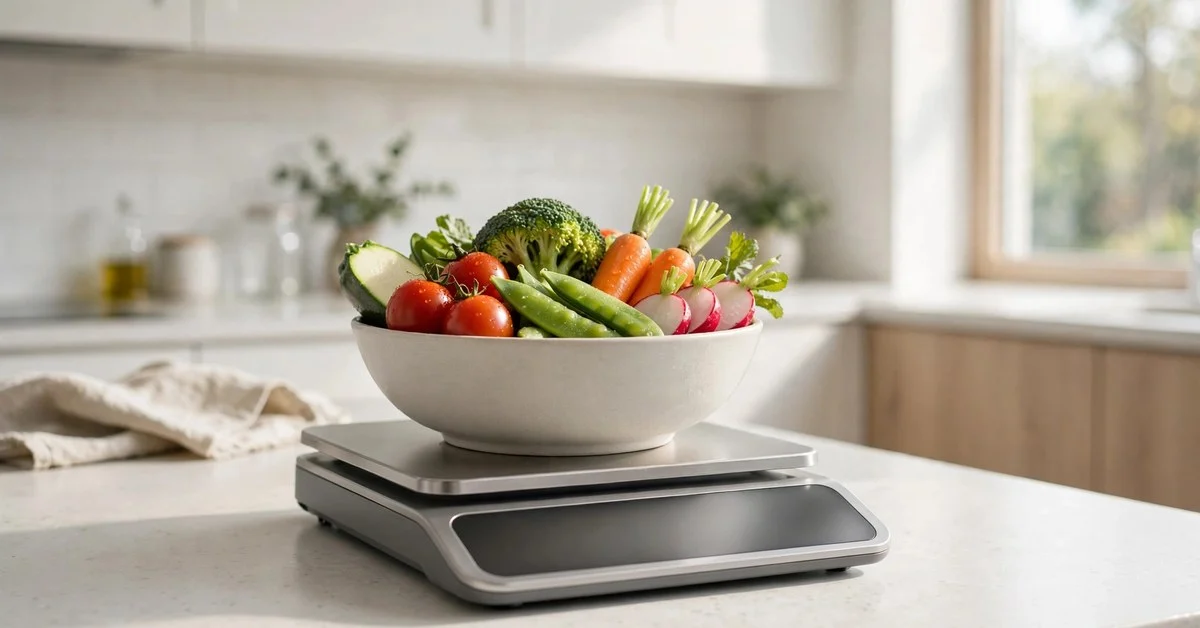
Airlines love the number 7. Many carriers cap your cabin bag at exactly 7 kilograms, which is why this weight keeps popping up on packing lists, workout plans, and luggage tags. Seven kilograms equals about 15.4 pounds — roughly the heft of a large watermelon, a 15-pound dumbbell, or two gallon jugs of milk. If you are asking what weighs 7kg, the short answer is: plenty of ordinary things you already lift every week. The question comes up when you are packing a carry-on, picking a kettlebell, or comparing bags of pet food at the store. Getting a feel for how heavy 7kg is also helps with shipping estimates and baggage limits, where a kilogram or two decides whether you pay extra. Below you will find 15 everyday items that weigh about 7 kilograms, a quick conversion chart, and simple tricks for picturing this weight without a scale.
7kg Conversion Chart
| Unit | Converted Value |
|---|---|
| Ounces | ≈ 246.92 oz |
| Pounds | ≈ 15.43 lb |
| Grams | 7,000 g |
| Kilograms | 7 kg |
Common Objects That Are About 7kg
| Object | Approximate Weight |
|---|---|
| A 15-pound dumbbell | ≈ 6.8 kg |
| A 15-pound bag of charcoal | ≈ 6.8 kg |
| A 15-pound bag of dog food | ≈ 6.8 kg |
| A large watermelon | ≈ 7 kg |
| A bowling ball | 6.4–7.3 kg |
| A medium air fryer | ≈ 7 kg |
| A home sewing machine | 6–8 kg |
| An upright vacuum cleaner | ≈ 7 kg |
More Everyday Items Around 7kg
| Object | Approximate Weight |
|---|---|
| A large Thanksgiving turkey | 6–8 kg |
| An adult Maine Coon cat | 6–8 kg |
| A child car seat | 5–8 kg |
| A desktop PC tower | 7–10 kg |
| Three reams of printer paper | ≈ 6.8 kg |
| A large sack of potatoes | ≈ 6.8 kg |
| Two gallons of milk | ≈ 7.7 kg |
How Heavy Is 7kg?
Seven kilograms sits in a sweet spot: heavy enough to notice, light enough for most adults to lift with one hand for a short distance. It feels substantial but not straining — think of carrying a bag of groceries from the car to the kitchen rather than hauling furniture. To place it on a mental scale, a 5 kg bag of rice is a little lighter and a bit easier to toss around, while a packed 10 kg suitcase is clearly a step up and usually needs two hands or a shoulder strap.
What makes 7 kg tricky to judge is shape. Seven kilograms of watermelon feels very different from 7 kilograms of printer paper: the watermelon is round and awkward, the paper is dense and compact. That is why the items below are so useful. They give your brain familiar packages to attach the number to, so the next time a label says 7 kg, you already know what to expect.
Easy ways to estimate 7kg in everyday life
- Picture two milk jugs: One gallon of milk weighs about 3.9 kg, so two full jugs land just over 7 kg. If you have carried two gallons home from the store, you know this weight.
- Think airline carry-on: Many airlines limit cabin bags to 7 kg. A packed carry-on that just passes the gate check is your built-in reference.
- Grab a gym dumbbell: A 15-pound dumbbell is 6.8 kg — nearly a perfect match. Hold one next time you are at the gym to calibrate your sense of 7 kg.
- Lift a watermelon: A large watermelon at the market usually weighs 6 to 8 kg. Hefting one gives you an instant, memorable feel for this weight.
- Check the label: Bags of charcoal, dog food, and potatoes print their exact weight. A 15-pound bag is 6.8 kg, close enough to stand in for 7 kg.
- Weigh your big cat: A large domestic cat, especially a Maine Coon, can weigh 6 to 8 kg. Scooping one up is a surprisingly accurate lesson in what 7 kg feels like.
1. A 15-Pound Dumbbell
This is the single best reference on the list. A 15 lb dumbbell converts to 6.8 kg, which is close enough to 7 kg that your muscles cannot tell the difference. Dumbbells are manufactured in exact pound increments, so the weight is precise rather than approximate. Almost everyone has held one at a gym, in a hotel fitness room, or in a friend’s garage setup. Because the weight is stamped right on the handle, there is no guessing involved. Next time you work out, pick up the 15-pounder and hold it for a few seconds. That effort in your forearm is exactly what 7 kg demands.
2. A 15-Pound Bag of Charcoal
Grilling charcoal is commonly sold in bags of about 15 pounds, or 6.8 kg. The bag is bulky and a little dusty, the kind of package you sling over one shoulder on the way to the backyard. Its weight is printed on the front, which makes it a reliable anchor rather than a guess. Most people have carried one during barbecue season, so the memory is easy to summon. If a parcel or piece of luggage feels like a full bag of charcoal, you are holding something close to 7 kg.
3. A 15-Pound Bag of Dog Food
Fifteen pounds is a standard mid-size bag for dry dog food, and it converts to about 6.8 kg. Pet owners lift this bag regularly — from the store shelf to the cart, from the car to the pantry. The printed weight on the packaging removes all doubt, and the slightly awkward rectangular shape is part of the memory. Because the bag is both heavy and bulky, it teaches you what 7 kg feels like in a real-world package rather than a compact gym weight. When you wonder how heavy 7kg is, picture your last trip down the pet food aisle.
4. A Large Watermelon
Few things say summer like thumping a watermelon to check for ripeness, and a large one typically weighs 6 to 8 kg. Its round shape makes the weight feel bigger than it is, since there is no handle and you have to cradle it with both arms. That awkwardness is exactly what makes it memorable. Grocery shoppers handle watermelons all season long, so the sensation is fresh in most people’s minds. If you want a quick calibration, pick up the biggest melon in the pile and hold it for a moment — you are feeling roughly 7 kg.
5. A Bowling Ball
Bowling balls top out at 16 pounds (7.3 kg) under the rules of the sport, and most adult house balls fall between 10 and 16 pounds. A 14 to 16-pound ball therefore sits right around 7 kg. The finger holes concentrate all that weight into your hand, which is why a bowling ball always feels heavier than it looks. Nearly everyone has bowled at least once, so the memory of swinging one down the lane is vivid. Lane balls also have their weights engraved on them, making this one of the most trustworthy references here.
6. A Medium Air Fryer
A typical 5-quart air fryer weighs roughly 7 kg (about 15 pounds). You notice it most when lifting the appliance in and out of a cabinet or carrying it to the counter. Air fryers have become standard kitchen gear over the last few years, so millions of people have a physical memory of this weight. The boxy shape and side handles make it a fair stand-in for other small appliances. If you are trying to judge whether a package or gadget weighs around 7 kg, ask yourself if it feels like hauling the air fryer.
7. A Home Sewing Machine
Most home sewing machines weigh between 6 and 8 kg. They are dense little machines — compact, but packed with metal parts — and many come with a built-in carrying handle that practically invites you to feel the weight. Crafters and anyone who took a home-economics class will recognize the solid heft. Because the machine is small relative to its weight, it also teaches an important lesson: 7 kg can hide in a surprisingly small package. That makes it a good reference for dense objects like tools and electronics.
8. An Upright Vacuum Cleaner
Many upright vacuums weigh about 15 pounds, or 6.8 kg. You push one around the house every week, tilt it back, and lift it over thresholds and up stairs. That repeated handling burns the weight into memory better than almost anything else on this list. The long handle gives you leverage, which is why the vacuum feels lighter in use than it does when you pick it up outright. For estimating purposes, think of the dead-lift moment when you carry it up a flight of stairs — that is 7 kg.
9. A Large Thanksgiving Turkey
A turkey big enough to feed a crowd usually weighs 14 to 18 pounds (6.4 to 8.2 kg). Anyone who has cooked one remembers the awkward transfer from refrigerator to roasting pan: slippery, unbalanced, and heavier than expected. Holiday cooking makes this a once-a-year reference, but a powerful one, because the memory involves both hands and full attention. If you are estimating the weight of a roast, a ham, or any large cut of meat, the Thanksgiving bird is your benchmark for the 7 kg zone.
10. An Adult Maine Coon Cat
Maine Coons are among the largest domestic cat breeds, with adult males typically weighing 6 to 8 kg. Picking one up is famously like lifting a small dog — there is a lot more cat than you expect. Cat owners know this weight intimately from daily scooping, vet visits, and lap sessions. The living, wriggling factor makes it harder to judge precisely, but the general heft is unmistakable. For a fun and furry way to learn what 7 kg feels like, find the biggest cat in the house.
11. A Child Car Seat
Convertible child car seats generally weigh between 5 and 8 kg before a child is even in them. Parents carry these seats daily — in and out of the car, up the porch steps, through parking lots. The bulky plastic shell and straps make the weight awkward to manage, which is why it sticks in memory. If you have ever lugged a car seat with one hand while holding a toddler with the other, you know exactly how demanding 7 kg can be. It is a great reference for any bulky, awkwardly shaped object.
12. A Desktop PC Tower
A standard desktop computer tower weighs roughly 7 to 10 kg. The steel case, power supply, and components pack a lot of mass into a box about the size of a small suitcase. Anyone who has set up a home office or moved a computer remembers the dense, compact lift. Because the weight is concentrated and the edges are sharp, a PC tower feels like serious business at 7 kg and up. Use it as your mental model for electronics, small machinery, and anything described as “surprisingly heavy for its size.”
13. Three Reams of Printer Paper
One ream of standard letter paper — 500 sheets — weighs about 2.3 kg. Stack three reams and you get roughly 6.9 kg, essentially 7 kg on the nose. Office workers know the weight of a single ream well; it is the unit that gets loaded into copiers and carried from supply closets. Three reams form a neat, dense brick that is easy to picture. This is the most mathematical reference on the list, and a handy one for estimating boxes of documents, books, or anything paper-based.
14. A Large Sack of Potatoes
A big sack of potatoes — about 15 pounds, or 6.8 kg — is a staple of grocery runs and market trips. The bag is lumpy and shifts as you carry it, which makes the weight feel alive in your hands. Shoppers in many countries buy potatoes in bulk sacks, so the experience is widespread. The printed weight on commercial sacks keeps the reference honest. When a bag of produce, soil, or animal feed feels like that sack of potatoes, you are in the 7 kg neighborhood.
15. Two Gallons of Milk
One US gallon of milk weighs about 3.9 kg (8.6 pounds), so two full jugs come to roughly 7.7 kg — just a splash over 7 kg. Almost everyone has carried milk home from the store, often one jug in each hand, which makes this reference beautifully balanced and familiar. The rigid handles and sloshing liquid are part of the sensory memory. For a quick mental estimate, picture two gallon jugs and pour a glass out of one. What is left is about 7 kg.
Frequently Asked Questions
How much is 7kg in pounds?
Seven kilograms converts to about 15.43 pounds. A quick mental shortcut is to double the kilograms and add ten percent: 7 × 2 = 14, plus 1.4, gives 15.4 pounds.
Is 7kg heavy to carry?
For most adults, 7 kg is noticeable but manageable — like a full grocery bag or a packed school backpack. It gets tiring over long distances, which is why airlines chose it as a typical carry-on limit.
What household item weighs closest to 7kg?
A 15-pound dumbbell at 6.8 kg is the closest common match. A large watermelon, a medium air fryer, and an upright vacuum cleaner are all within a few hundred grams of 7 kg too.
How heavy is 7kg compared to a gallon of water?
One US gallon of water weighs about 3.8 kg, so 7 kg is just under two gallons. Picture two gallon jugs with a little poured out of each.
See also: what weighs 10 kg.
Final Thoughts
So, what weighs 7kg? As you have seen, the answer touches nearly every room of the house — from the dumbbell in the garage to the watermelon in the kitchen to the vacuum in the closet. That is what makes 7 kilograms such a useful weight to internalize: it sits right at the boundary between “easy to carry” and “worth thinking about,” which is exactly where packing decisions, shipping costs, and workout choices live. The next time you see 7 kg on a label, skip the mental math and reach for one of these pictures instead. Whether it is two milk jugs, a big cat, or a 15-pound dumbbell, everyday objects turn an abstract number into something your hands already understand — no scale required. See also: what weighs 6 kg.

I’m Priya Sharma, a content writer at MeasureZit.com, specializing in measurements, unit conversions, and mathematical concepts. I turn technical topics into clear, accurate content that’s easy to understand. My focus is precision, clarity, and genuinely useful information.