Ten kilograms is the weight that changes how you lift — the packed suitcase, the car tire, the microwave. Ten kilograms equals 10,000 grams, about 22.05 pounds — roughly the weight of a packed carry-on suitcase. At twenty-two pounds, it demands two hands, a straight back, and a plan.
This is the benchmark weight of moving day and travel day. Luggage limits hover near it, gym equipment steps through it, and household appliances cluster around it. Once you know what weighs 10 kg, you can judge any lift before you commit your back to it — and pack a suitcase that sails through check-in. It is the weight where respect for your back becomes non-negotiable: lift smart, not just strong.
Conversion Chart
| Unit | Converted Value |
|---|---|
| Kilograms | 10 |
| Grams | 10,000 |
| Ounces | ≈ 352.74 |
| Pounds | ≈ 22.05 |
Common Objects That Are About 10 Kilograms
| Object | Approximate Weight |
|---|---|
| A 10-kg dumbbell | 10 kg |
| A 10-kg bag of rice | 10 kg |
| A car tire | ≈ 10 kg |
| A 10-liter jug of water | ≈ 10 kg |
| A microwave oven | ≈ 10–12 kg |
| A beagle | ≈ 10 kg |
| A 20-lb bag of dog food | ≈ 9.07 kg |
| A 20-lb bag of potatoes | ≈ 9.07 kg |
More Everyday Items Around 10 Kilograms
| Object | Approximate Weight |
|---|---|
| A packed carry-on suitcase | ≈ 7–10 kg |
| A full laundry basket | ≈ 8–10 kg |
| A case of 24 water bottles | ≈ 12 kg |
| A 2-year-old toddler | ≈ 12 kg |
| A medium pumpkin | ≈ 10 kg |
| A vacuum cleaner | ≈ 7–8 kg |
| A bag of cement | 10 kg |
What Weighs 10 Kg in Daily Life?
Ten kilograms is the weight of a packed carry-on at the airline limit — the lift that makes you grunt quietly and adjust your grip. It is well past one-handed territory for most people. Two hands, bent knees, committed lift: that is the 10-kilo protocol.
For scale, a vacuum cleaner at about 7 to 8 kilograms sits clearly under the mark, while a case of 24 water bottles at roughly 12 kilos sits over it. The 10-kilogram zone sits between them, nearest to the car tire at about ten kilos. It is also roughly the weight of two 5-kilo rice bags or about 22 pounds of anything — the conversions all point to the same familiar heft. Think “packed suitcase” and you are there.
Easy ways to estimate 10 kilograms in everyday life
- Lift a packed carry-on: A full carry-on suitcase runs 7 to 10 kilos — the airline-limit lift everyone knows. That overhead-bin heave is the 10-kilo experience.
- Roll a car tire: A passenger tire weighs about 10 kilos. The garage classic is awkward, round, and exactly the weight.
- Hoist a rice sack: The 10-kg rice bag is the pantry heavyweight — the two-armed hug from the market.
- Picture a beagle: A healthy beagle weighs about 10 kilos. Dog owners lift this weight every vet visit.
- Double 5 kilos: Two 5-kg rice bags make 10 kilos exactly. And it sits between 6 kilograms and 7 kilograms doubled — the scale stays tidy.
- Think 22 pounds: For imperial minds, 10 kilos is 22 pounds — the number on every luggage scale. That conversion is worth memorizing before any trip.
- Check the dumbbell rack: Gym dumbbells are labeled in kilos. Find the 10, grip it with both hands, and lift carefully — that labeled iron is the most honest 10-kilo teacher there is.
1. A 10-Kg Dumbbell
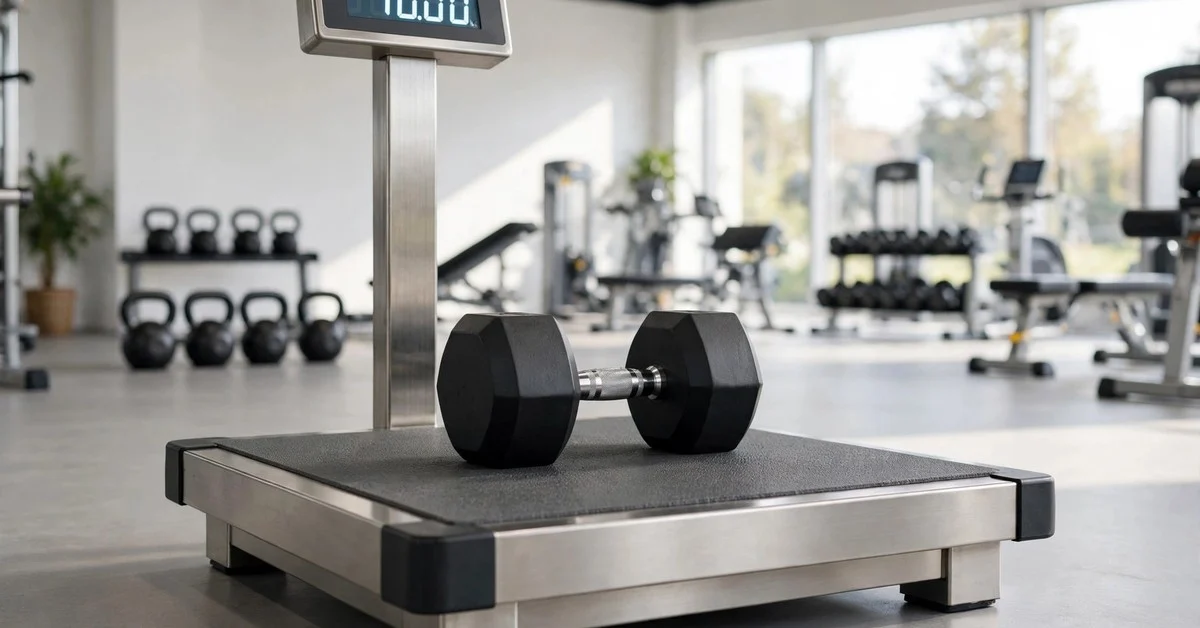
The 10-kilogram dumbbell is a gym workhorse — heavy enough for real strength work, standard enough to be everywhere. It is manufactured to exact mass and racked in every fitness center. Lifters know this weight by feel.
Grip it and feel the serious pull — that is ten kilograms of iron demanding respect. This is the definitive 10-kg reference because it is labeled, certified, and designed to be lifted. The single dumbbell teaches the unit; a pair teaches what twenty kilos feels like.
2. A 10-Kg Bag of Rice
The 10-kilogram rice sack is the bulk-buy heavyweight — the market staple that feeds a family for a month or more. It is the standard large size across Asia, Africa, and Latin America. The weight is printed on every sack.
Hug the sack to your chest and feel its massive, shifting weight — that is ten kilos. This is how 10 kilograms is most often encountered in daily life: the market trip, the shoulder carry, the careful placement on the kitchen floor. Nobody forgets this lift.
3. A Car Tire
A standard passenger car tire weighs about 10 kilograms — rubber, steel belts, and bead wire in a heavy ring. Mechanics roll, lift, and stack these all day. It is the garage’s unit weight.
Try lifting one and feel the awkward, dense ring — that is ten kilos in its most unwieldy form. The tire is memorable because the shape fights you: the weight is the same as the dumbbell, but the handling is completely different. Form matters as much as mass.
4. A 10-Liter Jug of Water
Ten liters of water weigh exactly ten kilograms — the liter-kilo identity at scale. The big office cooler bottle or the camping jerry can is the everyday form. Water’s density makes this exact.
Try lifting the full jug and feel the sloshing, committed weight — that is ten kilos by definition. This reference is scientifically perfect: ten cubic decimeters of water, ten kilograms, no debate. It is the standard against which all other 10-kilo estimates can be checked.
5. A Microwave Oven
A countertop microwave weighs 10 to 12 kilograms — the magnetron and transformer make it dense. It is the kitchen appliance everyone has moved at least once. The weight surprises first-time movers.
Unbox one and feel the compact, boxy heft — about ten kilos. This reference is universal because microwaves are everywhere and moving one is a shared experience. The awkward shape plus real weight is the classic 10-kilo challenge: plan the grip before the lift.
6. A Beagle
A healthy adult beagle weighs about 10 kilograms — the breed standard sits at 9 to 11. Vets weigh them routinely, so the figures are solid. It is the canine kilo-times-ten.
Lift a beagle that wants to stay on the ground and you are wrestling ten kilos of cheerful resistance. This is the most delightful reference on the list: the weight wiggles, licks, and leans. Dog owners develop a precise 10-kilo sense from vet visits and car rides.
7. A 20-Lb Bag of Dog Food
A 20-pound bag of dog food weighs 9.07 kilograms — just under ten kilos. It is the standard large size, designed to be carried from store to car to pantry. Pet owners buy it on repeat.
Shoulder the bag and feel the kibble shifting inside — nearly ten kilos. This reference bridges the imperial and metric systems: the 20-pound bag is America’s almost-10-kilos. The small shortfall barely registers, making it an excellent everyday teacher.
8. A 20-Lb Bag of Potatoes
A 20-pound sack of potatoes weighs 9.07 kilograms — the produce counterpart to the dog food bag. It is the standard bulk size at warehouse stores. The lumpy contents make the carry interesting.
Heft the sack and feel its earthy, uneven weight — nearly ten kilos. Like the dog food bag, this is the imperial almost-10-kilos. Farmers’ market shoppers and bulk buyers know this lift: two hands, straight back, into the trunk.
9. A Packed Carry-On Suitcase
A packed carry-on suitcase weighs 7 to 10 kilograms — airlines cap cabin bags around this range, so travelers pack to it. The familiar rectangle is the travel icon. Everyone who flies knows this lift.
Heave it into the overhead bin and feel the strain — that is up to ten kilos at arm’s length. This is the most widely experienced 10-kilo reference on Earth: millions perform this lift weekly. The overhead press with luggage is the unofficial 10-kilo fitness test.
10. A Full Laundry Basket
A full basket of dry laundry weighs 8 to 10 kilograms — clothes are lighter than they look, but a heaped basket adds up. Wet laundry weighs considerably more. It is the household’s weekly weight.
Carry the heaped basket to the machine and feel its bulky, soft weight — nearly ten kilos. This reference is a domestic ritual: the laundry trip teaches the weight without anyone noticing. The bulky shape makes ten kilos feel bigger than the dumbbell’s ten.
11. A Case of 24 Water Bottles
A shrink-wrapped case of 24 half-liter bottles weighs about 12 kilograms — two kilos over our target. The plastic, water, and packaging add up fast. It is the warehouse-store staple.
Try lifting the case and feel its substantial, slab-like weight — clearly more than ten kilos. This is the “step up” reference: it shows what twelve kilos feels like next to ten. The flat, awkward shape makes the extra two kilos very noticeable.
12. A 2-Year-Old Toddler
An average 2-year-old weighs about 12 kilograms — two kilos over our target, though smaller toddlers sit nearer ten. Pediatric growth charts track this closely. It is the parental unit of weight.
Scoop up a toddler and feel the warm, squirming weight — a bit more than ten kilos. Parents develop the most accurate weight sense of anyone, calibrated by daily lifting. The living, moving load teaches ten kilos better than any static object.
13. A Medium Pumpkin
A medium carving pumpkin weighs about 10 kilograms — the Halloween standard. Pumpkins are sold by size, and the medium grade clusters reliably here. It is autumn’s heavyweight.
Heft the ribbed orange sphere with both hands and feel its solid weight — that is ten kilos. The pumpkin is memorable because choosing one is already a lifting ritual: the patch, the compare, the carry to the car. That practiced heft is the 10-kilo sense.
14. A Vacuum Cleaner
A standard upright vacuum weighs 7 to 8 kilograms — clearly under our target. Canister models run lighter; heavy-duty ones heavier. It is the “step below” reference from the cleaning closet.
Push and lift the vacuum and feel its manageable weight — then imagine it about a third heavier. That mental addition lands at ten kilos. Everyone has wrestled a vacuum up stairs, so the baseline is universal. The shortfall teaches what “under ten kilos” feels like.
15. A Bag of Cement
Small bags of cement mix are sold in 10-kilogram sizes — the DIY standard for minor repairs. The dense gray powder packs its weight into a compact sack. Hardware stores stack them by the pallet.
Hoist the sack and feel its dead, dense weight — exactly ten kilos, no shifting or sloshing. This is the precision reference for the weight: manufactured, labeled, and utterly uniform. Builders know this lift intimately — it is the 10-kilo unit in its purest form.
Frequently Asked Questions
How many pounds is 10 kg?
Ten kilograms equals 22.046 pounds, usually rounded to 22 pounds. For travel and everyday use, “twenty-two pounds” is the conversion to remember.
What is a common 10 kg object?
A packed carry-on suitcase, a car tire, and a 10-kg bag of rice are the most common. A beagle, a microwave, and a 10-kg dumbbell are other familiar examples.
Is 10 kg heavy to lift?
For most adults it is a solid two-handed lift — manageable for short carries but tiring over distance. Proper form matters: bend the knees, keep the back straight, and hold the load close.
How many liters of water is 10 kg?
Ten liters exactly. A standard 10-liter water jug weighs 10 kilograms, which is why offices and campsites use them as informal weight standards.
Can I check in 10 kg of luggage?
Most airlines allow 7 to 10 kg for cabin bags, while checked baggage is usually 20 to 32 kg. Ten kilos fits comfortably within standard carry-on limits on most carriers.
See also: what weighs 1 kg. See also: what weighs 5 kg.
Final Thoughts
So, what weighs 10 kg? A packed suitcase, a car tire, a beagle, or a bag of cement — twenty-two pounds that asks for two hands and a straight back. These everyday objects turn the number into a lift your body already understands.
The next time you heave a suitcase into an overhead bin or hug a rice sack at the market, notice the effort consciously. That small moment of attention calibrates your sense of ten kilograms — and makes every future lift, from furniture to luggage, a decision your body makes with confidence. Respect the weight, plan the grip, and ten kilos becomes manageable instead of intimidating. Ten kilos is honest work for your muscles — give it the respect it has earned.

I’m Dane Whitfield, a content writer at MeasureZit.com, where I specialize in creating clear, accurate articles on measurements, unit conversions, and mathematical concepts. I enjoy breaking down complex numerical topics into simple, practical explanations that readers can actually use. My goal is always precision and clarity helping people make sense of the numbers around them.