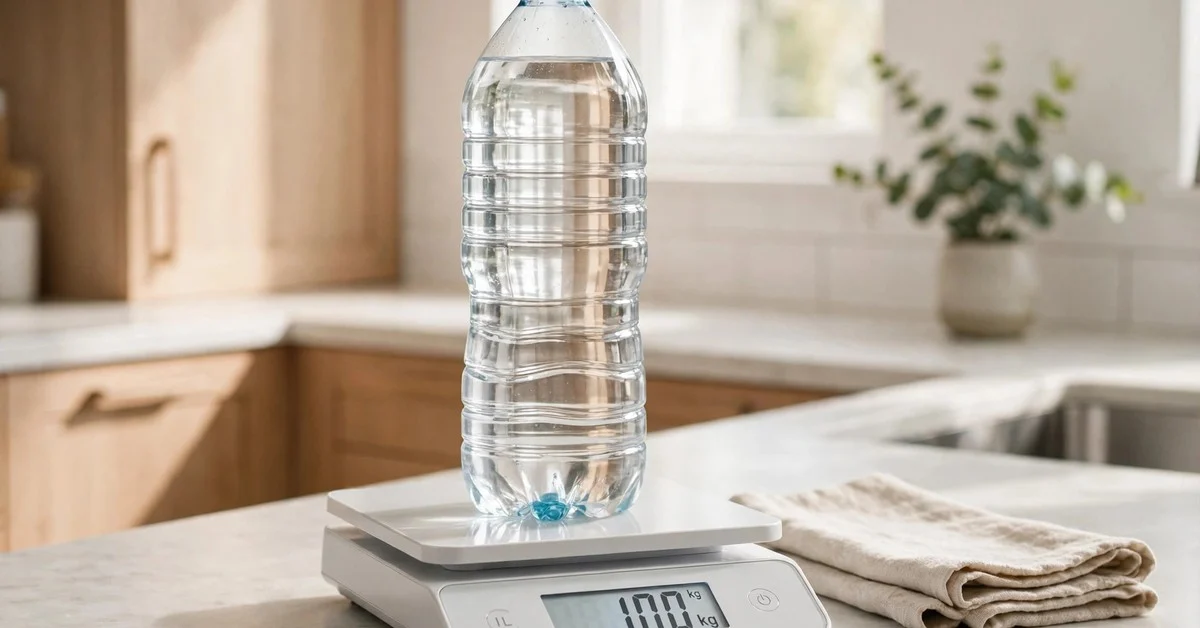
One kilogram is the weight the metric world runs on — the bag of sugar, the liter of water, the dumbbell at the gym. One kilogram equals exactly 1,000 grams, or 2.20 pounds — about the weight of a liter of water. It is light enough to lift with one hand, yet heavy enough to notice.
This is the base unit of everyday weighing across most of the planet. Groceries are sold by the kilo, luggage limits are set in kilos, and recipes outside the US measure in grams and kilograms. Once you know what weighs 1 kg, the entire metric system starts feeling intuitive instead of foreign. A kilogram is also the weight most of the world’s commerce is built on, from produce markets to parcel scales.
Conversion Chart
| Unit | Converted Value |
|---|---|
| Kilograms | 1 |
| Grams | 1,000 |
| Ounces | ≈ 35.27 |
| Pounds | ≈ 2.20 |
Common Objects That Are About 1 Kilogram
| Object | Approximate Weight |
|---|---|
| A liter of water | 1 kg (exact) |
| A 1-kg bag of sugar | 1 kg |
| A 1-kg bag of rice | 1 kg |
| A pineapple | ≈ 1 kg |
| A 1-kg dumbbell | 1 kg |
| A 1-kg bag of coffee beans | 1 kg |
| A liter of milk | ≈ 1.03 kg |
| A thick dictionary | ≈ 1 kg |
More Everyday Items Around 1 Kilogram
| Object | Approximate Weight |
|---|---|
| A pair of running shoes | ≈ 700 g |
| A dozen eggs | ≈ 600 g |
| A 2-lb bag of flour | ≈ 907 g |
| A small laptop | ≈ 1.2 kg |
| A bottle of wine | ≈ 1.25 kg |
| A soccer ball | ≈ 430 g |
| A 3-lb bag of apples | ≈ 1.36 kg |
What Weighs 1 Kg in Daily Life?
One kilogram is the weight of a full liter bottle of water — a comfortable one-handed lift with real substance. It is heavier than most people expect from the number “one,” which is why the liter-bottle test surprises first-timers. That solid, sloshing weight is the metric base unit.
For scale, a pair of running shoes at about 700 grams sits clearly under the mark, while a small laptop at roughly 1.2 kilograms sits just over it. The 1-kilogram zone sits between them, nearest to the pineapple at about a kilo. Think “liter bottle” and you have it exactly.
Easy ways to estimate 1 kilogram in everyday life
- Lift a liter bottle: One liter of water weighs exactly one kilogram — the definition is built on it. Every water bottle is a certified 1-kg reference.
- Grab a bag of sugar: Sugar is sold in 1-kg bags in most of the world. The paper brick in the baking aisle is the grocery standard.
- Hold a pineapple: A typical pineapple weighs about a kilogram. The spiky fruit is nature’s kilo, always in the produce section.
- Picture a dumbbell: Gyms stock 1-kg dumbbells for beginners and rehab. The small hexagonal weight is the fitness kilo.
- Stack up to bigger weights: Six of these make 6 kilograms, and seven make 7 kilograms. Mastering the single kilo unlocks the whole scale.
- Think 2.2 pounds: For imperial thinkers, a kilogram is 2.2 pounds — a little more than two pounds of anything. That conversion bridges both systems.
- Weigh your groceries: Most produce scales show kilograms. Toss a bag of apples on one and watch for the 1.00 reading — that is your kilo, straight from the store.
1. A Liter of Water
One liter of water weighs exactly one kilogram — this is not a coincidence but the historical definition of the kilogram. A liter is a cubic decimeter, and a cubic decimeter of water at its densest defines the mass. The bottle in your fridge is metrology in action.
This is the ultimate 1-kg reference because it is exact by definition. Lift a full liter bottle and feel its cool, shifting weight — that is one kilogram, no approximation. Scientists, cooks, and travelers all use this identity, and it never varies anywhere on Earth.
2. A 1-Kg Bag of Sugar
Sugar is sold in 1-kilogram bags across most of the world — the paper brick that anchors the baking aisle. Manufacturers target the round metric number, and the weight is printed boldly on the front. It is the grocery kilo.
Hold the bag and feel its dense, granular weight — that is one kilogram of sweetness. This reference is valuable because it is how the kilo is actually bought and sold. When a recipe calls for a kilo of anything, picture this bag and you have the scale.
3. A 1-Kg Bag of Rice
Rice is another staple sold in 1-kilogram bags — the standard small size in markets worldwide. The sealed plastic brick is dense and uniform, making it an excellent heft reference. Families buy this size weekly.
Lift the bag and feel how compact a kilogram can be — rice packs its weight into a small brick. This reference teaches density alongside weight: a kilo of rice looks much smaller than a kilo of marshmallows. Same mass, wildly different volume.
4. A Pineapple
A typical pineapple weighs about one kilogram, though large ones reach 1.5. The fruit’s size is naturally constrained, so the average clusters reliably around the kilo. It is the produce aisle’s metric mascot.
Hold the spiky, fragrant fruit and feel its solid weight — that is nature’s kilogram. The pineapple is memorable because it engages every sense: rough skin, sweet smell, golden heft. When you need a kilo estimate among fresh foods, grab the pineapple.
5. A 1-Kg Dumbbell
Gyms manufacture 1-kilogram dumbbells for beginners, rehabilitation, and warm-ups. The small hexagonal or vinyl-coated weight is a fitness staple. Its mass is certified, since training weights are quality-controlled.
Grip the little dumbbell and feel its honest, balanced weight — that is one kilogram of iron. This reference is perfect for active people: the gym kilo is encountered in every workout. It also scales beautifully — the rack marches upward in tidy kilogram steps.
6. A 1-Kg Bag of Coffee Beans
Coffee is commonly sold in 1-kilogram bags — the standard for serious home brewers and small cafes. The valve-sealed bag keeps beans fresh, and the weight is printed on every package. It replaced smaller bags as home brewing grew.
Hold the bag and feel the dense, pebbly weight of a kilo of beans — rich and substantial. Coffee lovers handle this package regularly, making it a living reference. It also demonstrates how a kilo of something aromatic and valuable feels worth more than its weight suggests.
7. A Liter of Milk
A liter of milk weighs about 1.03 kilograms — just over the kilo, since milk is slightly denser than water. The carton is a fridge staple worldwide, and the liter is the standard size. That extra 30 grams is barely noticeable.
Lift the carton and you are holding essentially one kilogram. This reference is useful because milk is handled daily in most households — pouring cereal is a kilo lesson in disguise. The tiny excess over water’s kilo also teaches that density tweaks weight.
8. A Thick Dictionary
A thick paperback dictionary weighs about one kilogram — roughly a thousand pages of thin paper plus covers. Reference books cluster around this weight because publishers target portable sizes. It is the student’s kilo.
Hold the book and feel its dense, page-packed weight — that is a kilogram of knowledge. This reference works because books are intimate: you hold them for hours while studying. That familiar hand-feel, about a kilo, calibrates your sense effortlessly.
9. A Pair of Running Shoes
A pair of adult running shoes weighs about 700 grams — roughly 0.7 kilograms, clearly under our target. Each shoe contributes around 350 grams of foam, rubber, and mesh. Racing flats run lighter; trail shoes heavier.
Hold the pair and feel their airy, cushioned lightness — then imagine them about forty percent heavier. That mental step lands at one kilogram. Runners have this reference on their feet daily, and the shortfall teaches what “under a kilo” feels like.
10. A Dozen Eggs
Twelve large eggs weigh about 600 grams — roughly 0.6 kilograms. Each egg contributes 50 to 57 grams, and the carton adds a little more. It is breakfast’s built-in weight set.
Lift the carton and feel its fragile, balanced weight — a bit more than half a kilo. This reference is universal: nearly every kitchen holds a dozen eggs weekly. Mentally add two-thirds more and you reach the kilogram — a practical scaling exercise.
11. A 2-Lb Bag of Flour
A 2-pound bag of flour weighs 907 grams — just under a kilogram. It is the standard small flour size in the US, sitting slightly shy of the metric round number. Bakers in both systems meet this package.
Hold the soft paper bag and feel its powdery weight — nearly a kilo. This reference bridges the imperial and metric worlds: the 2-pound bag is America’s almost-kilo. The 93-gram shortfall is small enough that the bag still teaches the kilo’s feel.
12. A Small Laptop
A small ultraportable laptop weighs about 1.2 kilograms — just over our target. Manufacturers chase lightness, so 1.1 to 1.3 is the modern range for 13-inch machines. The weight is published in every spec sheet.
Lift the closed laptop and feel its slim, dense weight — a touch more than a kilo. This is the “just over” reference for the digital age: millions lift one daily. The slight excess draws the upper boundary of the kilo zone.
13. A Bottle of Wine
A standard 750-ml bottle of wine weighs about 1.25 kilograms full — the glass bottle contributes nearly half. Wine bottles are heavy by design, protecting their contents. It is the dinner party’s kilo-plus.
Hold the bottle by the neck and feel its substantial weight — clearly more than a kilogram. This reference is memorable because wine bottles are handled ceremonially. The extra quarter-kilo teaches what “over the kilo” feels like in a familiar shape.
14. A Soccer Ball
A regulation soccer ball weighs 410 to 450 grams — roughly 0.43 kilograms, less than half our target. The leather panels and bladder are specified by the laws of the game. It is the light end of this list.
Hold the ball and feel how little a kilo’s fraction weighs in something so large — then imagine it more than twice as heavy. That mental doubling lands at one kilogram. The soccer ball teaches the weight-volume lesson vividly: big does not mean heavy.
15. A 3-Lb Bag of Apples
A 3-pound bag of apples weighs about 1.36 kilograms — roughly a third over our target. It is the standard small produce bag, holding six to eight apples. The weight is printed on every bag.
Hoist the bag and feel its round, shifting weight — clearly more than a kilo. This is the “step up” reference from the produce aisle. Comparing it with the single pineapple above maps the kilo’s neighborhood: one pineapple is the kilo, the bag is the kilo-plus.
Frequently Asked Questions
How many pounds is 1 kg?
One kilogram equals 2.20462 pounds, usually rounded to 2.2 pounds. For everyday purposes, “two-point-two pounds” is the conversion to remember.
What is the easiest way to picture 1 kg?
Lift a full 1-liter bottle of water — it weighs exactly one kilogram. It is the simplest, most exact reference available anywhere.
Is 1 kg a lot of weight?
It is moderate — about as heavy as a bag of sugar or a pineapple. Most adults can lift it with one hand easily, but carrying several kilos for distance becomes real work.
How much water is 1 kg?
Exactly one liter. Since a liter of water defines the kilogram, the two are interchangeable — one liter of water always weighs one kilogram, anywhere on Earth.
How many ounces are in 1 kg?
One kilogram equals about 35.27 ounces. Since there are about 28.35 grams in an ounce, dividing 1,000 by 28.35 gives the ounce count.
See also: what weighs 5 kg. See also: what weighs 10 kg.
Final Thoughts
So, what weighs 1 kg? A liter of water, a bag of sugar, a pineapple, or a small dumbbell — the metric system’s home base, weighing 2.2 pounds. These everyday objects make the kilogram tangible instead of theoretical.
The next time you lift a water bottle or grab a bag of sugar, notice the weight consciously. That single moment of attention turns a daily habit into a calibrated sense of the kilogram — and makes every metric measurement you meet from now on feel like common sense. One kilo is the foundation; grams below it and multi-kilo weights above it all become easier once this unit lives in your hand. That is the metric system demystified: one familiar weight at a time.

I’m Owen Reeves, a content writer at MeasureZit.com, specializing in measurements, unit conversions, and mathematical concepts. I turn technical topics into clear, accurate content that’s easy to understand. My focus is precision, clarity, and genuinely useful information.










