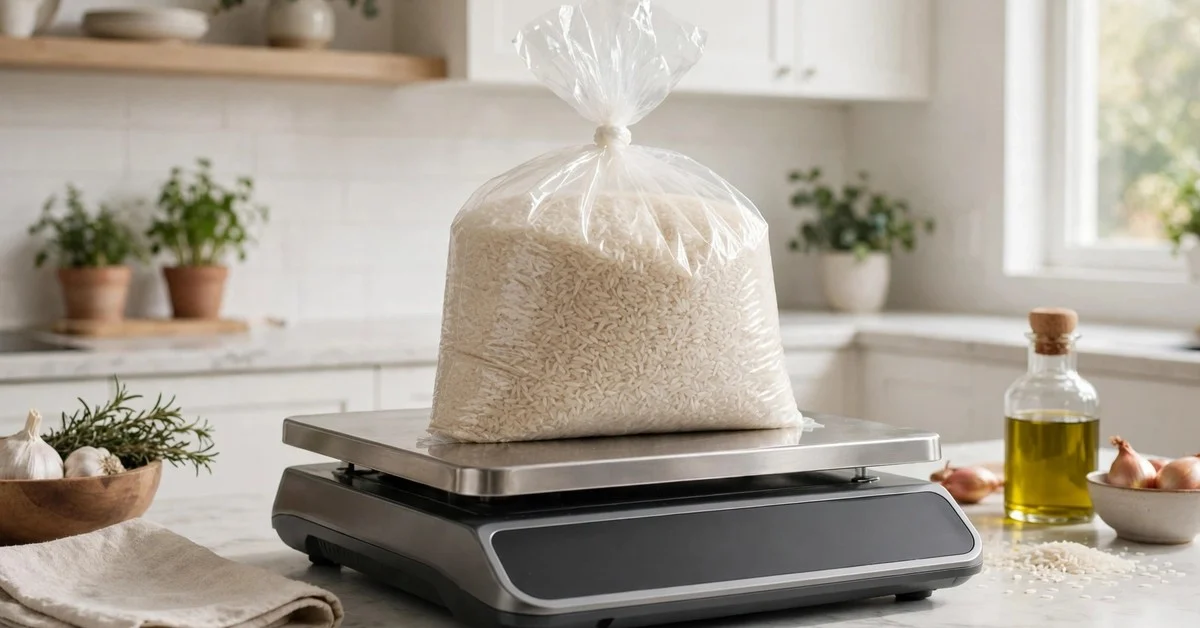
Five kilograms is the weight that makes you use two hands — the big bag of rice, the loaded grocery bag, the dumbbell that means business. Five kilograms equals 5,000 grams, about 11.02 pounds — roughly the weight of a large bag of rice. At eleven pounds, it is firmly in “carry it, don’t toss it” territory.
This is the workhorse weight of daily life. Pet food, rice, and flour come in 5-kilo bags; gym dumbbells step through 5 kilos; and luggage scales start mattering around this range. Once you know what weighs 5 kg, hauling groceries and packing bags gets a lot more predictable. It is also the size where metric and imperial thinking meet — eleven pounds, five kilos, one very full bag.
Conversion Chart
| Unit | Converted Value |
|---|---|
| Kilograms | 5 |
| Grams | 5,000 |
| Ounces | ≈ 176.37 |
| Pounds | ≈ 11.02 |
Common Objects That Are About 5 Kilograms
| Object | Approximate Weight |
|---|---|
| A 5-kg bag of rice | 5 kg |
| A 5-kg dumbbell | 5 kg |
| A 5-liter jug of water | ≈ 5 kg |
| An average house cat | ≈ 4.5 kg |
| A large watermelon | ≈ 5 kg |
| A medium turkey | ≈ 5 kg |
| A gallon of paint | ≈ 5 kg |
| A 10-lb bag of potatoes | ≈ 4.54 kg |
More Everyday Items Around 5 Kilograms
| Object | Approximate Weight |
|---|---|
| A bowling ball | ≈ 5–7 kg |
| Two reams of copy paper | ≈ 5 kg |
| A 10-lb bag of dog food | ≈ 4.54 kg |
| A gallon of milk | ≈ 3.9 kg |
| A car tire | ≈ 10 kg |
| A small bag of charcoal | ≈ 4 kg |
| A microwave oven | ≈ 10–12 kg |
What Weighs 5 Kg in Daily Life?
Five kilograms is the weight of a big bag of rice hugged against your chest — a committed two-handed carry. It is heavy enough to make you plan the trip from car to kitchen, but light enough that most adults manage it without strain. That is the 5-kilo zone.
For scale, a gallon of milk at about 3.9 kilograms sits clearly under the mark, while a car tire at roughly 10 kilograms is about double. The 5-kilogram zone sits between them, nearest to the house cat at around 4.5 kilos. Think “bag of rice” and you have it exactly.
Easy ways to estimate 5 kilograms in everyday life
- Hug a rice bag: The 5-kg bag of rice is the definitive reference — labeled, standardized, and carried home weekly by millions of families.
- Lift a dumbbell: Gyms stock 5-kg dumbbells as the first “real” weight. One in each hand is the classic farmer’s carry.
- Picture a cat: An average house cat weighs about 4.5 kilos. If you have ever lifted a reluctant cat, you know this weight intimately.
- Hoist a watermelon: A large watermelon runs about 5 kilos. The summer picnic staple is nature’s 5-kg weight.
- Count up from 1 kilo: Five liter-bottles of water make 5 kilos exactly. And a 6-kilogram object is just one bottle more — the scale builds neatly.
- Think 11 pounds: For imperial minds, 5 kilos is 11 pounds — just over the 7-pound mark by half again. That conversion anchors both systems.
1. A 5-Kg Bag of Rice
The 5-kilogram bag of rice is the pantry heavyweight — the sealed sack that feeds a family for weeks. It is the standard bulk size in markets worldwide, and the weight is printed on every bag. This is the kilo scaled up to real life.
Hoist the sack and feel its dense, shifting weight — that is five kilograms. This is the best reference because it is how 5 kilos is actually bought, carried, and stored. The trip from the store shelf to the car to the kitchen shelf is a 5-kilo workout everyone knows.
2. A 5-Kg Dumbbell
The 5-kilogram dumbbell is the gym’s first serious weight — past the warm-up sizes, into real training. It is manufactured to exact mass and found in every fitness center on Earth. Beginners graduate to it; experienced lifters warm up with it.
Grip one in each hand and feel the honest pull on your arms — that is five kilograms per side. This reference is perfect for active people because it is encountered in every workout. It also anchors the dumbbell rack: everything heavier is measured against this familiar step.
3. A 5-Liter Jug of Water
Five liters of water weigh exactly five kilograms — the liter-to-kilo identity scaled up. The big office-cooler jug or the camping water carrier is the everyday form. Water’s density makes the math perfect.
Lift the jug by its handle and feel the sloshing, committed weight — that is five kilos. This reference is exact by definition, like the liter bottle. Campers, office workers, and anyone who has lugged water knows this carry: two hands, straight back, short trip.
4. An Average House Cat
An average adult house cat weighs about 4.5 kilograms — just under our target. Vets weigh cats routinely, so the figures are well documented. Big males reach 5 or 6 kilos; petite females sit near 3.5.
Lift a cat that does not want to be lifted and you are wrestling about five kilos of muscle and attitude. This is the most memorable reference on the list because it is alive — the weight shifts, resists, and purrs. Cat owners have a calibrated 5-kilo sense built from daily handling.
5. A Large Watermelon
A large watermelon weighs about 5 kilograms, with prize specimens reaching far more. The melon’s size is naturally constrained, so big ones cluster reliably around this weight. It is summer’s heavyweight.
Heft the melon with both hands and feel its cool, round density — that is five kilos of fruit. The watermelon is a great reference because selecting one is already a weighing ritual: shoppers thump and lift, judging weight by feel. That practiced heft is the 5-kilo sense in action.
6. A Medium Turkey
A medium Thanksgiving turkey weighs about 5 kilograms (11 pounds) — the classic holiday bird. Turkeys are sold by weight, and the 10-to-12-pound range is the most popular size. Butchers know this bird by heart.
Lift the wrapped bird and feel its substantial, awkward weight — that is five kilos. This reference is seasonal but powerful: millions handle exactly this weight once a year. The two-handed, careful carry from counter to roasting pan is the 5-kilo maneuver everyone recognizes.
7. A Gallon of Paint
A gallon of paint weighs about 5 kilograms — the can is a hardware-store icon. Paint is dense, so the gallon can feels heavier than its size suggests. Professionals buy it by the gallon because coverage math is built on it.
Hoist the can by its wire handle and feel the concentrated weight swinging at your side — that is five kilos. DIYers know this carry well: the paint can is the home-improvement kilo-times-five. It also teaches density — a gallon of paint outweighs a gallon of milk easily.
8. A 10-Lb Bag of Potatoes
A 10-pound bag of potatoes weighs 4.54 kilograms — just under five kilos. It is the standard produce-bag size, and the weight is printed on every sack. The lumpy contents shift as you carry it.
Shoulder the sack and feel its earthy, uneven weight — nearly five kilos. This reference bridges the imperial and metric worlds: the 10-pound bag is America’s almost-5-kilos. The half-kilo shortfall is small enough that the sack still teaches the weight’s feel.
9. A Bowling Ball
Bowling balls range from about 5 to 7 kilograms (10 to 16 pounds), with house balls clustering in the middle. The weight is drilled into the ball’s choice — literally, since finger holes are custom. It is the sport’s variable standard.
Hoist a house ball and feel its dense, concentrated weight — around five kilos and up. This reference is fun because it is encountered as play: the approach, the swing, the release all calibrate your arm to the weight. Bowlers develop a precise 5-kilo sense without ever thinking about it.
10. Two Reams of Copy Paper
A ream of copy paper (500 sheets) weighs about 2.5 kilograms, so two reams total roughly 5 kilos. Offices buy paper by the ream, and the weight is consistent because paper is manufactured to tight specs. It is the workplace kilo-times-five.
Lift the two wrapped reams and feel their crisp, blocky weight — that is five kilos. Office workers know this carry: the supply-room trip with paper for the printer. It is a surprisingly good reference because the weight is so uniform and so frequently handled.
11. A 10-Lb Bag of Dog Food
A 10-pound bag of dog food weighs 4.54 kilograms — just under five kilos, like the potato sack. It is the standard small size, designed to be carried home easily. Pet owners buy it regularly.
Carry the bag by its handle and feel the kibble shifting inside — nearly five kilos. This reference is a weekly ritual for dog owners: the pet-store trip is a 5-kilo carry in disguise. The rustling, uneven load teaches the weight better than any static object.
12. A Gallon of Milk
A US gallon of milk weighs about 3.9 kilograms — clearly under our target at roughly four-fifths of five kilos. The plastic jug is a fridge icon worldwide. It is the “step below” reference.
Lift the jug and feel its familiar weight — then imagine it about a quarter heavier. That mental addition lands at five kilos. Everyone has carried milk home, so the baseline is universal. The shortfall teaches what “under five kilos” feels like in the most ordinary package.
13. A Car Tire
A standard passenger car tire weighs about 10 kilograms — roughly double our target. The rubber, steel belts, and rim mount add up fast. Mechanics handle this weight constantly.
Try lifting one and feel the awkward, heavy ring — that is two 5-kilos in one object. The tire is the “double” reference: it shows what five kilos feels like multiplied. Halve the tire’s weight in your mind and you land back at the rice bag.
14. A Small Bag of Charcoal
A small bag of barbecue charcoal weighs about 4 kilograms — a kilo under our target. The chunky briquettes pack loosely, so the bag is bulky for its weight. Summer grilling made it a seasonal staple.
Hoist the bag and feel its light-for-its-size weight — just under five kilos. This reference teaches volume versus weight beautifully: the big bag looks like it should weigh more. Mentally add a small bag of sugar and you reach five kilos exactly.
15. A Microwave Oven
A typical countertop microwave weighs 10 to 12 kilograms — about double our target. The magnetron, transformer, and steel case add up. It is the kitchen’s heavyweight appliance.
Try moving one and feel the dense, boxy weight — two 5-kilos in a single box. The microwave is the “double” reference from the kitchen: unbox one and you are handling what two rice bags weigh. Halve it mentally and the 5-kilo unit snaps into focus.
Frequently Asked Questions
How many pounds is 5 kg?
Five kilograms equals 11.023 pounds, usually rounded to 11 pounds. For everyday purposes, “eleven pounds” is the conversion to remember.
What is a common 5 kg object?
A 5-kg bag of rice is the most common — it is the standard bulk size worldwide. A 5-kg dumbbell, a large watermelon, and an average house cat are other familiar examples.
How many liters of water is 5 kg?
Five liters exactly. Because one liter of water weighs one kilogram, any 5-liter jug of water is a perfect 5-kilogram reference you can lift and feel.
Is 5 kg heavy to carry?
It is a solid two-handed carry for most people — like a big bag of rice or a full grocery bag. Most adults manage it comfortably for short distances, but it gets tiring over longer walks.
How many 5 kg bags make 25 kg?
Five — 25 divided by 5 is exactly 5. Airline checked-bag limits are often 23 to 32 kg, so thinking in 5-kilo bag units helps with packing math.
See also: what weighs 10 kg. See also: what weighs 1 kg.
Final Thoughts
So, what weighs 5 kg? A bag of rice, a dumbbell, a house cat, or a large watermelon — eleven pounds of real-world weight you carry more often than you realize. These familiar objects turn the number into a physical memory.
Next time you hoist the rice bag or lift the cat, pay attention to the weight. That small moment of awareness calibrates your sense of five kilograms — and makes every heavier lift, from luggage to furniture, easier to judge before you commit. Five kilos is also the perfect stepping stone: double it for ten, halve it for two and a half, and the metric scale starts feeling natural. Five kilos today, ten tomorrow — the scale only goes up from here.

I’m Priya Sharma, a content writer at MeasureZit.com, specializing in measurements, unit conversions, and mathematical concepts. I turn technical topics into clear, accurate content that’s easy to understand. My focus is precision, clarity, and genuinely useful information.










