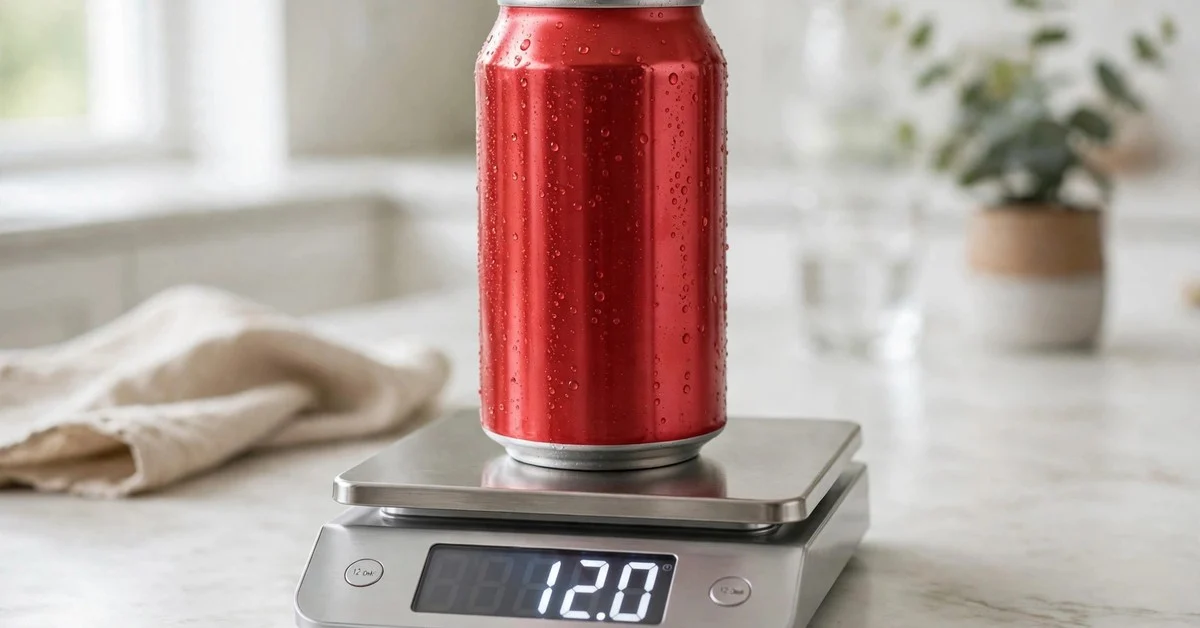
Twelve ounces is the weight you have been holding your entire life without naming it — the soda can, the coffee bag, the tall Starbucks cup. Twelve ounces equals 340.2 grams, exactly three-quarters of a pound — about the weight of a standard 12-ounce soda can. It is substantial in the hand and standard on the shelf.
This is one of the most standardized weights in consumer goods. Soda has been sold in 12-ounce cans for generations, coffee roasters settled on 12-ounce bags as the craft standard, and beer comes in 12-ounce cans and bottles. Learn how much 12 oz is and grocery aisles start reading like a familiar map. It is the weight of refreshment-break culture itself. Three-quarters of a pound, held a billion times a day.
Conversion Chart
| Unit | Converted Value |
|---|---|
| Ounces | 12 |
| Pounds | 0.75 |
| Grams | 340.19 |
| Kilograms | ≈ 0.34 |
Common Objects That Are About 12 Ounces
| Object | Approximate Weight |
|---|---|
| A standard soda can | 12 fl oz |
| A 12-oz bag of coffee | 12 oz |
| A 12-oz bag of chocolate chips | 12 oz |
| A Starbucks tall drink | 12 fl oz |
| A 12-oz steak | 12 oz |
| Three sticks of butter | 12 oz |
| Sixty US quarters | 340.20 g (exact) |
| A can of beer | 12 fl oz |
More Everyday Items Around 12 Ounces
| Object | Approximate Weight |
|---|---|
| A can of evaporated milk | 12 fl oz |
| A large grapefruit | ≈ 350 g |
| A can of chicken noodle soup | 10.75 oz |
| A bottle of water | 16.9 oz |
| A box of pasta | 16 oz |
| A can of coconut milk | 13.5 oz |
| A pint of ice cream | 16 oz |
How Much Is 12 Oz in Real Terms?
Twelve ounces is the weight of a full soda can — cold, condensation-covered, with real presence in your grip. It is three-quarters of the way to a pound: more than a snack, less than a brick. Your hand knows this weight from thousands of repetitions.
For scale, a can of chicken noodle soup at 10.75 ounces sits just under the mark, while a standard water bottle at 16.9 ounces sits clearly over it. The 12-ounce zone sits between them, nearest to the large grapefruit at about 350 grams. Think “soda can weight” and you will never be far off.
Easy ways to estimate 12 ounces in everyday life
- Hold a soda can: The classic 12-ounce can is the definitive reference — designed, labeled, and held by billions of hands daily.
- Picture a coffee bag: Craft coffee roasters sell 12-ounce bags as standard. The brick-shaped bag on the shelf is three-quarters of a pound of beans.
- Think tall Starbucks: A Starbucks “tall” is 12 fluid ounces. If you have ordered one, you have held this weight in a paper cup.
- Stack three butter sticks: Each stick is 4 ounces, so three in a row give you 12 ounces. The wrapper markings make this arithmetic visible.
- Halve it for 6 ounces: Half of 12 ounces is 6 ounces — two butter sticks or a petite steak. Knowing the 12-ounce unit unlocks its fractions.
- Remember it is three-quarters of a pound: Four of these make three full pounds, and it is a long way from 7 pounds. Fraction thinking turns ounces into pounds.
1. A Standard Soda Can
The 12-fluid-ounce soda can is the most handled 12-ounce object on Earth. Its dimensions — about 122 millimeters tall — have been standard since the 1960s, and the volume is printed on every can. Billions are lifted daily.
Hold a cold one and feel its familiar weight: that is twelve ounces of liquid plus a few grams of aluminum. This is the reference against which all others are judged, because everyone has held hundreds of them. The muscle memory in your hand already knows this weight — now it has a number.
2. A 12-Oz Bag of Coffee
Craft coffee roasters standardized on the 12-ounce bag — the brick-shaped package that dominates specialty shelves. It replaced the old 16-ounce pound as roasters adjusted to costs, and the weight is printed prominently. It is the modern coffee unit.
Pick up the bag and feel the dense, brick-like weight of whole beans — that is three-quarters of a pound. Coffee lovers handle this package weekly, making it a living reference. It also teaches density: twelve ounces of coffee looks like far less than twelve ounces of chips.
3. A 12-Oz Bag of Chocolate Chips
Baking chocolate chips are sold in 12-ounce bags — the standard size for a batch of cookies. The bag is designed around classic recipes that call for “one bag” of chips. Every major brand uses this size.
Hold the bag and feel the pebbly weight of hundreds of chips shifting inside — that is twelve ounces. Bakers meet this unit constantly, and the bag-to-recipe relationship makes it memorable: one bag, one batch, twelve ounces. It is portioning built into packaging.
4. A Starbucks Tall Drink
A Starbucks “tall” is 12 fluid ounces — the small size, despite the name suggesting otherwise. The cup is standardized across every store worldwide, and the volume is part of the brand’s identity. Millions are held every morning.
Wrap your hand around the paper cup and feel its warmth and weight — that is twelve ounces of coffee plus the cup. This reference works because it is a daily ritual for so many people. The morning cup is a 12-ounce lesson repeated until it is muscle memory.
5. A 12-Oz Steak
The 12-ounce steak is the hearty restaurant cut — the ribeye or New York strip for serious appetites. Steakhouses list it proudly because it signals generosity. Butchers portion it precisely since it commands a premium price.
Picture the thick cut on the plate, about the size of two palms — that is three-quarters of a pound of beef. It is an indulgent reference, but a useful one: the difference between the 8-ounce house cut and the 12-ounce upgrade is a weight you can feel before you order.
6. Three Sticks of Butter
Three standard sticks of butter total exactly 12 ounces — one and a half cups. Each stick contributes 4 ounces, and the trio is a common sight in holiday baking. The wrapper markings make the math visible.
Line up the three foil rectangles and you are looking at twelve ounces. This reference is valuable because it is additive and exact — no scale, no guessing. Big-batch bakers assemble this trio regularly, and each stick is a labeled 4-ounce building block.
7. Sixty US Quarters
Sixty quarters weigh exactly 340.20 grams — twelve ounces with no rounding, since each quarter is 5.67 grams. It is a hefty double handful of change. Coin rolls are built on this arithmetic.
Try holding sixty quarters: the weight presses firmly into both palms. This is the precision reference for 12 ounces — counting coins is counting grams. It is also a vivid demonstration of density: sixty small discs concentrate three-quarters of a pound into a surprisingly small pile.
8. A Can of Beer
Beer cans and bottles are standardized at 12 fluid ounces — the industry’s eternal unit. The weight is printed on every package, and the size has survived decades of packaging trends. It is the social standard.
Hold the cold can and feel its familiar heft — that is twelve ounces of beer plus aluminum. Like the soda can, this reference benefits from sheer repetition: most adults have held hundreds of them. The hand knows before the brain bothers to calculate.
9. A Can of Evaporated Milk
Evaporated milk is sold in 12-fluid-ounce cans — the small, squat tin found in every baking aisle. The size is traditional, matched to recipes that call for “one can.” It is denser than regular milk, so it weighs slightly more than 12 ounces.
Hold the compact can and feel its surprising density — that is about twelve ounces in a very small package. This reference teaches concentration: evaporation removed the water but kept the weight, packing three-quarters of a pound into a can shorter than a soda can.
10. A Large Grapefruit
A large grapefruit weighs about 350 grams — roughly 12.3 ounces, just over our target. Citrus is sold by size grade, and the large grade clusters reliably around this weight. It is the produce aisle’s heavyweight.
Cup the dimpled sphere in your palm and feel its juicy heft — that is essentially twelve ounces. The grapefruit is useful because it is round, familiar, and always in season somewhere. When you need a 12-ounce estimate among fresh foods, this is the one to grab.
11. A Can of Chicken Noodle Soup
A standard can of condensed chicken noodle soup holds 10.75 ounces — just over an ounce under our target. The iconic label has carried this weight for generations. It is the “just under” reference with a famous face.
Hold the can and feel its dense weight — then imagine it slightly heavier. That small mental addition lands you at twelve ounces. The soup can draws the lower boundary of the 12-ounce neighborhood, and its fame makes the comparison stick.
12. A Bottle of Water
A standard single-serve water bottle holds 16.9 fluid ounces (500 ml) — clearly over our target at just over a pound. It is the hydration standard, sold everywhere on Earth. The bottle plus water weighs about 17.5 ounces.
Hold the bottle and feel its substantial weight — noticeably more than twelve ounces. This is the “step up” reference: it shows what a full pound-plus feels like next to the three-quarter-pound can. The contrast sharpens your sense of where twelve ounces ends.
13. A Box of Pasta
A standard box of dried pasta weighs 16 ounces — one full pound, a third more than our target. The rectangular box is a pantry staple worldwide. It is the “pound” reference sitting next to the three-quarter-pound items.
Hold the box and feel its long, rigid weight — clearly more than twelve ounces. Comparing the pasta box with the coffee bag teaches an important skill: telling three-quarters of a pound from a full pound by feel. The difference is smaller than you expect, which is exactly why the skill matters.
14. A Can of Coconut Milk
A standard can of coconut milk holds 13.5 fluid ounces — about an ounce and a half over our target. The rich, creamy liquid is denser than water, so the can weighs a touch more than its volume suggests. It is a curry-night staple.
Hold the squat can and feel its dense weight — just over twelve ounces. This is the “barely over” reference, close enough that most hands could not tell the difference. It shows how tight the 12-ounce neighborhood is: a can and a half-ounce on either side still feels like the same weight.
15. A Pint of Ice Cream
A US pint of ice cream weighs 16 ounces — one pound, a third more than twelve ounces. The round carton is a freezer icon, and its weight is printed on every lid. It is the indulgent ceiling of this list.
Hold the frosty carton and feel its solid, cold weight — clearly more than twelve ounces. The pint draws the upper boundary: twelve ounces is the soda can, sixteen is the ice cream. Once you can feel that four-ounce gap, your hand has learned to weigh the grocery aisle.
Frequently Asked Questions
How many grams is 12 oz?
Twelve ounces equals 340.194 grams, usually rounded to 340.2 grams. For cooking and everyday use, “about 340 grams” is perfectly accurate.
Is 12 oz the same as 1.5 cups?
For water and similar liquids, 12 fluid ounces equals 1.5 cups. For weight ounces of dry ingredients, the cup equivalent depends on density — 12 ounces of flour is about 2.75 cups, while 12 ounces of sugar is about 1.7 cups.
What does 12 oz of meat look like?
Twelve ounces of meat is a hearty steak about the size of two palms, or roughly three-quarters of a pound of ground beef. It is a generous restaurant portion — most single servings are 4 to 8 ounces.
How many 12 oz cans are in a gallon?
A US gallon holds 128 fluid ounces, so about 10.7 twelve-ounce cans fill a gallon. In practice, roughly ten and two-thirds cans.
See also: what 1 oz looks like. See also: how much 2 oz is.
Final Thoughts
So, how much is 12 oz? It is a soda can, a bag of coffee, a tall Starbucks, or three sticks of butter — three-quarters of a pound you have been holding all your life. These familiar objects give the number a physical memory your hand already owns.
Next time you pick up a can or a coffee bag, pause and feel the weight consciously. That small moment of attention turns a lifetime of casual handling into a calibrated sense of twelve ounces — and makes every label, recipe, and portion built on it instantly understandable. You have been carrying this knowledge for years; now it finally has a number. That is the quiet power of a good reference: years of experience, finally named.

I’m Dane Whitfield, a content writer at MeasureZit.com, where I specialize in creating clear, accurate articles on measurements, unit conversions, and mathematical concepts. I enjoy breaking down complex numerical topics into simple, practical explanations that readers can actually use. My goal is always precision and clarity helping people make sense of the numbers around them.