How much is 6 oz? Pick up a chicken breast from the meat counter — that palm-size piece of poultry is one of the everyday items that weigh about 6 ounces. Six ounces equals 170 grams, or just over a third of a pound (0.375 lb). It is the weight diet plans, recipes, and restaurant menus return to again and again: a small steak, a piece of fish, a serving of pasta, a scoop of protein powder. Whether you are portioning dinner, meal-prepping for the week, reading a nutrition label, baking from a recipe, or wondering how big 6 ounces really is, this is the weight to know by feel. Learn it once and you will use it every single day in the kitchen.
Conversion Chart
| Unit | Converted Value |
|---|---|
| Ounces | 6 oz |
| Pounds | 0.375 lb |
| Grams | ≈ 170.1 g |
| Kilograms | ≈ 0.17 kg |
15 Everyday Items That Weigh About 6 Ounces
Common Objects That Weigh About 6 oz
| Item | Approximate Weight |
|---|---|
| 1. A Hockey Puck | 6 oz (official) |
| 2. A Smartphone | About 6–7 oz |
| 3. A Chicken Breast | About 6 oz |
| 4. A Small Sirloin Steak | 6 oz |
| 5. A Medium Apple | About 6 oz |
| 6. A Medium Orange | About 6 oz |
| 7. A Medium Potato | About 5–6 oz |
| 8. Three Large Eggs | About 6 oz |
More Everyday Items Around 6 oz
| Item | Approximate Weight |
|---|---|
| 9. A Billiard Ball | About 5.5–6 oz |
| 10. A Baseball | About 5–5.25 oz |
| 11. A Juice Box | About 6.75 oz |
| 12. A Medium T-Shirt | About 5–6 oz |
| 13. A Paperback Book | About 6–8 oz |
| 14. A Bar of Soap | About 5–6 oz |
| 15. A Yogurt Cup | About 5.3 oz |
How Much Is 6 oz?
Six ounces sits right in the hand’s comfort zone. It is heavier than a deck of cards but lighter than a can of soda — in fact, it is exactly half a 12-ounce can’s weight in product. In the kitchen, 6 oz is a standard portion: restaurants list 6-ounce steaks and fillets, diet plans call for 6 ounces of lean protein, and a medium piece of fruit lands here naturally. Once your hand learns this weight, portioning gets easier without a scale.
To feel it, bracket it. A baseball weighs about 5 ounces — just under. A juice box is about 6.75 ounces — just over. Hold a baseball in one hand and imagine it slightly heavier, and you have 6 ounces. Or think metric: how many grams is 6 oz? About 170 grams, which is a number worth memorizing since so many recipes and labels use grams.
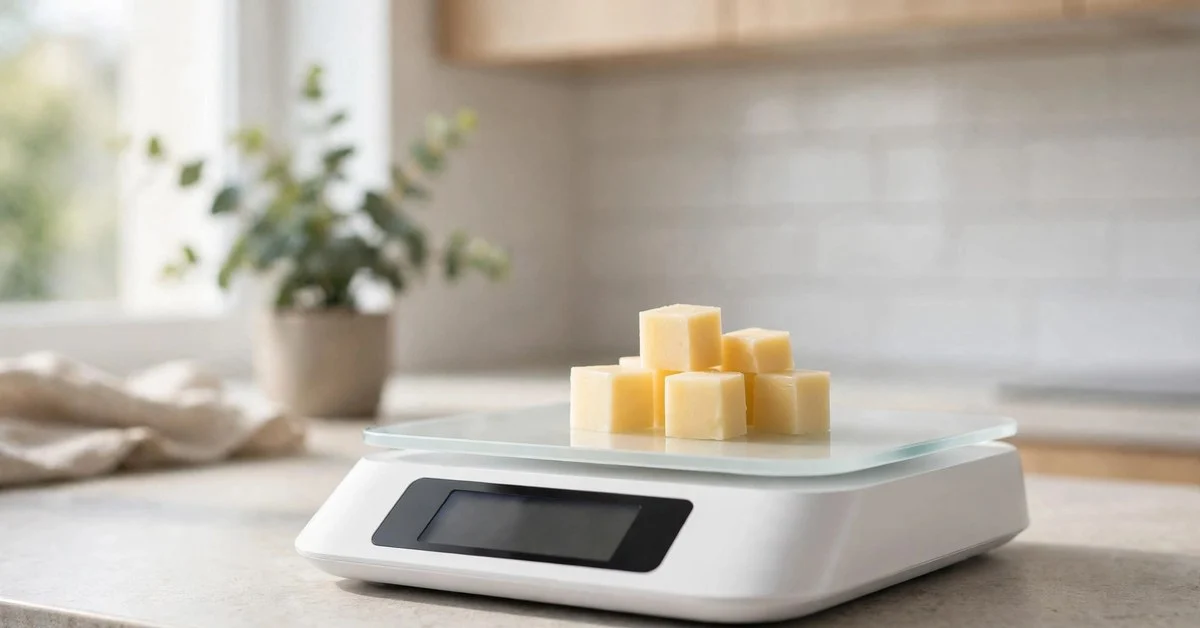
A kitchen scale makes this concrete fast. Place your phone on it and watch the display land near 6 ounces. Then try a chicken breast, an apple, three eggs. After a few weigh-ins your hand starts to recognize 6 ounces on its own, and you will portion proteins, fruit, and snacks accurately without thinking. Cooks who learn this weight waste less food and hit their recipes more consistently.
Easy ways to estimate 6 oz in everyday life
- Hold your phone: Most smartphones weigh about 6 to 7 ounces. Your phone in your palm is a 6-ounce scale.
- Picture a hockey puck: An official puck is exactly 6 ounces. If it feels like a puck, it is 6 oz.
- Use the palm test: A 6-ounce chicken breast or steak fillet is about the size and thickness of your palm.
- Count the eggs: Three large eggs weigh about 6 ounces together. Grab three and feel it.
- Think in grams: 170 grams is 6 ounces. Many kitchen scales toggle between the two — learn both numbers.
- Halve a soda can: A standard 12-ounce can of soda holds twice this much — picture it half full and you have 6 oz.
1. A Hockey Puck
An official ice hockey puck weighs exactly 6 ounces. The rulebook sets it: 5.5 to 6 ounces, with the standard puck landing at 6. It is a small, hard rubber disc, three inches across and one inch thick. This is the most precise reference on the list. If you have ever handled a puck — cold, heavy for its size, smelling faintly of rubber — you know exactly how 6 ounces feels. Sports shops sell them for a few dollars, so it is also the cheapest 6-ounce calibration weight you can buy.
2. A Smartphone
Most modern smartphones weigh between 6 and 7 ounces. A standard-size iPhone, for example, comes in right around 6 ounces. You hold this object for hours every day — texting, scrolling, calling — so your hand already knows the weight intimately. Lift your phone and really notice its heft, the way it settles into your palm. That familiar pull is about 6 ounces. It is the reference you carry everywhere, making it perfect for on-the-spot estimates: does this piece of fish weigh more or less than my phone?
3. A Chicken Breast
A medium boneless, skinless chicken breast weighs about 6 ounces — the portion diet plans and recipes mean when they say “one chicken breast.” Butchers and meal-prep guides use this figure constantly. You have held hundreds of them. Raw, it fills the palm and has real substance without feeling heavy. This is the kitchen’s native 6-ounce unit. When a recipe calls for 6 ounces of any protein, picture a chicken breast and portion to match.
4. A Small Sirloin Steak
Restaurant menus list a 6-ounce sirloin as the “small” steak — the sensible order next to the 8 and 12-ounce cuts. Butchers cut them to this weight on purpose. On the plate, it is a modest, palm-size piece of beef, thick enough to feel like a real steak. Anyone who has ordered the small sirloin has held 6 ounces on a fork. It is a delicious ruler, and it anchors the weight to a dining experience most people share.
5. A Medium Apple
A medium apple weighs roughly 6 ounces (about 180 grams). Produce scales and nutrition charts back this up: the “medium apple” of diet plans is a 6-ounce fruit. Pick one up at the store and feel it settle into your palm — firm, round, with satisfying weight. Take a bite and notice how the weight shifts. This is nature’s 6-ounce package, sold by the bag in every supermarket. When you need a quick mental image of 6 ounces of anything, an apple in your hand is hard to beat.
6. A Medium Orange
Like the apple, a medium orange weighs about 6 ounces. Citrus runs a touch denser than apples, so the orange may feel slightly smaller in the hand for the same weight. Roll one in your palm at the grocery store. That dimpled sphere, cool from the produce misters, is about 6 ounces. Between the apple and the orange, you have two fruit-based references that make 6 ounces tangible in the produce aisle.
7. A Medium Potato
A medium russet potato weighs about 5 to 6 ounces — the size sold loose in every supermarket. Bakers and recipe writers call this “one medium potato.” Hold one: oblong, earthy, fitting neatly in a closed fist. It is a humble but honest 6-ounce weight. Mashed potato recipes that serve two often start with “three medium potatoes,” which is roughly 18 ounces — and now you can do that math by feel.
8. Three Large Eggs
A large egg weighs about 2 ounces, so three of them together hit 6 ounces. Egg cartons are graded by weight, which keeps this figure steady. Crack open the fridge, take three eggs, and cradle them in one hand. That delicate handful is 6 ounces. It is a fragile ruler — you would not juggle it — but for kitchen estimating, three eggs is a memorable and exact-feeling portion.
9. A Billiard Ball
A standard billiard or pool ball weighs about 5.5 to 6 ounces. The set is manufactured to tight tolerances so every ball rolls true. Pool halls are full of them, racked in triangles. Pick one up and feel the dense, polished weight — heavier than it looks. That glossy sphere is essentially 6 ounces. It is a satisfying reference because the weight surprises first-timers, which makes it stick in memory.
10. A Baseball
A regulation baseball weighs 5 to 5.25 ounces — just under our mark. League specs keep it there. Every baseball fan knows this weight from playing catch: light enough to throw far, heavy enough to sting a bare hand. Hold one and imagine it a touch heavier — add the weight of two quarters — and you have 6 ounces. It is the “just under” bracket that sharpens the estimate.
11. A Juice Box
A standard juice box holds 6.75 fluid ounces of juice, and the whole package weighs in just over 6 ounces of liquid plus the carton. Lunchboxes everywhere contain these. Stab the straw in and lift it — that small carton is slightly more than 6 ounces. For portion thinking, it is useful: a juice box is a single serving, and a 6-ounce serving of almost anything looks about this size in your hand.
12. A Medium T-Shirt
A medium cotton T-shirt weighs about 5 to 6 ounces. Clothing makers even describe fabric by weight — a “6-ounce tee” is standard mid-weight cotton, the kind most of your shirts are made from. Pull one from your drawer and hold it up, feeling the soft drape. That familiar handful of fabric is about 6 ounces. It is a gentle reference, useful because everyone has handled a T-shirt. The weight of your clothes is something your hands already understand from getting dressed every morning.
13. A Paperback Book
A typical mass-market paperback weighs about 6 to 8 ounces. Readers know this weight from holding books open for hours — heavy enough to notice, light enough to forget. Grab a paperback from the shelf and feel the block of paper in one hand. That compact brick is roughly 6 ounces. Longer novels run heavier, slim novellas lighter, but the average paperback sits right in our zone. Bookworms have been calibrating their hands to 6 ounces for years without realizing it.
14. A Bar of Soap
A standard bar of bath soap weighs about 5 to 6 ounces. Soap makers size bars to fit the hand, which keeps the weight consistent. Unwrap a fresh bar and hold it — smooth, firm, palm-filling. That is about 6 ounces. It is a bathroom-shelf ruler, always within reach, and its weight is familiar from daily use.
15. A Yogurt Cup
A single-serve yogurt cup holds about 5.3 ounces (150 grams) — just under 6 ounces. Grocery dairy aisles stack them by the hundred in every flavor imaginable. Peel the lid and lift the cup: that cool, spoonable portion is a touch less than 6 ounces. Add a spoonful in your mind and you are there. It is a breakfast-table reference for the most common serving size in the dairy case, and dieters already think of it as “one serving.”
Frequently Asked Questions
How many grams is 6 oz?
Six ounces is about 170 grams. Multiply ounces by 28.35: 6 × 28.35 = 170.1 grams. This is the number to remember for recipes and nutrition labels that use metric.
Is 6 oz the same as 6 fluid ounces?
Not exactly. Ounces measure weight; fluid ounces measure volume. For water they are close — 6 fluid ounces of water weighs about 6.2 ounces — but for flour, honey, or oil the weights differ. This article covers weight ounces.
How big is 6 ounces of chicken?
About the size of your palm — a medium chicken breast, roughly 3 to 4 inches across and an inch thick. It is the standard single serving in most diet plans, and it cooks through evenly without drying out. When a recipe says “6 ounces of chicken,” this palm-size piece is exactly what it means.
What does 6 oz look like in cups?
Six fluid ounces is three-quarters of a cup. For dry ingredients it varies: 6 ounces of flour is about 1⅓ cups, while 6 ounces of sugar is about ¾ cup. Weigh dry goods for accuracy.
See also: how much 8 oz is.
Final Thoughts
So, how much is 6 oz? It is a hockey puck, your smartphone, a chicken breast, a medium apple — about 170 grams of everyday life. Six ounces is the weight your hand already knows, even if you never thought about it. The next time a recipe, a diet plan, or a menu mentions 6 ounces, skip the scale and trust your palm. Picture the puck, feel your phone, remember the chicken breast. Everyday objects turn 6 ounces from a number on a label into a weight you can judge by hand, and that makes portioning, shopping, and cooking a little easier every single day. See also: how much 5 oz is.

I’m Dane Whitfield, a content writer at MeasureZit.com, where I specialize in creating clear, accurate articles on measurements, unit conversions, and mathematical concepts. I enjoy breaking down complex numerical topics into simple, practical explanations that readers can actually use. My goal is always precision and clarity helping people make sense of the numbers around them.