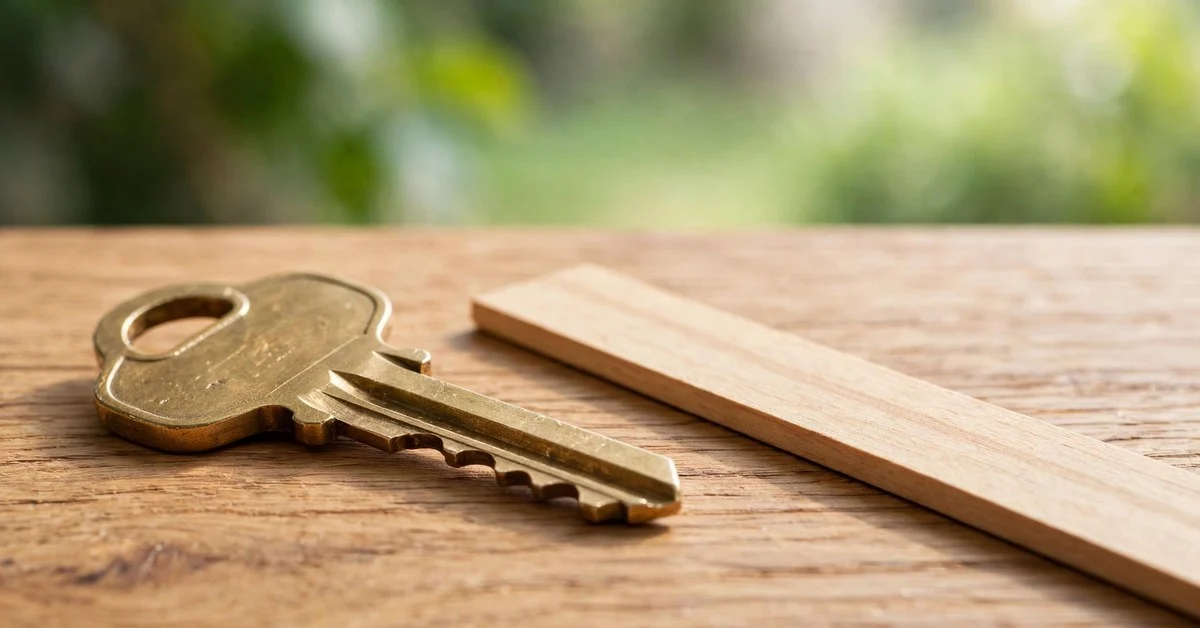
How big is 7 cm, really? Hold up a standard house key — that little piece of brass is one of the common things that are about 7 cm long. Seven centimeters equals about 2.76 inches, or roughly two and three-quarter inches. It is a small measurement with a big job: keys, USB drives, sticky notes, and lipstick tubes all live at this scale. Whether you are reading a product listing, sizing a craft project, measuring fabric for sewing, or guessing if something fits in a pocket, knowing how big 7 cm is turns a vague number into a picture you already carry with you. Once you link 7 cm to your keyring, you will start spotting this length everywhere.
Conversion Chart
| Unit | Converted Value |
|---|---|
| Inches | ≈ 2.76 in |
| Feet | ≈ 0.23 ft |
| Millimeters | 70 mm |
| Centimeters | 7 cm |
| Meters | 0.07 m |
15 Common Things That Are 7 cm Long
Common Objects That Are About 7 cm
| Item | Approximate Length |
|---|---|
| 1. A House Key | About 7 cm |
| 2. A Wooden Clothespin | About 7 cm |
| 3. A Sticky Note (side) | 7.6 cm (3 in) |
| 4. A Lipstick Tube | About 7.5 cm |
| 5. A USB Flash Drive | About 5–7 cm |
| 6. A Tea Bag | About 6–7 cm |
| 7. An Adult Thumb | About 6–7 cm |
| 8. A Tennis Ball | 6.7 cm across |
More Everyday Items Around 7 cm
| Item | Approximate Length |
|---|---|
| 9. A Baseball | 7.4 cm across |
| 10. A Shot Glass | About 6–7 cm tall |
| 11. Three US Quarters | 7.3 cm side by side |
| 12. A Playing Card (width) | 6.35 cm |
| 13. A Credit Card (width) | 8.56 cm |
| 14. A Disposable Lighter | About 8 cm |
| 15. A Large Chicken Egg | About 6 cm long |
How Big Is 7 cm?
Seven centimeters is just under three inches — 2.76 inches, to be precise. Since one inch is 2.54 cm, you can think of 7 cm as two full inches plus another three-quarters of an inch. It is a pocket-size measurement. Almost everything at this scale fits in a closed fist.
To pin it down, bracket it. A playing card is 6.35 cm wide — a little narrower than 7 cm. A credit card is 8.56 cm wide — a little wider. Hold a playing card in one hand and a credit card in the other, and 7 cm sits right between them. Or think metric: a 20 cm ruler is a common school tool, and 7 cm is just over a third of it.
If you have a tape measure handy, 7 cm is easy to find: look for the mark just past two and three-quarter inches. That tiny span covers the length of a house key, the width of three quarters, and the height of a shot glass. It is also worth remembering that 70 mm is the same thing — packaging and product specs often list millimeters, so 7 cm and 70 mm are two names for one size.
Easy ways to estimate 7 cm in everyday life
- Check your keyring: A standard house key is about 7 cm long. Your pocket already holds the ruler.
- Look at your thumb: An adult thumb measures roughly 6 to 7 cm from tip to base. Hold it next to the object.
- Use a sticky note: A standard 3-inch sticky note is 7.6 cm per side — just a hair over 7 cm.
- Grab two coins: Three US quarters laid side by side span about 7.3 cm, close enough for a quick check.
- Think in inches: Two and three-quarter inches is 7 cm. If you think in inches, that fraction is your shortcut.
- Picture a tennis ball: A tennis ball is 6.7 cm across — just under 7 cm. Anything ball-sized is in the zone.
1. A House Key
The humble house key is the star of this list. A standard brass house key measures about 6 to 7 cm from the tip of the blade to the end of the bow — the part you grip. Everyone carries one, and its size is remarkably consistent across brands. This is why it works so well as a ruler. Pull out your keyring, lay a key flat, and you are looking at 7 cm. Need to know if a screw, a battery, or a small part is about 7 cm? Hold your key next to it. The answer is instant.
2. A Wooden Clothespin
A classic wooden clothespin — two prongs, a metal spring — runs about 7 to 7.5 cm long. Laundry rooms and craft drawers are full of them. Their size has barely changed in a century because the design just works. Pick one up and feel it between your fingers. That small wooden stick is almost exactly 7 cm. It is a sturdy little ruler for the junk drawer, and because clothespins are so cheap and common, you probably have a dozen within reach right now.
3. A Sticky Note
A standard square sticky note measures 3 inches per side, which is 7.62 cm — just over half a centimeter more than our target. Desks everywhere are littered with these yellow squares. Their size is fixed by manufacturing, so they never vary. Peel one off the pad and hold it up. That square is essentially 7 cm with a tiny bonus. For estimating the length of anything small — a USB plug, a key, a bottle cap — a sticky note is a surprisingly precise stand-in.
4. A Lipstick Tube
A standard lipstick tube stands about 7 to 8 cm tall with the cap on. Makeup bags and purses carry this shape worldwide. The tube is designed to fit a hand and a pocket, which keeps its height in a narrow range across brands. Twist one open and the whole object, cap included, is right around 7 cm. It is a glamorous little ruler. Anyone who has ever fished a lipstick out of a bag already knows this size by touch.
5. A USB Flash Drive
Most USB flash drives measure between 5 and 7 cm long, with many classic designs landing right at 7. These pocket-size storage sticks are everywhere — desk drawers, laptop bags, conference swag piles. Their length is set by the USB connector plus a body big enough to grip. Hold one between thumb and forefinger and slide it toward a laptop port. That familiar stick, about as long as your thumb, is roughly 7 cm. It is a modern reference that anyone under sixty will recognize instantly, and it doubles as a handy gauge for small screws and plugs.
6. A Tea Bag
A standard paper tea bag measures roughly 6 to 7 cm tall. Kitchens and office break rooms stock them by the box. The size is set by the amount of tea inside and the need to drape the string over a mug’s rim. Pull one from the box and hold it flat. That little paper pillow is about 7 cm. It is a soft, humble ruler — and since nearly everyone has made tea, the size is already stored in your muscle memory.
7. An Adult Thumb
An average adult thumb measures about 6 to 7 cm from the tip to the knuckle where it meets the hand. Your own body is the most portable ruler you own. Press your thumb against any small object to compare. Because thumbs scale roughly with hand size, most adults land in this range. It is not laboratory-precise, but for a quick field estimate — is that screw 5 cm or 7 cm? — your thumb settles the question in a second.
8. A Tennis Ball
A regulation tennis ball measures 6.54 to 6.86 cm in diameter — just a whisper under 7 cm. The ITF sets this standard, so every ball from every brand is the same size. Sports bags, dog parks, and junk drawers are full of them. Wrap your fingers around one and feel the fuzzy curve fill your palm. That familiar sphere is essentially 7 cm across. When something is described as tennis-ball-sized, you now know exactly what that means in centimeters, and you can picture it without measuring.
9. A Baseball
A regulation baseball measures about 7.3 to 7.5 cm in diameter — a touch over 7 cm. League standards keep this figure tight. Anyone who has held a baseball knows its satisfying weight and size in the palm. Cup one in your hand and feel the seams under your fingers. That ball is just barely bigger than 7 cm across. It pairs nicely with the tennis ball above: one sits just under our mark, the other just over it, and 7 cm rests between them.
10. A Shot Glass
A standard shot glass stands about 6 to 7 cm tall. Bars and kitchen cabinets hold these small, heavy-bottomed glasses. Their height is set by the standard pour they are built to hold. Set one on the table and look at it. That short glass is about 7 cm tall. It is a compact vertical ruler for small spaces — the height of a stack of coins, a bottle cap’s diameter times two, a matchbox standing on end.
11. Three US Quarters
A US quarter is 2.426 cm across, so three of them laid side by side span about 7.3 cm — just over 7 cm. Coins are precision-made, which makes them excellent impromptu rulers. Dig three quarters from your pocket or purse and line them up edge to edge. That little row of silver is essentially 7 cm. It is a neat trick for estimating when nothing else is handy, and the math is simple enough to do in your head.
12. A Playing Card
A standard playing card is 6.35 cm wide — about two-thirds of a centimeter under 7 cm. Poker decks and card game boxes are full of these precisely cut rectangles. Card players handle them constantly, so the size is familiar. Hold one by its short edge. That width is just shy of 7 cm; add the thickness of a pencil line and you are there. It is the “slightly under” anchor that helps you triangulate the true size.
13. A Credit Card
A standard credit card measures 85.6 mm wide — 8.56 cm — about a centimeter and a half over our target. This is one of the most standardized objects on earth: every bank card, ID card, and hotel key follows the same dimensions. Pull out your wallet and look at any card. That width is just over 7 cm; trim a fingernail’s width off each side in your mind and you land on 7. It is the “slightly over” anchor, and everyone owns one, which makes it the most reliable upper bracket in your wallet.
14. A Disposable Lighter
A classic disposable lighter stands about 8 cm tall — roughly a centimeter more than 7 cm. Pockets, drawers, and campsites are full of them. The shape is so standardized that the size barely varies between brands. Hold one upright. That slim rectangle is just a touch taller than 7 cm. Like the credit card, it works as an upper bracket: picture it slightly shortened, and you have the measurement.
15. A Large Chicken Egg
A large chicken egg measures about 6 cm long — just under 7 cm. Eggs vary, but the large grade sold in every grocery store is remarkably consistent. Open the fridge and pick one up. That smooth oval is a little shorter than 7 cm; imagine it stretched by half a centimeter. It is a soft, organic ruler from the most ordinary place imaginable — the breakfast table.
Frequently Asked Questions
How big is 7 cm in inches?
Seven centimeters is about 2.76 inches — roughly two and three-quarter inches. Divide by 2.54: 7 ÷ 2.54 = 2.7559.
What object is exactly 7 cm?
A standard house key comes closest, at about 6 to 7 cm long. A wooden clothespin is another near-exact match at roughly 7 cm.
Is 7 cm bigger than 3 inches?
No, slightly smaller. Three inches is 7.62 cm, so 7 cm is about 0.6 cm — roughly a quarter inch — less than 3 inches.
How can I measure 7 cm without a ruler?
Use your thumb — an adult thumb is about 6 to 7 cm long. Or grab a sticky note: one side is 7.6 cm, just a hair over 7 cm.
Final Thoughts
So, how big is 7 cm? It is a house key, a clothespin, a thumb, a tea bag — the small sturdy objects that fill pockets and drawers. Once you connect 7 cm to things you touch every day, the number stops being abstract. You will read “7 cm” on a product page and see your keyring. You will hear “about three inches” and know it is a touch less. Keep the key and the sticky note in mind as your two pocket rulers. That is the real payoff: everyday objects turn a small metric measurement into something your hands already understand, no ruler required.

I’m Priya Sharma, a content writer at MeasureZit.com, specializing in measurements, unit conversions, and mathematical concepts. I turn technical topics into clear, accurate content that’s easy to understand. My focus is precision, clarity, and genuinely useful information.










