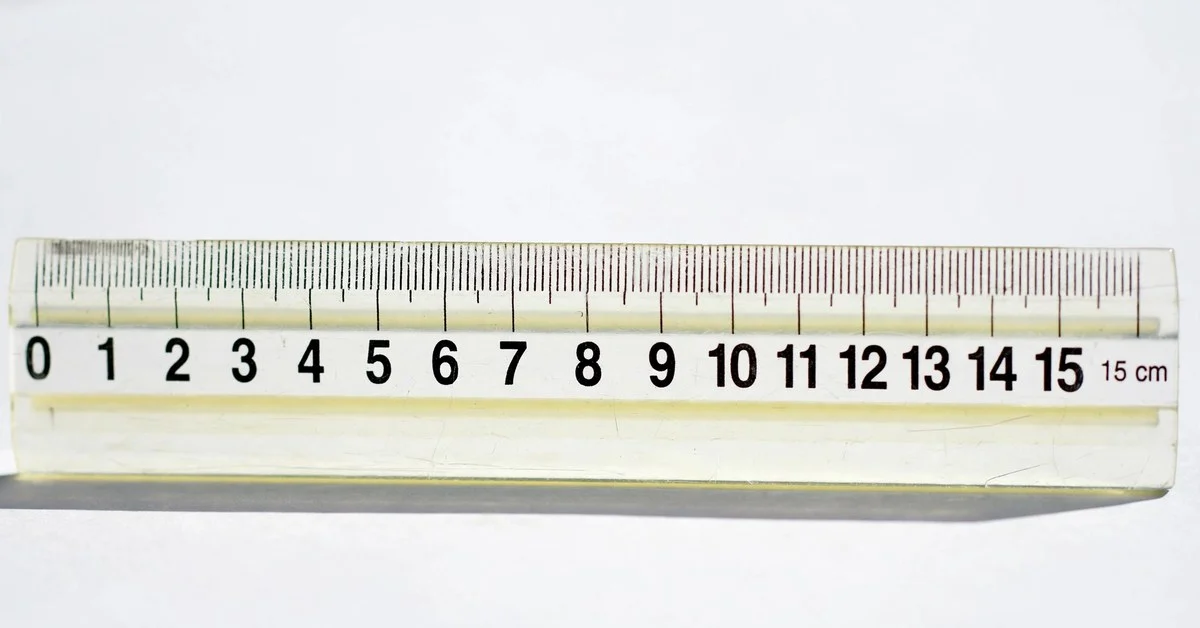
Introduction
If you’re wondering how big 15 cm is, here’s the quick answer: 15 centimeters is about 5.91 inches — just under 6 inches, or exactly 150 millimeters. Searching for everyday things that are 15 cm long? Fifteen of them wait below. It’s a wonderfully familiar size: half a school ruler, a dollar bill, a standard hot dog. Shoppers compare phone and gadget dimensions in this range, students measure with it daily, and cooks know it from sandwich and utensil sizes. DIYers meet it in small tools and brackets, and travelers see it in document dimensions. Once 15 cm has a picture attached, estimating it turns effortless. A ballpoint pen is close, a smartphone is close — choose one and you’re set.
15 cm Conversion Chart
| Unit | Converted Value |
|---|---|
| Inches | ≈ 5.91 in |
| Feet | ≈ 0.49 ft |
| Yards | ≈ 0.16 yd |
| Millimeters | 150 mm |
| Meters | 0.15 m |
15 Common Things That Are 15 cm Long
Here are fifteen familiar objects, each measuring about fifteen centimeters. The first table holds the closest matches; the second adds more everyday items in the same neighborhood.
Common Objects That Are About 15 cm
| Object | Approximate Length |
|---|---|
| Half a school ruler | 15 cm |
| A US dollar bill | 15.6 cm |
| A standard hot dog (frankfurter) | 15.24 cm |
| A 6-inch sub sandwich | 15 cm |
| A standard ballpoint pen | about 14–15 cm |
| A smartphone (height) | about 15–16 cm |
| A standard postcard | 10 × 15 cm |
| A US personal check | 15.24 cm |
More Everyday Items Around 15 cm
| Object | Approximate Length |
|---|---|
| A hard glasses case | about 15–16 cm |
| A standard stapler | about 15 cm |
| A scientific calculator | about 15–16 cm |
| A game controller (width) | about 15–16 cm |
| A power bank | about 14–15 cm |
| A 6-inch flower pot (height) | about 15 cm |
| A cereal bowl (diameter) | about 14–15 cm |
How Big Is 15 cm?
Fifteen centimeters is just under six inches — roughly the length of an adult’s hand from wrist to middle fingertip. It’s one of the friendliest metric sizes because it maps so neatly onto familiar objects. Half a standard 30 cm school ruler is exactly 15 cm. A dollar bill is 15.6 cm. Six inches is 15.24 cm — so close that for everyday purposes, 15 cm and 6 inches are interchangeable.
For scale, 10 centimeters is a good two finger-widths smaller — picture a smartphone with a third missing. A standard pencil, at 19 cm, is the “slightly bigger” neighbor you’ll meet in every classroom.
This is the desk-drawer size. Pens, phones, calculators, and staplers all live in this range because it matches the human hand so well. The reason so many products land on 15 cm is simple ergonomics: it’s about the longest thing most hands can grip comfortably, and about the shortest thing that still feels substantial on a shelf. Designers return to it again and again because it just works. When a product page lists 15 cm, you’re looking at something designed to be held — which makes it one of the easiest sizes to judge by feel alone.
Easy ways to estimate 15 cm in everyday life
- Halve a ruler: A standard 30 cm school ruler folded in half is exactly 15 cm. The image is probably already in your head from school.
- Picture a dollar bill: At 15.6 cm long, it’s just over. Imagine it trimmed by half a centimeter.
- Think of a hot dog: A standard frankfurter is 15.24 cm — the 6-inch hot dog is no coincidence.
- Grab your phone: Most smartphones are 15–16 cm tall. Look at yours: that’s 15 cm in your hand.
- Use your hand: For many adults, wrist to middle-fingertip is 17–19 cm. Picture your hand slightly shorter.
- Recall a pen: A standard ballpoint is 14–15 cm. The one on your desk right now is your gauge.
1. Half a School Ruler
A standard 30 cm school ruler, divided in half, gives you exactly 15 cm. This is the reference most people learned first: rulers hung on classroom walls and lived in pencil cases for years. The midpoint — the 15 cm mark — is printed right on it. Picture the ruler, find its center, and you have a perfect 15 cm burned into memory from childhood. Steel rulers and wooden ones agree — the midpoint is the midpoint. Math teachers pointed at that midpoint for years, which is why the image feels so automatic.
2. A US Dollar Bill
A US dollar bill measures 15.6 cm long (6.14 × 2.61 inches) — just over our target. All US denominations share the same dimensions, a standard unchanged for nearly a century. It’s a superb reference because the size is fixed by law and the object is iconic. Foreign banknotes come in different sizes, so this reference is strictly the US dollar. Picture one in your wallet, then trim about half a centimeter off the end in your mind.
3. A Standard Hot Dog (Frankfurter)
A standard frankfurter measures 15.24 cm — exactly 6 inches. Hot dog sizes are standardized by the food industry so they match standard buns. This is the tastiest reference on the list, and the 6-inch figure is no accident: it’s the industry’s way of saying 15 cm. Cocktail franks are much smaller, so picture the full-size frankfurter. Ballpark franks and grocery-store packs follow the same standard. Picture one on the grill at a barbecue. That sizzling length is your 15 cm.
4. A 6-Inch Sub Sandwich
The famous 6-inch sub is 15 cm of sandwich by definition. Subway built a brand around this exact length, and competitors followed with their own 6-inch offerings. It’s a deliciously memorable gauge: the next time you order one, notice it before the first bite. Footlong subs are simply two of these end to end. From end to end, that sandwich is 15 cm of lunchtime measuring.
5. A Standard Ballpoint Pen
A standard ballpoint pen — the classic stick pen — measures about 14 to 15 cm long. Pen lengths cluster here because they need to fit the hand comfortably for writing. It’s the desk-drawer champion of this list: nearly every desk on earth holds one. Fancy metal executive pens run longer, but the humble plastic stick stays near the mark. Click pens and capped pens alike cluster around this length. Glance at yours right now. That familiar stick is essentially 15 cm.
6. A Smartphone (Height)
Most modern smartphones stand about 15 to 16 cm tall. Phone heights have crept upward over the years, but the current generation clusters tightly in this range. It’s the reference you check a hundred times a day without realizing it. Compact older models were shorter, so this means the modern full-size phone. Phone cases add a few millimeters, so judge by the bare phone. Hold yours up and look at it fresh: the height in your palm is roughly 15 cm of glass and aluminum.
7. A Standard Postcard
A standard postcard measures 10 × 15 cm (the 4 × 6 inch format). Postal services worldwide settled on similar dimensions, so the size is dependable across borders. It’s a charming reference from the age of travel: picture one arriving in your mailbox, photo on the front, message on the back. Larger art prints come in other sizes, but the classic postcard holds the format. Tourist shops still sell them by the rack, keeping the size alive. Its long edge is exactly 15 cm.
8. A US Personal Check
A standard US personal check measures 15.24 cm long (6 × 2.75 inches) — the 6-inch length again. Check dimensions are fixed by banking standards, so every checkbook matches. Even as checks fade from daily life, the size persists in drawers everywhere. Business-size checks are longer, so this is the personal checkbook kind. Picture one torn from the book: that familiar slip is 15 cm of old-school payment.
9. A Hard Glasses Case
A hard-shell glasses case runs about 15 to 16 cm long. Cases are sized to protect standard frames, which keeps the dimensions consistent across brands. It’s a pocket-and-purse staple for millions of wearers. Soft pouches vary more, so the rigid shell case is the steadier gauge. Picture yours — or a friend’s — sitting on a nightstand. That slim protective shell is roughly 15 cm long.
10. A Standard Stapler
A standard desktop stapler measures about 15 cm long. Office staplers converged on this size because it balances capacity with desk-friendliness. It’s the workhorse reference: unglamorous, ubiquitous, and exactly right. Heavy-duty staplers are bigger, so this means the standard desktop model. Look at the one on your desk or in the supply closet. From back to front, it’s about 15 cm of paper-binding power.
11. A Scientific Calculator
A standard scientific calculator — the kind from math class — measures about 15 to 16 cm tall. Calculator bodies are sized for both the keypad and the hand, which locks the dimensions in a narrow range. Students know this object intimately. Graphing models are a touch larger, but the standard scientific kind sits right in range. Picture yours from school days, or your child’s: that familiar slab is roughly 15 cm.
12. A Game Controller (Width)
A standard game controller measures about 15 to 16 cm wide. Controllers are sculpted around adult hands, so the width stays consistent across brands and generations. Gamers have this size in muscle memory from thousands of hours. Retro controllers were smaller, but the modern full-size pad holds the mark. Picture yours on the coffee table: the distance from grip to grip is about 15 cm.
13. A Power Bank
A standard portable power bank measures about 14 to 15 cm long. The size is driven by the battery cells inside plus a slim shell — a formula most brands share. It’s the modern travel essential, living in bags and backpacks everywhere. Ultra-compact lipstick-size chargers are shorter, so this means the standard slab. Picture yours next to your phone: that slim brick is roughly 15 cm of backup charge.
14. A 6-Inch Flower Pot (Height)
A standard 6-inch nursery pot stands about 15 cm tall. Pot sizes follow nursery conventions, so the “6-inch” label means the same thing at every garden center. Plant lovers handle these constantly. Decorative ceramic pots come in every size, so this is the plain nursery pot the plants arrive in. Picture one on a windowsill, soil and seedling inside: that classic terracotta or plastic pot is 15 cm tall.
15. A Cereal Bowl (Diameter)
A standard cereal bowl measures about 14 to 15 cm across at the rim. Bowl sizes are tuned to a standard serving, which keeps them consistent across sets and brands. It’s the breakfast-table reference: you see it every morning. Soup bowls and serving bowls run larger, so this is strictly the cereal kind. Picture yours filled and steaming: that circle is roughly 15 cm across.
Frequently Asked Questions
Is 15 cm the same as 6 inches?
Essentially, yes. Six inches equals 15.24 cm — just 2.4 mm over. For anything short of precision engineering, you can treat 15 cm and 6 inches as the same length.
What household item is exactly 15 cm?
Half a standard 30 cm school ruler is exactly 15 cm, and a 6-inch sub sandwich is 15 cm by definition. A dollar bill (15.6 cm) and a hot dog (15.24 cm) are the closest runners-up.
How many inches is 15 cm?
About 5.91 inches. Divide by 2.54: 15 ÷ 2.54 = 5.91. On an imperial ruler, it sits just under the 6-inch mark.
Is 15 cm a good size for a phone?
It’s the standard. Most smartphones today are 15–16 cm tall, a size manufacturers settled on as the sweet spot between screen space and one-handed use. Foldable phones complicate the picture, but the classic slab still rules.
See also: how big 25 cm is. See also: how big 1 cm is.
Final Thoughts
So, how big is 15 cm? It’s half a ruler, a dollar bill, a hot dog — a friendly, hand-fitted size woven through daily life. Classrooms, kitchens, desks, and pockets all trade in this length. Once you’ve tied the number to one of these familiar objects, the abstract melts away. Product dimensions, phone specs, and sandwich menus will all make instant sense. The next time 15 cm appears on a label or a listing, you’ll picture it without a second thought. Fifteen centimeters is the people’s measurement: ordinary, useful, and always within easy reach. Whether you’re ordering lunch, buying a gadget, or helping with homework, it’s one size you’ll use without even noticing. Keep it in mind and measuring gets a little easier every day.

I’m Priya Sharma, a content writer at MeasureZit.com, specializing in measurements, unit conversions, and mathematical concepts. I turn technical topics into clear, accurate content that’s easy to understand. My focus is precision, clarity, and genuinely useful information.










