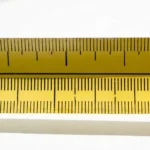
You have the perfect photo, the frame is already on the wall, and now the print lab is asking you a question you never expected: 8×10 or 10×12? Inches, centimeters, aspect ratios — suddenly a simple print order feels like a math quiz. Here is the part nobody tells you: both of those classic print sizes are built around the same quiet number. An 8×10 print measures 20.3 × 25.4 cm, and a 10×12 measures 25.4 × 30.5 cm. That 25.4 cm edge — a breath over 25 cm — is the backbone of photo printing.
So how big is 25 cm? About 9.84 inches — call it just under ten inches — or exactly 250 millimeters, one quarter of a meter. This article is your photo-print guide to that length: which print sizes hit it, how to match prints to frames without guesswork, and fifteen everyday things — from cake pans to wall clocks — that share the measurement. Whether you are decorating a wall or just trying to picture a quarter-meter, 25 cm is about to become the most useful print size you know.
Why 25 cm keeps showing up at the photo lab
Photo printing inherited its sizes from film and paper manufacturing, and those industries loved the 10-inch dimension. Ten inches converts to 25.4 cm — close enough to 25 that the entire metric world rounded it in conversation. That is why print labs on every continent will happily sell you a “25 cm” print that is technically 25.4 cm: the inch-based standard came first, and the metric label is a friendly approximation.
This history explains the confusing overlap you see at print kiosks. A lab might list 8×10, 20×25 cm, and 20.3×25.4 cm as three separate options when they are effectively the same print. They are not trying to trick you; they are serving two measurement cultures with one product line. Once you know that 25 cm is the metric shadow of the 10-inch standard, the whole menu snaps into focus.
The practical upshot: whenever a frame, mat, or print mentions 25 cm (or 25.4), you are in 8×10 territory — the most common photo print size in the world. Learn this one length and you can navigate any print lab, frame aisle, or online ordering page without a conversion chart. It is the closest thing the photo world has to a universal unit.
The photo-print guide: which print sizes land near 25 cm
Let us walk the print menu row by row. The 8×10 inch print is the king of this neighborhood: 20.3 × 25.4 cm, with its long side sitting a hair over 25 cm. It is the default for portraits, school photos, and desk frames, and its 4:5 aspect ratio is flattering for faces — which is why photographers love it. If you buy one print size in your life, make it this one.
Step up to the 10×12 inch print (25.4 × 30.5 cm) and the 25 cm edge becomes the short side. This size suits landscapes and group shots, giving horizontal scenes room to breathe. Notice the pattern: the 25.4 cm dimension simply rotates from long edge to short edge as prints get bigger. Learn to spot it and you will read print sizes the way musicians read key signatures.
Then there is the 10×15 inch print (25.4 × 38.1 cm), where 25.4 cm is again the short side, stretched into a panoramic 2:3 ratio — the same proportions as a classic 35mm film frame. And in metric-first countries you will see the 20×25 cm print, which hits our number exactly: 25.0 cm on the long edge, no rounding, no approximation. If precision matters to you, that is the size to order.
Matching frames is where this knowledge pays rent. An “8×10 frame” is built for the 20.3 × 25.4 cm print, and a “20×25 cm frame” is built for the metric twin — and yes, they are interchangeable in practice, since 0.4 cm of difference disappears behind the frame’s lip. The mistake to avoid is assuming a 25 cm print fits a 25 cm frame opening exactly; frame sizes describe the print they hold, and the opening (the “rabbet”) is slightly smaller so the print does not fall through. When in doubt, buy the frame labeled for your print size, not the raw measurement.
One more print-lab survival tip: watch the aspect ratio before you order. A photo from your phone is typically 4:3 or 16:9, while an 8×10 print is 4:5 — so the lab will crop the sides to make it fit. If someone’s face sits near the edge of your shot, that crop can be brutal. Most ordering sites show a crop preview; use it. Knowing that your target is the 25 cm edge does not help if the lab slices off your subject to get there.
Finally, a note on bordered versus borderless prints. A “borderless” 8×10 fills the full 20.3 × 25.4 cm with image, while a bordered print shrinks the photo slightly to leave a white margin — meaning the image itself no longer spans the full 25 cm edge. If you are matching a print to a mat with a pre-cut window, borderless is the safer order; the window was cut for the full-size image. It is a small detail, but it is exactly the kind of detail that separates a print that fits from one that needs trimming with scissors.
Fifteen everyday things that match the 25 cm print edge
Prints are not the only things living at this length. Here are fifteen household residents of the 25 cm neighborhood.
In the kitchen
- A 10-inch round cake pan. The standard 10-inch pan measures 25.4 cm across — the exact same dimension as the long edge of an 8×10 print. Bakers and photographers are unknowingly using the same unit. Next time you frost a layer cake, you are looking at photo-print size.
- A 5-quart Dutch oven. The classic enameled Dutch oven runs about 26 cm in diameter, a touch over our mark. It is the heavyweight of this list in every sense: lift one and you will feel exactly how substantial 25 cm of cast iron is.
- A standard colander. Most everyday colanders span 24 to 28 cm across the rim. It is the pasta-night gauge: the circle you drain spaghetti through is roughly the long edge of an 8×10 photo.
- A 2-slice toaster. The humble countertop toaster runs about 25 to 28 cm long. It has sat on kitchen counters for decades at nearly the same dimensions, making it one of the steadiest 25 cm references in the house.
- A small cutting board. Compact daily-use cutting boards typically measure 25 to 30 cm on the long side. It is the board you grab for an onion or an apple — and its length is the print-lab number.
- A lazy Susan. The rotating tray at the center of many family dinner tables is usually 25 to 30 cm in diameter. Give it a spin at your next family dinner and notice: that circle is 25 cm of convenience.
On the walls and shelves
- A round wall clock. Standard wall clocks run 25 to 30 cm in diameter — the 10-to-12-inch class. Look at yours right now: the face you check a dozen times a day is roughly the size of a 10×12 print.
- A table-lamp shade. Medium drum and empire shades typically measure 25 to 30 cm across the bottom. It is the soft-glowing reference in every living room: the shade diffusing your evening light is about 25 cm wide.
- A standard magazine. The classic magazine page is 21.6 × 27.9 cm (8.5 × 11 inches), standing just under 3 cm over our mark. Hold one up: trim a thumb’s width off the top in your mind and you have 25 cm.
- A board game box. The standard square game box runs 26 to 30 cm per side. Game night is secretly a measurement lesson — the box of your favorite strategy game is just over the print-lab length.
Desk, hobby, and on the go
- An 8×10 photo print itself. The anchor of this article: 20.3 × 25.4 cm, long edge a whisper over 25 cm. If you have one in a frame on your desk, you own a permanent 25 cm reference. Glance at it whenever a measurement needs judging.
- A 10×12 photo print. At 25.4 × 30.5 cm, its short edge is our number. Photographers ordering this size are holding 25 cm in one hand and 30 in the other — a two-for-one reference.
- A 20×25 cm metric print. The exact hitter: 25.0 cm on the long edge with no rounding. Common in metric-country labs, it is the purest expression of this article’s number.
- An adult lunchbox. The classic rigid lunchbox runs about 25 cm long. It is the nostalgic entry: the box that carried sandwiches to school is the same length as the photo on the mantel.
- A bike helmet. Adult helmets typically measure 25 to 30 cm front to back. It is the safety-certified reference — engineered to fit the human head, which keeps its dimensions remarkably consistent across brands.
The math: 25 cm in inches, feet, and fractions of a meter
Twenty-five centimeters converts to 9.84 inches, so “just under ten inches” is the phrase to memorize — it works in every casual conversation. In feet that is 0.82, or roughly ten-twelfths of a foot. But the prettiest fact is the metric one: 25 cm is exactly one quarter of a meter. Four of them make 100 cm. Nobody needs a calculator for that, which is precisely why metric countries price fabric, ribbon, and trim by the quarter-meter.
| Unit | 25 cm equals |
|---|---|
| Inches | ≈ 9.84 in |
| Feet | ≈ 0.82 ft |
| Yards | ≈ 0.27 yd |
| Millimeters | 250 mm |
| Meters | 0.25 m |
Print-shop questions people ask about 25 cm
Is an 8×10 print the same as a 20×25 cm print?
For all practical purposes, yes. An 8×10 is 20.3 × 25.4 cm; a 20×25 cm print is 20 × 25 cm. The difference — three millimeters on one edge, four on the other — vanishes behind any frame’s lip. Labs list them separately out of habit, not because you would ever notice the difference on the wall.
Will a 10×12 photo fit in an 8×10 frame?
No — and this is the most common framing mistake. A 10×12 print (25.4 × 30.5 cm) is bigger in both dimensions than an 8×10 opening, so it will buckle or refuse to sit flat. Match the frame to the print size exactly: 10×12 prints need 10×12 frames. When a print mentions the 25 cm edge, check whether it is the long edge (8×10) or the short edge (10×12) before buying the frame.
What size frame do I need for a 25 cm print?
Buy the frame labeled for your print’s named size, not the raw measurement. A 20×25 cm print goes in a 20×25 cm (or 8×10 inch) frame; the frame’s opening is deliberately a few millimeters smaller than the print so the photo stays put. Ordering by the named size sidesteps the whole problem.
Why do photo labs list both inches and centimeters?
Because the standards were born in inches and the customers live in both systems. The 10-inch print standard predates metric labeling by decades, so labs print both numbers to avoid confusion. The centimeter figure is usually rounded — 25.4 becomes “25” — which is why the two labels on the same product can look like different sizes.
Does 25 cm refer to the long side or the short side of my print?
It depends on the print. On an 8×10 (20.3 × 25.4 cm) it is the long side; on a 10×12 (25.4 × 30.5 cm) or 10×15 (25.4 × 38.1 cm) it is the short side. Always check both dimensions when ordering — the 25 cm edge rotates as prints grow, and assuming it is the long side is how wrong-size frames happen.
See also: how big 15 cm is.
See also: how big 12 cm is.
Measure the wall, not the guess
Twenty-five centimeters is the quiet standard behind your framed photos, your cake pans, and your wall clock — just under ten inches, exactly a quarter meter, and the long edge of the world’s most popular print size. The next time a lab menu or a frame label throws numbers at you, look for the 25 cm edge and let it orient you. Measure the wall space, match the print to the frame by name, and check the crop preview before you order. A little measurement literacy turns the most confusing aisle of the photo shop into the simplest one — and your walls will thank you for it.

I’m Dane Whitfield, a content writer at MeasureZit.com, where I specialize in creating clear, accurate articles on measurements, unit conversions, and mathematical concepts. I enjoy breaking down complex numerical topics into simple, practical explanations that readers can actually use. My goal is always precision and clarity helping people make sense of the numbers around them.