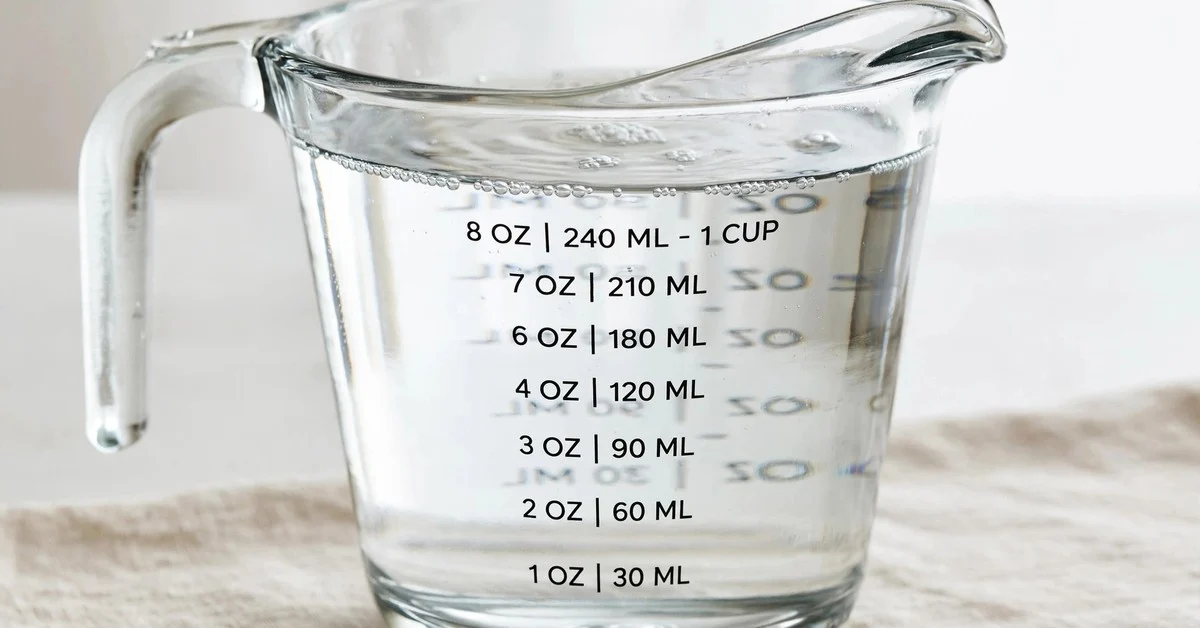
Mid-recipe, flour on your hands, the batter waiting, and the measuring cup is in the dishwasher. Every cook meets this moment, and every cook improvises: a coffee mug, a juice glass, a tablespoon counted out one by one. The question behind the improvisation is one of the most looked-up numbers in the kitchen: how many ounces in a cup? Eight fluid ounces. That is the US answer, and it is the quiet backbone of every cup, pint, quart, and gallon in American cooking.
The number matters because the whole kitchen system hangs from it. Two cups make a pint, two pints make a quart, four quarts make a gallon, and it all starts with the 8-ounce cup. This guide gives you the exact conversions including the UK and metric cousins, fifteen everyday vessels that hold about 8 ounces, and the recipe rescue plan: how to measure a true cup when all you have is a coffee mug.
The 8-ounce answer, and its cousins
A US cup holds 8 fluid ounces, which is 236.6 milliliters, about 0.24 liters. It divides into 16 tablespoons or 48 teaspoons, and two cups make a pint. Those are the numbers American recipes assume, and they are consistent enough to cook by without thinking.
The cousins complicate things just enough to matter. A UK (Imperial) cup holds about 10 fluid ounces, or 284 milliliters, a full quarter more than the US cup, so a British recipe’s “cup” is a bigger cup. A metric cup, used in many international recipes, is defined as exactly 250 milliliters, about 8.45 fluid ounces, splitting the difference. If a recipe’s results seem off and the source is foreign, the cup is the first suspect: check which cup the author meant before blaming your oven.
One more distinction that saves real mistakes: fluid ounces measure volume, ounces measure weight. Eight fluid ounces of water weigh about 8.3 ounces, close enough to blur, but eight fluid ounces of flour weigh about 4.3 ounces and eight fluid ounces of honey weigh about 12. For water-like liquids the two systems rhyme; for everything else they go their separate ways, which is why serious bakers weigh dry ingredients instead of scooping them.
Recipe rescue: when you only have a coffee mug
Here is the signature skill for this article: turning the humble coffee mug into a calibrated measuring cup. Mugs are not random; they cluster around standard sizes, and once you know your mug’s size, you can measure cups with it all day.
Step one: find your mug’s size. Fill the mug with water to the brim, then pour it into a tablespoon, counting: each tablespoon is half a fluid ounce, so 16 tablespoons is a cup. Most mugs land on one of four sizes: 8 ounces (one true cup), 10 ounces (one and a quarter cups), 12 ounces (one and a half cups), or 16 ounces (two full cups). The classic thick diner mug is usually 8; the standard office mug is usually 12; the giant novelty mug is 16 or more. Count once, remember forever.
Step two: learn your mug’s fractions. A 12-ounce mug, the most common, gives you easy landmarks: filled to the brim is 1.5 cups, two-thirds full is 1 cup, one-third full is half a cup. A 10-ounce mug: full is 1.25 cups, four-fifths is 1 cup. An 8-ounce mug is the dream: full is exactly 1 cup, half is half a cup. Mark your everyday mug’s cup lines with a small dot of nail polish on the outside if you cook this way often; future you, mid-recipe, will be grateful.
The no-count fallback: the two-fist trick. A loosely closed adult fist holds about half a cup of dry goods like flour or rice. Two fists is roughly a cup. It is not precise enough for delicate baking, but for soups, stews, and grain bowls it is honest, instant, and always available. Your hands are measuring cups that are never in the dishwasher.
The spoon ladder. When precision matters and no cup exists, count: 16 tablespoons to a cup, 3 teaspoons per tablespoon. Tedious, yes, but exact, and for small amounts it is often faster than washing the measuring cup anyway. Two tablespoons is an eighth of a cup; four is a quarter; eight is a half. The spoon ladder also rescues scaling: need a third of a cup? That’s 5 tablespoons plus a teaspoon.
Know your mug’s lies. Coffee-shop sizes lie on purpose: a shop’s “small” is often 12 ounces and called a cup on the menu, which is half a cup more than a true cup. Travel mugs are worse, with 16 to 20 ounce capacities and fill lines that mean nothing. Only your own kitchen mug, once counted, tells the truth. Calibrate it once and it becomes the most-used measuring tool you own.
Scaling without a cup. The rescue plan gets more powerful when you scale. Need to double a recipe that calls for 1 cup? That’s two mugfuls of your 8-ounce mug, or one full 16-ounce travel mug. Need to halve 2 cups with a 12-ounce mug? Two-thirds of the mug, twice. The trick is converting the recipe into your mug’s units first, then cooking in mugfuls and fractions of mugfuls. Write the converted amounts on a sticky note on the fridge while you cook; the math happens once, the pouring happens easily. And for baking, where the stakes are highest, the mug method pairs with the scale: measure the flour by weight for accuracy, measure the milk and water by mug for speed. Precision where it matters, convenience everywhere else.
Fifteen 8-ounce vessels hiding in your kitchen
- A mini soda can. The 7.5-ounce mini cans sold in packs hold just a whisper under a cup. Close enough to picture the cup, small enough to notice the gap.
- A half-pint mason jar. Exactly 8 fluid ounces, with measurement markings on the side. The canning jar is a measuring cup that happens to store jam.
- A Starbucks short cup. The 8-ounce “short,” the unlisted smallest size, is a true cup. Ask for it by name and you get coffee’s most honest measure.
- A toddler sippy cup. Most hold 7 to 9 ounces, clustering right at the cup. Parents measure 8 ounces multiple times a day without ever calling it that.
- Eight coffee scoops. A standard coffee scoop is 2 tablespoons, so eight scoops total 16 tablespoons: exactly one cup. Morning coffee has been measuring cups all along.
- A small creamer pitcher. The little pitcher that comes with a coffee service holds about 8 ounces. Restaurant tables have been serving cups of cream for centuries.
- Half a pint glass. A pint glass is 16 ounces, so half is exactly 8. Fill any pint glass halfway and you have measured a cup with barware.
- A small candle jar. The standard small jar candle is an 8-ounce vessel. Once the candle is gone, the cleaned jar is a surprisingly good measuring cup.
- A half-pint jam jar. Exactly 8 ounces, like its mason-jar cousin. Breakfast preserves come in cup-sized packaging by tradition.
- A large ramekin. The bigger ramekins used for pot pies and desserts hold about 8 ounces. Baking dishes have been cup measures all along.
- Eight standard ice cubes, melted. A standard ice cube is about an ounce of water, so eight melted cubes make exactly a cup. The freezer is an emergency measuring station.
- Four condiment cups. The little 2-ounce souffle cups from takeout orders: four of them total 8 ounces. Save them and you own a stackable cup measure.
- A 250-milliliter water bottle. The small hotel and airline bottles hold 250 milliliters, about 8.5 ounces: a metric cup, just over the US one.
- A Keurig 8-ounce brew setting. The machine’s 8-ounce button dispenses exactly one cup of coffee. Pod coffee’s most-used setting is a cup by definition.
- Three demitasse cups. A demitasse holds 2 to 3 ounces, so three of them total roughly 8. Espresso culture measures the cup in threes.
Cup confusion: five mistakes that ruin recipes
Knowing the cup is 8 ounces is the start; the mistakes below are where recipes actually die. Every one comes from confusing the cup with something that looks like a cup.
Mistake one: weighing flour by the cup’s ounce number. A cup of all-purpose flour weighs about 4.3 ounces, not 8. Cooks who see “8 oz flour” and scoop one cup have added nearly double the flour. The fix is the scale for baking, or the spoon-and-level method: spoon flour into the cup, level it off, never scoop with the cup itself, which compacts the flour and adds up to an ounce per cup.
Mistake two: the coffeemaker cup. Automatic drip coffeemakers define a “cup” as 5 or 6 ounces, not 8. A 12-cup coffeemaker brews 60 to 72 ounces, not 96. Recipes written in coffeemaker cups and read in measuring cups come out wrong by a quarter, which is why the office coffee tastes different from the recipe’s promise.
Mistake three: the UK cup. At 10 fluid ounces, the Imperial cup is 25 percent larger than the US cup. A British baking recipe followed with American cups under-measures every liquid by a quarter. When a recipe’s source is British and the results are dry, the cup is the suspect, not the oven.
Mistake four: the liquid/dry cup swap. Liquid measuring cups are meant to be filled to a line below the brim; dry cups are meant to be filled to the brim and leveled. Pouring a cup of milk into a dry cup and eyeballing the brim over-measures; scooping flour into a liquid cup and guessing the line under-measures. Use the right cup for the job; they’re different tools with the same name.
Mistake five: packing versus sifting. A cup of packed brown sugar weighs about 7.5 ounces; a cup of sifted flour weighs about 4 ounces. The cup measures volume, but recipes assume a standard packing, and “one cup” of an ingredient prepared differently is a different amount. Read the preparation: “1 cup sifted flour” and “1 cup flour, sifted” are different instructions with different results.
Questions about cups, ounces, and mug math
Is a coffee mug the same as a measuring cup?
Only sometimes. A true measuring cup is exactly 8 ounces; coffee mugs range from 8 to 20 ounces, with 12 the most common. Never assume: count your mug’s capacity once with tablespoons, as described above, and you’ll know whether your mug is a cup, a cup and a half, or something else entirely.
Why do American recipes use cups instead of weight?
History and convenience. The cup system grew out of 19th-century American kitchens that lacked scales, and it stuck because volume is fast: scooping is quicker than weighing. The trade-off is accuracy, which is why professional bakers weigh flour. For everyday cooking, the cup’s speed wins; for delicate baking, the scale’s honesty wins.
How many ounces are in 2 cups?
Sixteen fluid ounces, which is also one pint. This is the most-used doubling in the kitchen: two cups of stock, two cups of flour, two cups of anything. Remember “a pint’s a pound” for water-like liquids and the doubling stays intuitive.
Does 8 ounces of flour equal 1 cup?
No, and this is the classic kitchen trap. Eight ounces of weight is a weight; a cup is a volume. A cup of all-purpose flour weighs only about 4.3 ounces, so 8 ounces of flour is nearly two cups. The numbers match only for water-like liquids. When a recipe says “8 oz of flour,” it means weight; when it says “1 cup,” it means volume.
What’s the fastest way to measure a cup without any tools?
The water-bottle method: half of a standard 16.9-ounce water bottle is about 8.5 ounces, just over a cup, and the bottle’s midpoint is easy to eyeball. For dry goods, the two-fist trick gives roughly a cup. Neither is laboratory-grade, but both beat guessing, and both are available in any kitchen on earth.
See also: how many cups are in a gallon.
See also: how much 8 oz is.
Rescue the recipe
How many ounces in a cup? Eight fluid ounces: 16 tablespoons, 48 teaspoons, half a pint, the foundation the whole American kitchen is built on. It’s the mini soda can, the half-pint mason jar, the short coffee, eight scoops, eight melted ice cubes. And now your coffee mug is a measuring cup too, once counted, once marked, forever ready. The measuring cup can stay in the dishwasher. The recipe doesn’t have to wait, and neither do you.

I’m Owen Reeves, a content writer at MeasureZit.com, specializing in measurements, unit conversions, and mathematical concepts. I turn technical topics into clear, accurate content that’s easy to understand. My focus is precision, clarity, and genuinely useful information.










