Picture yourself standing at the foul line of a bowling lane, staring down sixty feet of polished wood toward the pins. Sixty feet is exactly 20 yards, and it is the distance from a bowling lane’s foul line to the head pin. If you have ever wondered how long is 60 feet, or what 60 feet looks like in everyday life, you are not alone. Sports fans, home buyers and DIY builders all run into this measurement sooner or later.
Sixty feet pops up in surprising places. A youth baseball coach paces it off between bases, a driver judges a gap in highway traffic, and a home buyer reads a lot width on a property listing. Once you have a few solid mental pictures, estimating 60 feet gets easy. Below are 15 common things that are 60 feet long, plus exact conversions and simple tricks to judge the distance without a tape measure.
60 Feet Conversion Chart
| Unit | Converted Value |
|---|---|
| Inches | 720 |
| Feet | 60 |
| Yards | 20 |
| Miles | ≈0.01 |
| Millimeters | 18,288 |
| Centimeters | 1,828.8 |
| Meters | ≈18.29 |
15 Common Things That Are 60 Feet Long
Common Objects That Are About 60 Feet
| Object | Approximate Length |
|---|---|
| A Little League base path | 60 feet |
| A bowling lane (foul line to head pin) | 60 feet |
| A pitcher’s mound to home plate | 60 feet 6 inches |
| An NFL field, goal line to the 20-yard line | 60 feet |
| A volleyball court | About 59 feet |
| An articulated (“bendy”) bus | 60 feet |
| Four sedans parked bumper to bumper | About 60 feet |
| A six-story building | About 60 feet |
More Everyday Items Around 60 Feet
| Object | Approximate Length |
|---|---|
| Five highway lanes side by side | 60 feet |
| Nine king-size beds laid end to end | About 60 feet |
| Ten adults lying head to toe | About 57 feet |
| A large adult male sperm whale | Up to 60 feet |
| One and a half 40-foot shipping containers | 60 feet |
| Three parallel parking spaces | About 60–66 feet |
| Two fire engines parked bumper to bumper | About 60 feet |
How Long Is 60 Feet?
Sixty feet is one of those distances that sounds shorter than it feels. It is exactly three times 20 feet, and a little more than half of 100 feet. A 53-foot semi-trailer comes up a bit short of the mark, while a 78-foot tennis court stretches well past it. Walk it yourself and you will cover the distance in roughly 20 to 24 normal walking steps.
The easiest mental picture depends on what you know best. Sports fans can think of a bowling lane or a Little League diamond. City dwellers can picture a bendy bus pulling away from the curb. And if you drive, sixty feet is about four car lengths, which is a gap you judge every time you merge onto a highway.
Easy ways to estimate 60 feet in everyday life
- Walk it off: Take about 20 to 24 relaxed walking steps. Most adults cover close to 60 feet that way.
- Count sedans: Line up four average sedans bumper to bumper in your mind. Each one is roughly 15 feet, so four make about 60.
- Stack basketball hoops: A regulation hoop stands 10 feet high. Six of them stacked would reach 60 feet.
- Use a building: Count six stories on an apartment block. At roughly 10 feet per story, that is about 60 feet.
- Picture the diamond: A Little League base path is exactly 60 feet. If you played youth baseball, you have run this distance hundreds of times.
- Think football: On an NFL field, the goal line to the 20-yard line is exactly 60 feet.
1. A Little League Base Path
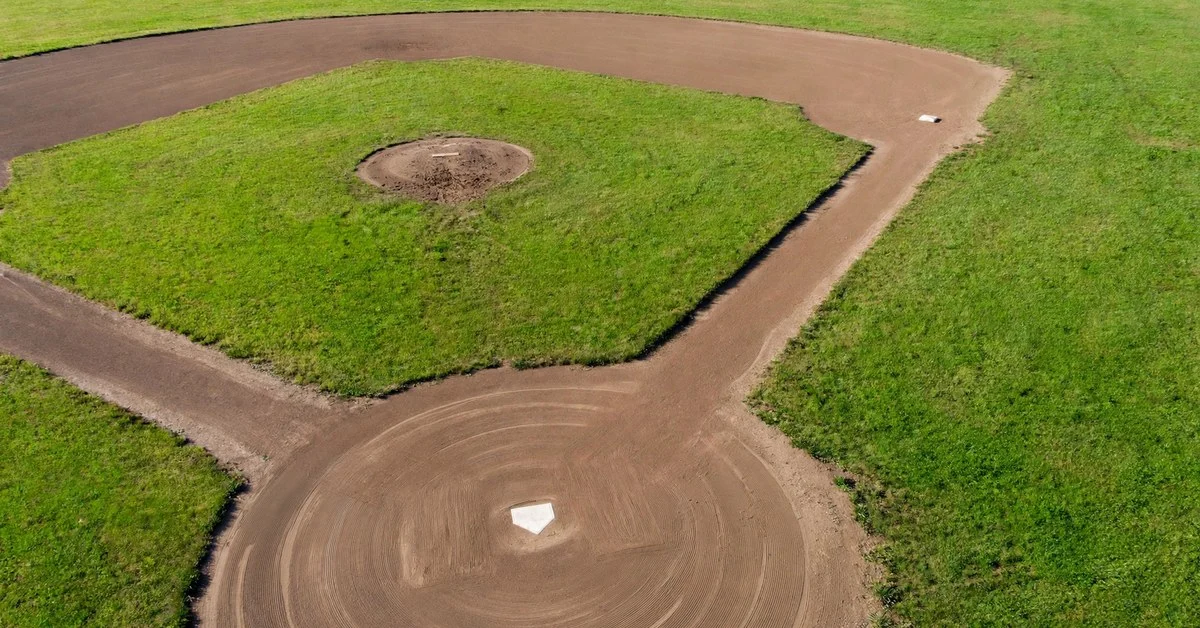
Ask any youth baseball coach and they will tell you the base paths on a Little League diamond measure exactly 60 feet. It is an official rule, not a rough guess, which makes it one of the most reliable references on this list. Kids run it every game, coaches pace it off when lining the field, and parents watch it from the bleachers all season. If you ever played youth baseball, your legs already know this distance. To use it, picture a runner sprinting from first to second base. That burst of speed covers 60 feet, and remembering it gives you a ready-made ruler for how long 60 feet is anywhere else.
2. A Bowling Lane
Next time you pick up a bowling ball, remember that the lane in front of you is a regulation 60 feet from the foul line to the head pin. Lane builders follow strict specifications, so every proper lane in every bowling alley measures the same. That consistency is what makes it such a trustworthy mental yardstick. Most people have stood at that foul line, ball in hand, staring at pins that look impossibly far away. They are exactly 60 feet away. Use that memory the next time you need to judge a long distance, and the answer will feel concrete instead of abstract.
3. A Pitcher’s Mound to Home Plate
The most famous sixty feet in sports sits just past the mark: the distance from a major league pitcher’s mound to home plate is 60 feet 6 inches. Those extra six inches barely register when you picture it, so the mound-to-plate distance works beautifully as a 60-foot reference. Every pitch you have ever watched on television traveled this exact path. Because the number is so deeply tied to baseball, it sticks in the memory with almost no effort. When you need a quick estimate, imagine a pitcher staring down a batter. The space between them is how long 60 feet is, close enough for any everyday purpose.
4. An NFL Field, Goal Line to the 20-Yard Line
Football fans already carry this measurement in their heads. Twenty yards equals 60 feet, so the stretch from the goal line to the 20-yard line is exactly 60 feet. Field markings are painted to precise standards, which means this reference never changes from stadium to stadium. Anyone who has watched a drive stall at the red zone has seen this distance marked out in bright white lines. For estimating, think of two first-down chains laid end to end, since each chain measures 10 yards. That picture turns an abstract number into something you can almost see on the grass.
5. A Volleyball Court
An indoor volleyball court measures 18 meters long, which works out to about 59 feet, just a foot shy of our target. Courts are built to international specifications, so the size is the same whether you are watching the Olympics or a high school match. If you have ever stood on one, you know it feels long but very runnable. That near miss is actually useful: picture the court, then add one imaginary step, and you have 60 feet. It is a handy stand-in whenever you need to judge the length of a gym, a hall, or a backyard.
6. An Articulated (“Bendy”) Bus
City transit riders know the bendy bus well. These articulated buses stretch a full 60 feet from bumper to bumper, accordion joint and all. Transit agencies buy them to that exact length so they fit existing stops and turning lanes. If you have ever watched one swing around a corner, you have seen 60 feet of vehicle bending in the middle. Because they are so distinctive, they make a memorable ruler. The next time one pulls away from a curb, note how long it takes to clear the stop. That rolling length is what 60 feet looks like on the street.
7. Four Sedans Parked Bumper to Bumper
An average sedan measures roughly 15 feet long, so four of them parked nose to tail cover about 60 feet. Cars are everywhere, which makes this one of the easiest references to summon. You see rows of parked cars every day outside shops, offices and schools. Pick any four in a row and you are looking at roughly 60 feet of metal and glass. To estimate, just count off four car lengths. Drivers already do a version of this when judging following distance, so the habit transfers naturally to any open space.
8. A Six-Story Building
Look up at a mid-rise apartment block and count six stories. With each floor running about 10 feet, the building stands roughly 60 feet tall. Builders and architects work with these floor-to-floor heights constantly, so the figure holds up well across most residential buildings. This vertical reference is perfect when the distance you need runs upward rather than across, like the height of a tree or a flagpole. Stand across the street, count the floors, and you have a surprisingly accurate gauge for how long 60 feet is.
9. Five Highway Lanes Side by Side
Standard highway lanes are 12 feet wide, so five lanes side by side span exactly 60 feet. Road engineers follow this width across the country, which makes it a rock-solid reference. Anyone who has crossed a wide freeway on foot, or merged across several lanes in traffic, has felt this distance. It is wide enough to feel exposed but narrow enough to cross quickly. When you need to picture 60 feet of width, whether a lot, a warehouse or a wide room, think of a five-lane freeway and you will be right on target.
10. Nine King-Size Beds Laid End to End
A king-size bed is 80 inches long, which is 6 feet 8 inches. Lay nine of them end to end and you get just about 60 feet. Mattress sizes are standardized, so this math works in any furniture store in the country. It is a funny image, nine giant beds in a row, and funny images are the ones that stick. If you ever need a quick indoor estimate, think of your own bedroom, multiply it out, and walk the length in your head. Few references are this easy to verify with a tape measure at home.
11. Ten Adults Lying Head to Toe
For a very human ruler, imagine ten adults lying head to toe in a line. At an average height of around 5 feet 9 inches, the chain stretches roughly 57 feet, just a touch under our target. Nobody carries a tape measure to the park, but everybody knows roughly how tall people are. This one shines for group settings: a classroom, a team or a family can actually lie down and check. It turns an abstract measurement into a game, and the result lands close enough to 60 feet to be genuinely useful.
12. A Large Adult Male Sperm Whale
Out in the deep ocean, a large adult male sperm whale can reach about 60 feet from snout to fluke. Most mature males run a bit smaller, but the biggest bulls hit this length, which puts them among the largest toothed predators on Earth. You will probably never measure one yourself, but documentaries have made the sperm whale’s size familiar to almost everyone. When a distance feels enormous, picturing a whale helps put it in scale. Sixty feet is a full-grown giant of the sea, and that image is hard to forget.
13. One and a Half 40-Foot Shipping Containers
Shipping ports run on the 40-foot container. It is the workhorse box of global trade, stacked by the thousand on cargo ships and trains. One and a half of them laid end to end gives you exactly 60 feet. These containers are so standardized that their lengths never vary, which makes the math bulletproof. You have seen them on highways, on rail cars and stacked at construction sites. Picture one container, then add half of another in your mind, and you have a crisp industrial image of what 60 feet looks like.
14. Three Parallel Parking Spaces
City drivers know the parallel parking space well. Each one runs about 20 to 22 feet long, so three in a row add up to roughly 60 to 66 feet. Street planners size them to fit real cars with room to maneuver, which keeps the numbers honest. If you have ever circled a block hunting for a spot, you have sized up these spaces by eye. Three empty ones in a row is a stretch of curb you can picture instantly. It is a practical reference for judging street lengths, driveways and building frontages.
15. Two Fire Engines Parked Bumper to Bumper
A standard fire engine runs roughly 30 feet long, so two parked nose to tail cover about 60 feet. Fire trucks are built big to carry crews, water and ladders, and their size makes them impossible to miss on the street. Most people have watched one maneuver through traffic and noticed how much road it takes up. Double that image and you have 60 feet. It is a vivid, slightly dramatic way to remember the distance, and it works well when you want an estimate that errs on the generous side.
FAQs About How Long 60 Feet Is
Is 60 feet the same as 20 yards?
Yes. There are 3 feet in a yard, so 20 yards times 3 equals exactly 60 feet. Sports fields often mark distances in yards, which is why this conversion comes up so often.
What does 60 feet look like in everyday life?
Picture a bowling lane from the foul line to the head pin, or a bendy city bus pulling away from a stop. Both are 60 feet, and both are sights most people already know well.
How many stories tall is 60 feet?
About six stories. With each floor of a typical residential building running close to 10 feet, a six-story building stands roughly 60 feet tall.
How long is 60 feet compared to a football field?
An NFL field measures 360 feet including both end zones, so 60 feet is exactly one-sixth of the field. It is also the distance from the goal line to the 20-yard line.
Final Thoughts
How long is 60 feet? It is 20 yards, 720 inches, and about 18.3 meters, but numbers alone rarely stick. What sticks is a bowling lane stretching to the pins, a bendy bus swinging around a corner, or four sedans lined up in a parking lot. Those everyday pictures turn an abstract measurement into something you can feel. When you are sizing up a sports field, a building, or a stretch of road, keep one or two of these references in mind and you will be able to estimate 60 feet confidently, no tape measure required. See also: how long 50 feet is.

I’m Dane Whitfield, a content writer at MeasureZit.com, where I specialize in creating clear, accurate articles on measurements, unit conversions, and mathematical concepts. I enjoy breaking down complex numerical topics into simple, practical explanations that readers can actually use. My goal is always precision and clarity helping people make sense of the numbers around them.










