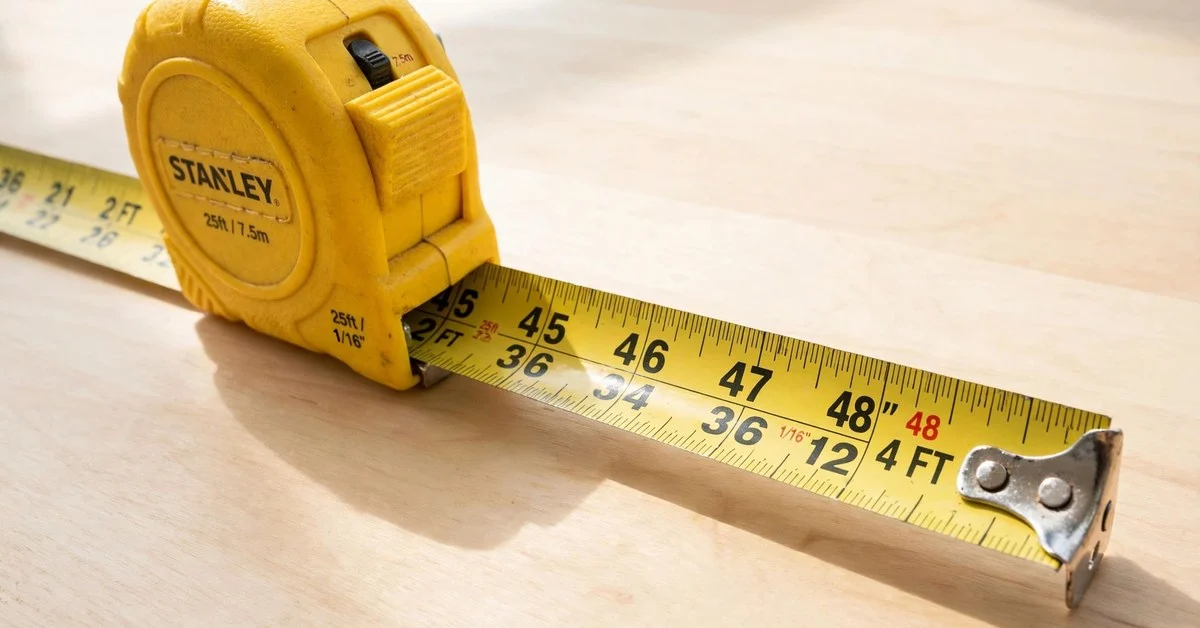
Last fall I helped a friend inspect a house, and the inspector disappeared under it through a hatch the size of a pizza box. Twenty minutes later he emerged, cobwebbed and grinning, with a full report on the plumbing. The clearance under that house? Four feet — 48 inches, 121.92 centimeters — and it’s one of the most consequential small measurements in home life. Four feet is the height of spaces you’re meant to crouch in, not stand in: crawl spaces, attics, playhouses, coops. It’s a working height, a kid height, a garden height. Learn to see it and you’ll understand half the low spaces in your life. It’s the height of the playhouse, the chicken coop, and the raised bed — structures built for small bodies and busy hands. Four feet is also the module the entire building industry thinks in, from plywood sheets to ceiling grids. This guide walks through fifteen four-footers, from crawl spaces to tomato plants, and teaches you how to move, work, and garden comfortably in spaces exactly this tall.
Rooms You Crouch In
Some spaces are four feet tall on purpose. They’re not mistakes or afterthoughts — they’re designed for small bodies, short visits, or storage, and knowing the height tells you what the space is for.
A kids’ play tent typically stands about four feet tall at its peak — just enough for a small child to stand upright inside. That height is the whole design brief: tall enough for imaginative play, short enough to fit in a living room and collapse into a closet. If your kindergartner can stand in it with headroom to spare, you’re looking at roughly 48 inches.
A plastic playhouse rises about four feet at its little roof peak. Manufacturers size them so a toddler can walk in the door (usually about 3 feet high) while the whole structure stays stable and shippable. Parents assemble them on patios everywhere, and that four-foot silhouette — door, window, tiny chimney — is instantly recognizable from the street.
A tall crawl space offers about four feet of clearance between the ground and the floor joists above. That’s generous as crawl spaces go — enough to army-crawl comfortably, sit up, and actually work on pipes and wiring without the claustrophobic squeeze of an 18-inch crawl. Inspectors love a four-foot crawl; it’s the difference between a quick look and a real inspection.
An attic kneewall — the short vertical wall where a sloped roof meets the attic floor — commonly runs about four feet high. It boxes in the eaves’ dead space and gives the finished attic a clean edge. When you’re up there ducking under the rafters, that four-foot wall is the line between “storage” and “bonk your head.”
The Backyard Flock and Plot
Gardeners and chicken-keepers live in four-foot dimensions. It’s the height of structures you reach into, over, and around all season long.
A chicken coop for a backyard flock often stands about four feet tall — high enough for hens to roost comfortably on raised bars, low enough to reach every corner for cleaning. Walk-in coops exist, but the classic 4-foot coop on legs keeps the birds safe from predators and the eggs at a convenient gathering height. Four feet of coop, a lifetime of breakfast.
A 4-foot rabbit hutch is the standard single-level home for a medium rabbit. Forty-eight inches of length gives a bunny room to hop three times, stretch fully, and keep sleeping and bathroom corners separate — the three things a rabbit behaviorist will ask about first. It’s the minimum dignified length, and responsible owners know it.
A mini greenhouse around four feet tall shelters seedlings and tender plants through the shoulder seasons. The height fits a standard tomato start with room to grow, and the whole unit can sit on a patio or balcony. Four feet of greenhouse turns a brown thumb’s spring into a head start.
A 4-foot-tall boxwood hedge is the formal garden’s favorite boundary — clipped twice a year to a crisp 48 inches. At four feet it defines a space without blocking the view, which is exactly what hedges are for. Landscape designers spec this height for parterres and entry flanks because it reads as architecture, not just shrubbery.
A staked tomato plant typically tops out around four feet. Determinate varieties are bred to stop here, setting all their fruit in a tidy window — perfect for canning season. When the plant hits the top of its four-foot stake, you know the variety is doing what it promised.
A 4-foot garden trellis gives cucumbers, peas, and pole beans exactly enough ladder. The four-foot height keeps the harvest within easy picking reach — no step stool, no stretching. Flat-panel trellises at this height also double as handsome dividers between garden beds.
Four Feet That Works
Indoors, 48 inches is the width of getting things done — desks, storage, and the tools that keep a household running.
A 4-foot office desk is the work-from-home standard: 48 inches wide, deep enough for a monitor and keyboard with room for a notebook alongside. It fits a bedroom wall without dominating the room, which is why it’s the best-selling desk size in the country. Measure your wall before you buy — 48 inches fills more space than it sounds like.
A 4-foot firewood rack holds the classic face cord in miniature. Stack 16-inch logs four feet high along its four-foot length and you’ve got about a sixth of a full cord — enough for a season of weekend fires in most climates. The four-foot length is no accident: it’s the dimension the firewood industry standardized around.
A 4-foot LED shop light is the garage and workshop default, throwing bright, even light over a workbench or parking bay. The 48-inch tube matches the fluorescent fixtures it replaces, so it drops into existing housings. One four-footer lights a two-car garage bay; two of them make a workshop feel like daylight.
A wardrobe moving box stands 48 inches tall — four feet of cardboard with a metal hanging bar across the top. It’s designed around the clothes it carries: shirts and folded pants hang without touching the bottom. Movers will tell you it’s the single most civilized invention in the moving industry.
A chiminea — the clay or cast-iron outdoor fireplace — typically stands four to five feet tall. The four-foot body puts the fire mouth at a comfortable viewing height from a patio chair, and the chimney draws smoke up and away. It’s a campfire with architecture, and the height is calibrated for conversation.
The Ceiling Crawl: Living and Working in 4-Foot Spaces
Here’s the signature skill for this length: knowing how to operate in spaces that are four feet tall — because you’ll encounter them constantly, from crawl spaces to attics to the back of deep closets, and there’s a right way to move through them.
First, the posture rule: crawl, don’t stoop. A four-foot ceiling is exactly the wrong height for bending over — you’ll wreck your back in minutes. Drop to hands and knees (knee pads are non-negotiable on rough surfaces) and move like the space wants you to. Professionals who work in crawl spaces wear coveralls, gloves, and a headlamp, and they move slowly: every joist, pipe, and nail is at forehead height.
Second, measure headroom before you commit. That “four-foot” attic might be four feet only at the ridge, sloping to two feet at the eaves. Walk the space (crawl it) with a tape and find the true minimum. For storage, you need the full four feet across most of the floor; for a person to work, you need it along the path they’ll travel. Anything under 18 inches isn’t a crawl space, it’s a regret.
Third, know the legal line. Four feet of ceiling is fine for storage, play, and chickens — but habitable living space in the US generally requires seven feet of ceiling height. That cute plan to finish the attic into a bedroom dies at the four-foot kneewall unless the ridge gives you seven feet over enough floor area. Check your local code before you dream; inspectors measure, and they don’t negotiate.
Finally, the kid-height dividend. Four feet is a child’s domain — playhouses, tents, and low branches all live here. When you’re designing a space for kids, think in four-foot modules: shelves they can reach, tables they can see over, hideouts that feel enormous to them and cramped to you. The same 48 inches that makes you crouch makes a seven-year-old feel like royalty.
And don’t forget the garden-reach rule, which is where four feet earns its keep outdoors. Forty-eight inches is the maximum width for any bed you tend from the sides — two feet of reach from the left, two from the right, meeting in the middle. Wider than four feet and the center becomes a dead zone you can only reach by stepping in (and compacting the soil you’re trying to grow in). Narrower and you’re wasting path space. The 4×4 raised bed, the 4-foot hedge row, the 48-inch greenhouse bench — they’re all four feet for the same reason: it’s exactly as wide as a gardener’s arms.
What Renters, Gardeners, and Crawlers Ask
How do I measure a crawl space’s height accurately?
Measure from the ground (not the top of any debris) straight up to the underside of the floor joists, using a rigid tape — not a laser, which needs a clear line of sight you won’t have. Take readings in at least three spots: near the hatch, at the far end, and wherever pipes or ducts hang lowest, because the lowest obstruction is your real clearance. Write down the smallest number. That’s the height that matters for working, for code, and for your back.
Is a 4-foot crawl space actually tall enough to work in?
Yes — it’s luxurious by crawl-space standards. Four feet lets you sit upright, turn around, and use both hands on a pipe or wire, which is all a plumber or electrician really needs. Bring a headlamp, knee pads, and a small tarp to lie on, and ventilate the space if you’ll be down there a while. Anything under two feet is a squeeze; four feet is a workspace.
Can I finish a basement with a 4-foot ceiling into living space?
No — not legally. US residential codes generally require seven feet of ceiling height for habitable rooms, and four feet doesn’t come close. You could dig down or lift the house, but both are major structural projects. What a four-foot basement is good for: storage, a workshop you sit (not stand) in, or mechanical systems. Keep it dry, keep it accessible, and don’t sleep down there.
How many plants fit in a 4×4 raised bed?
Sixteen — one per square foot, if you follow the square-foot gardening method the 4×4 bed was designed for. The classic layout: 16 carrots or radishes per square, 9 bush beans, 4 lettuces, or 1 tomato per square. The four-foot width is the genius of the design — you can reach the center square from either side without stepping on the soil and compacting it.
Will a 48-inch desk really fit two monitors?
Yes, with planning. Two 24-inch monitors side by side need about 44 inches of width including bezels and a little gap, which leaves you four inches on a 48-inch desk — tight but workable. Use monitor arms clamped to the back edge to reclaim the desk surface, and keep the keyboard centered. For two 27-inch monitors, step up to a 60-inch desk; 48 inches will feel like a cockpit.
How much firewood does a 4-foot rack actually hold?
About a sixth of a cord, if you stack 16-inch logs four feet high along the full four-foot length. The math: 4 x 4 x 1.33 feet is roughly 21 cubic feet, and a full cord is 128 cubic feet. That’s enough for a winter of weekend fires in mild climates, or about a month of nightly fires somewhere genuinely cold. For primary heating, you’ll want the full 8-foot rack — a third of a cord per row.
See also: how long 6 feet is.
See also: how long 48 inches is.
Four Feet, Head High Enough
Four feet is the height of the practical world — the crawl space, the garden bed, the desk that fits the spare room, the coop that keeps the hens safe. It asks you to crouch, to reach, to work with your hands instead of your assumptions. Learn its spaces and you’ll move through low clearances with confidence instead of dread, plant a garden your arms can actually tend, and buy furniture that fits the wall the first time. Forty-eight inches isn’t much until you need it. Then it’s exactly enough — and now you know precisely where to find it.

I’m Dane Whitfield, a content writer at MeasureZit.com, where I specialize in creating clear, accurate articles on measurements, unit conversions, and mathematical concepts. I enjoy breaking down complex numerical topics into simple, practical explanations that readers can actually use. My goal is always precision and clarity helping people make sense of the numbers around them.