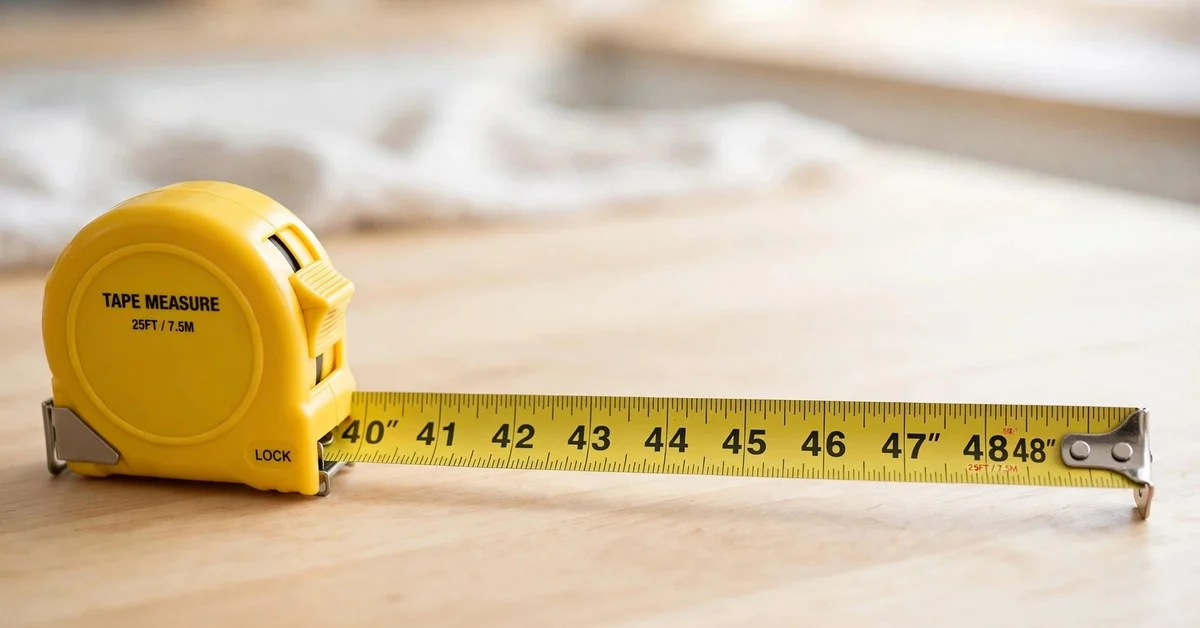
Spread your arms wide, fingertip to fingertip. For most adults, that wingspan lands within an inch or two of your height — and if you’re anywhere near average, you’re looking at roughly 48 inches of reach, exactly four feet. That’s the secret of this length: it’s human-scaled. Forty-eight inches is 121.92 centimeters, about 1.22 meters, and it shows up wherever people build things to fit people — garden gates you walk through, appliances you cook on, tables you gather around. Learn to feel four feet in your arms and you’ll carry a tape measure everywhere. It’s the width of the gate you stroll through, the pro range serious cooks graduate to, and the exact height of an average seven-year-old. Contractors think in four-foot modules because plywood, drywall, and ceiling grids all obey it. This guide tours fifteen four-footers — from garden gates to emperor penguins — and teaches you to calibrate the finest measuring instrument you own: your own arms.
Four Feet in the Garden
Outdoors, 48 inches is the dimension of welcome. Gates, arbors, and beds all seem to converge on four feet because it’s wide enough to walk through with a wheelbarrow and narrow enough to feel like an entrance rather than a gap.
A 48-inch garden gate is the classic walk-through width. Narrower gates force you to turn sideways with a bag of mulch; wider ones feel like you’re opening a driveway. Most wooden and metal garden gates are built 48 inches wide for exactly this reason — it’s the width of a comfortable human passage.
A 4-foot-wide garden arbor frames a path the way a doorway frames a room. The 48-inch opening lets two people stroll through side by side, which is the whole point of a garden entrance. Climbing roses or wisteria will cover the structure in a season or two, but the four-foot width is what makes it feel right from day one.
A 4×4-foot raised bed is the square-foot gardener’s standard: 48 inches per side, divided into sixteen one-foot squares. The four-foot width is deliberate — it’s the maximum reach of an average gardener leaning in from either side, so you can tend the middle without ever stepping on the soil. Sixteen squares, zero wasted steps.
The Kitchen’s 48-Inch Heavyweights
Step up from the standard 30-inch appliance and you enter four-foot territory, where kitchens get serious. These are the widths of pro-style cooking, built for people who treat dinner like an event.
A 48-inch wide pantry cabinet is the kitchen’s storage wall — four feet of adjustable shelves behind double doors. It swallows small appliances, bulk buys, and the cereal-box collection in one organized sweep. Kitchen designers spec the 48-inch width when a walk-in pantry isn’t in the cards: it’s the most storage you can get without a separate room.
A 48-inch built-in refrigerator is the side-by-side giant, usually split into French doors over freezer drawers. Luxury brands build to this width because it holds a week’s groceries for a family without the doors swinging into the walkway. Measure your kitchen doorway before delivery day — the fridge fits the kitchen, but does it fit the hallway?
A 48-inch workbench is the garage standard — four feet of butcher block or steel that holds a vise, a project, and the tools you’re actually using. It fits against most garage walls with room to walk around, which is why 48 inches became the default. Bolt it down, level it once, and it’ll outlive the car parked next to it.
Doors, Swings, and Goals
Four feet is also the width of gathering — the openings and furniture that bring people together, indoors and out.
A pair of 24-inch French doors opens to exactly 48 inches of doorway. Each door is a comfortable single width, but together they create a grand four-foot passage for moving furniture, hosting parties, or just letting the breeze through. It’s the architectural equivalent of opening your arms.
A 48-inch porch swing seats two adults with a little elbow room to spare — the classic width that’s been hanging from porch ceilings for a century. Shorter swings feel cramped for two; longer ones need heavier chains and deeper porches. Four feet is the sweet spot where a swing feels generous but still cozy.
A pop-up soccer goal for backyard practice usually measures 4 feet tall by 6 wide. The four-foot height matches a young goalkeeper’s reach and makes the goal challenging but not impossible for kids. Coaches love this size because it teaches placement over power — you have to aim, not just blast.
Four Feet in the Wild
Nature builds to four feet more often than you’d think. These are the animals that stand about as tall as a kitchen counter or stretch about as long as your arm span.
An emperor penguin stands about 48 inches tall — four feet of tuxedoed bird waddling across Antarctic ice. They’re the tallest penguins on Earth, and at four feet they’d come up to the chest of an average adult. Picture one next to a kindergartner and the kid finally meets someone their own height.
A great blue heron stands roughly four feet tall on those impossibly thin legs, with a six-foot wingspan folded neatly against its body. You’ll see them motionless at the edges of ponds and marshes, and that 48-inch height is what makes them look so startlingly human in silhouette — like a person standing in the shallows.
A ball python typically reaches about four feet as an adult, making it one of the most popular pet snakes precisely because of its manageable size. Four feet of snake sounds dramatic until you see one draped over an owner’s arms — then it just looks like a thick, slow-moving rope that happens to be alive.
The Jobsite’s Four-Footers
Contractors love four feet because it divides cleanly — half of eight, double of two, a third of twelve. The jobsite is full of 48-inch standards hiding in plain sight.
A 4-foot step ladder is the homeowner’s ladder: 48 inches tall when open, reaching about eight feet with a person standing on it. It handles ceiling fans, high shelves, and gutter-adjacent trim without the intimidation factor of an extension ladder. If you own exactly one ladder, this is probably it.
A standard shipping pallet measures 48 by 40 inches — the 48-inch side is the one forklifts and racking systems are designed around. Every warehouse in North America speaks this dimension fluently. Stack two pallets’ worth of boxes and you’ve got a four-foot cube of commerce.
A 4-foot length of PVC pipe is the plumber’s module. Pipe comes in 10-foot sticks, but repairs, vents, and drain runs get cut to four-foot sections because they fit in a truck bed, carry under one arm, and span most of the gaps you’ll actually encounter. Ask for “a four-footer” at the supply house and nobody blinks.
Your Arms Know Four Feet: The Reach Test
Here’s the signature trick for this length: your own wingspan is a 48-inch gauge waiting to be calibrated. The Vitruvian observation — arm span roughly equals height — holds surprisingly well across body types, usually within two inches. That means a 5-foot-8 person spans about 68 inches, a 6-footer spans 72, and a 4-foot child spans 48. But the real power move is measuring your half-span: fingertip to the center of your chest. For most adults that’s 30 to 36 inches. Two half-spans, fingertip to fingertip across your chest, and you’ve bracketed four feet without moving your feet.
Try the two-counter-depth rule next. Standard kitchen and bathroom counters are 24 to 25 inches deep. Two counter depths laid end to end: 48 to 50 inches. When you’re in a showroom wondering whether a 48-inch vanity will fit a wall, pace it as two counter-depths. Your hands already know what 24 inches feels like from a lifetime of kitchens — doubling it is free.
For vertical estimates, use the kid ruler. An average 7-year-old stands about 48 inches tall. If you have kids, nieces, nephews, or neighbor kids in your life, you know this height intimately — it’s the height of a second-grader looking you in the stomach. Any object that comes up to a 7-year-old’s crown is four feet tall. Parents do this instinctively; now you can do it deliberately.
Finally, the table-span test: sit at a 48-inch table (a standard card table or small dining table) and stretch your arms across it. Your fingertips should just about reach the far edge. Once you’ve felt that stretch, every 48-inch width — a desk, a vanity, a workbench — becomes something your body recognizes before your brain finishes the math.
But the real power move is the one-time calibration. Stand against a wall, stretch your arms wide, and have someone mark both middle fingertips with painter’s tape — then measure the distance once, properly, with a real tape. Write the number on a sticky note inside a kitchen cabinet. Most adults land between 64 and 72 inches, and now you know your exact wingspan forever. From then on, every estimate is arithmetic, not guesswork: need roughly four feet? That’s your wingspan minus a hand’s width (about 4 inches per hand). Need to check a 48-inch appliance width in a showroom? Stretch your arms and compare on the spot. One minute of measuring buys you a lifetime of four-foot confidence, no tape required.
What People Ask About Four-Foot Measurements
Is a 48-inch TV actually 48 inches wide?
No — and this trips up nearly every TV buyer. TVs are measured diagonally, corner to corner, so a 48-inch TV is 48 inches on the diagonal but only about 42 inches wide and 24 inches tall. The cabinet adds another inch or two. Always check the width and height specs separately before buying a stand, or your “48-inch” TV will swim in a 48-inch console — or worse, not fit at all.
Will a 48-inch bathroom vanity hold two sinks?
Yes, comfortably. A 48-inch vanity is the most popular double-sink width: each basin gets about 24 inches of territory, which is the minimum designers recommend per person. You’ll want the plumbing roughed in for two drains, and the mirror should span most of the 48 inches so both users can see themselves. It’s the smallest width where double sinks stop feeling cramped.
How wide should I make a garden gate?
Forty-eight inches is the sweet spot for a walk-through garden gate. Thirty-six inches works for people but not wheelbarrows; sixty inches starts to feel like a vehicle entrance and needs heavier posts to prevent sagging. Build the gate 48 inches wide, hang it on 4×4 posts set in concrete, and leave a finger’s width of clearance on the latch side so it never sticks in humid weather.
Why do contractors talk about “four-foot modules”?
Because the building supply industry does. Plywood and drywall come 4 feet wide, ceiling grids are 2×4 feet, and wall studs are spaced 16 inches — which divides 48 inches exactly three times. Designing in four-foot modules means every sheet lands on a stud with no ripping, no waste, and no weird slivers. When a contractor says “let’s keep it on the module,” they’re saying “let’s not pay for cuts we don’t need.”
Is 48 inches enough space behind a dining table for the chairs?
Yes — it’s generous. Designers recommend 36 inches minimum behind a dining table so chairs can pull out and someone can walk behind a seated diner; 44 to 48 inches is the comfort zone. At 48 inches, a guest can slide their chair back and stand without performing furniture Tetris. If your dining room is tight, 36 inches works, but 48 is where dinner parties stop feeling like a subway car.
Can an average person reach across 48 inches?
On a table or counter, yes — barely. The average adult’s forward reach from a standing position is about 25 to 30 inches, so reaching the far edge of a 48-inch-deep surface requires leaning in. That’s why kitchen designers cap island depths around 48 inches and why you’ll never see a 48-inch-deep desk: anything deeper puts the far half permanently out of reach. If you’re planning a workbench, keep the working depth under 30 inches.
See also: how long 36 inches is.
See also: how long 72 inches is.
Four Feet at Arm’s Length
Forty-eight inches is the most human measurement there is — the span of your arms, the height of a seven-year-old, the width of a gate built for walking through. Calibrate your wingspan once, learn the two-counter-depth rule, and four feet stops being a number on a spec sheet. It becomes something your body already knows, ready whenever a tape measure isn’t. Next time a label says 48 inches, skip the mental math: spread your arms, picture the gate, remember the penguin. Four feet has been with you your whole life. Now you finally have a name for it — and fifteen faces to prove it.

I’m Owen Reeves, a content writer at MeasureZit.com, specializing in measurements, unit conversions, and mathematical concepts. I turn technical topics into clear, accurate content that’s easy to understand. My focus is precision, clarity, and genuinely useful information.