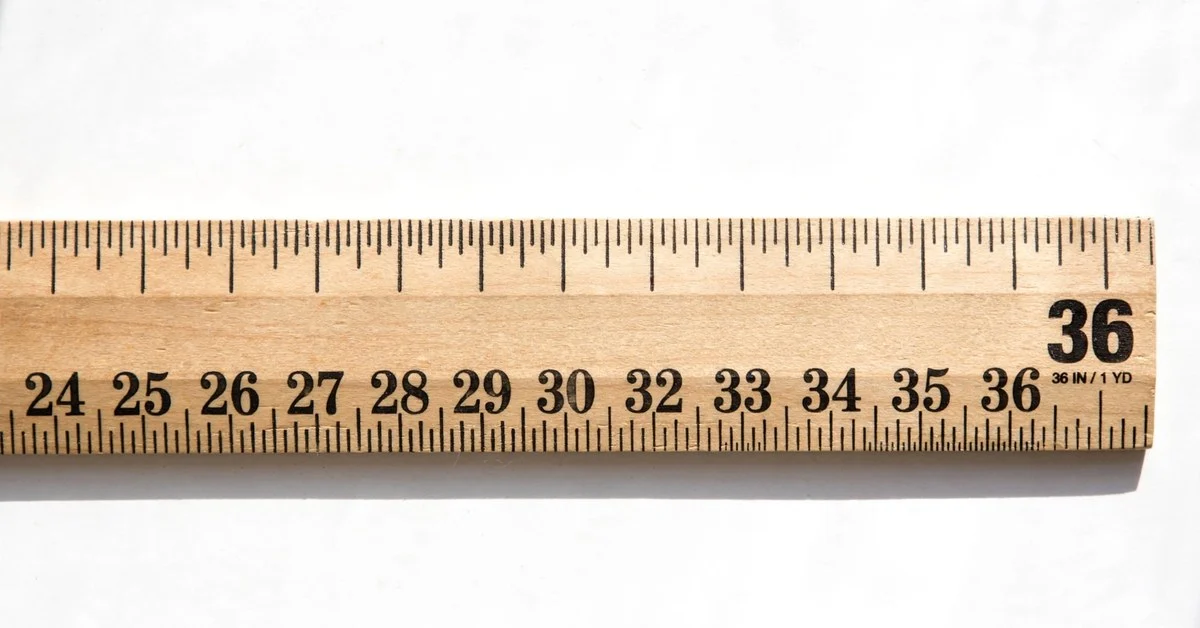
Last spring I tried to hem a pair of curtains with no tape measure in the house, just a vague memory that fabric is sold “by the yard.” I folded, guessed, pinned, and ended up with one panel that could have doubled as a tablecloth. The whole fiasco would have taken thirty seconds if I’d actually understood what I was holding: 36 inches is exactly one yard — three feet, no fractions, no fuss. In metric that’s 91.44 centimeters, a whisper under a full meter. It is the friendliest number in the imperial system, and once you learn to see it, you’ll spot it in kitchens, workshops, and lumber aisles everywhere you go. Sewers buy it by the bolt, carpenters cut it by the dozen, and golfers feel it in every putter they grip. Unlike awkward numbers such as 27 or 43 inches, a yard divides cleanly into halves, thirds, and quarters — which is why the whole imperial world bent itself around it. This guide walks you through fifteen places the yard hides in plain sight, plus a few tricks for carrying one in your head wherever you go.
The Kitchen Runs on 36 Inches
Walk into almost any kitchen in America and you’re surrounded by a silent agreement: the working surfaces all sit at one yard off the floor. It’s no accident. Generations of cabinetmakers, cooks, and appliance designers all converged on 36 inches because it fits the human body — high enough to chop without hunching, low enough to stir without lifting your shoulders.
A standard electric range stands 36 inches tall, and that number is load-bearing for your whole kitchen. Countertops butt right up against it, creating one continuous work surface. When you’re measuring for a slide-in replacement, that 36-inch height is the spec that matters most — get it wrong by even an inch and you’ll have an awkward lip or a gap collecting crumbs.
A 36-inch round pedestal table is the small-dining classic — a yard across, seating four in a cozy footprint. The single center pedestal means no corner legs to fight, which is why bistros and breakfast nooks love this size. At 36 inches it fits corners and bay windows that would choke on a rectangular table.
A 36-inch towel bar is the long-format option for bathrooms with the wall space. Most bars run 18 or 24 inches, but the 36-inch version holds two full-size bath towels side by side without bunching. If you’ve ever draped a damp towel over a too-short bar and watched it slide into a heap, you understand the appeal.
A 36-inch grab bar is the workhorse of accessible bathrooms. Mounted horizontally beside a toilet or along a shower wall, it gives a full yard of steady handhold. Building guidelines favor this length because it covers the natural range of a reaching arm without forcing anyone to reposition their grip mid-move.
A comfort-height bathroom vanity rises 36 inches from floor to countertop — a few inches taller than the old 32-inch standard. Taller adults asked for it, and remodelers listened. If your back aches after brushing your teeth at a low sink, you’re feeling the difference those inches make.
The Workshop’s 36-Inch Crew
Carpenters think in feet, and three feet is their favorite chunk. Lumber, dowels, and tool handles all seem to land on 36 inches with suspicious regularity. It’s the length that fits in a car trunk, spans a workbench, and matches the reach of an outstretched arm.
A 3-foot 2×4 board is the project-sized lumber you’ll find pre-cut at every hardware store. At 36 inches long, it’s the honest middle ground between a full 8-foot stud and a scrap bin. Shelving cleats, planter boxes, and garage hooks all start life as a 3-foot 2×4.
A 36-inch wooden dowel hangs on the craft aisle in every big-box store, usually in diameters from a quarter inch up to an inch and a half. Closet rods, garden stakes, curtain finials, and about ten thousand school projects begin as one of these. It’s the humble workhorse of the craft aisle.
A splitting maul pairs a heavy wedge head with a handle around 36 inches long. That three-foot lever is what turns a strong swing into firewood — the length multiplies your force while keeping your hands a safe distance from the splitting wedge. You’ll feel every inch of it after an afternoon’s work.
A pickaxe carries a 36-inch hickory handle, and miners and trail crews have sworn by that length for over a century. It’s long enough for a full two-handed swing and short enough to control on a slope. When you see a trail crew breaking rocky ground, you’re watching 36 inches of leverage in action.
A 3-foot step ladder stands 36 inches tall when open — the two-step helper that lives in laundry rooms and pantries. It puts the top shelf of a kitchen cabinet within reach without the wobble of a chair. If you own one, you’ve already got a perfect 36-inch reference hiding in a closet.
Around the House at 36 Inches
Beyond the kitchen and the garage, the yard keeps showing up in furniture and fixtures. Designers love 36 inches because it’s substantial without being bulky — big enough to be useful, small enough to fit through a doorway.
A counter-height dining table stands 36 inches tall, matching your kitchen counters so the two surfaces flow together in open floor plans. The matching stools run about 24 to 26 inches at the seat. Eat at one and notice how your elbows rest — that comfort is the 36-inch standard doing its job.
A 36-inch round wall mirror is the statement size for entryways and bathrooms. At a yard across, it’s big enough to check your whole outfit but light enough to hang on a single sturdy hook. Interior designers reach for this diameter when a 24-inch mirror feels skimpy and a 48-inch one feels like a wall of glass.
A 36-inch dog crate is the go-to size for medium-large breeds — think border collies, beagles on the big end, and compact Labradors. The 36-inch length gives a dog room to stand, turn around, and stretch out. If you’re crate shopping, this is the size the staff will point most owners toward.
A 36-inch lateral file cabinet is the wide-format office standard, a yard across with drawers built for side-to-side hanging folders. It doubles as a printer stand or a credenza in home offices. Measure any office supply aisle and you’ll find this width repeated like a drumbeat.
A 36-inch bar cart is the entertainer’s sidekick — a yard wide, with two tiers for bottles, glassware, and the cocktail shaker. The 36-inch width rolls through standard doorways and parks against any wall. Stock the top with spirits and the bottom with backup, and you’re ready for guests.
Thirty-Six Inches at a Glance
| Unit | 36 Inches Equals |
|---|---|
| Feet | 3 ft exactly |
| Yards | 1 yd exactly |
| Centimeters | 91.44 cm |
| Millimeters | 914.4 mm |
| Meters | 0.9144 m |
| Kilometers | 0.0009144 km |
The 36-Inch Eye: Training Your Built-In Ruler
Here’s the part that makes 36 inches more useful than any other length on this site: you can learn to feel it. A yard is the one imperial measurement your body already half-knows, and with a little calibration it becomes a mental tape measure you carry everywhere.
Start with the countertop check. Press your palm flat on your kitchen counter and notice where the surface meets your body — for most adults it’s right around the upper thigh. That contact point is 36 inches off the floor. Every kitchen you ever walk into has this reference built in. When you need to judge whether a table, a planter, or a stack of boxes is about a yard tall, compare it to the ghost of your own counter.
Next, learn the two-forearm trick. Bend your elbow and measure from the bony tip of the elbow to the tip of your middle finger — for most adults that’s 17 to 19 inches. Double it and you’re holding roughly 36 inches between your two forearms, elbow to fingertip. Carpenters and fabric-store regulars use this constantly: lay one forearm’s length end to end with the other, twice, and you’ve marked a yard without any tool at all. Measure your own forearm once with a real ruler and you’ll know your personal number forever.
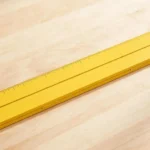
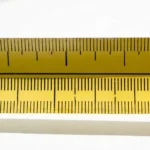
The third technique is the three-ruler chain. Three standard 12-inch rulers laid end to end make exactly 36 inches, and picturing them is easier than picturing 36 individual inches. When a product page says 36 inches wide, imagine the rulers stretching across it. Your brain handles “three rulers” far better than “thirty-six inches” — chunking is how human estimation actually works.
Finally, there’s the fabric test. Next time you’re near a fabric store, ask for a single yard of the cheapest muslin and hold it up. Drape it, fold it in half (18 inches — now you know that too), stretch it wide. A yard of cloth in your hands teaches the length the way no chart can, because your muscles remember what your eyes forget. Sewers have known this forever: the yard isn’t a number, it’s a handful.
One more calibration trick: the stride check. An average adult’s walking stride — heel to heel of consecutive steps — runs about 30 inches, so a slightly stretched step lands near 36. Pace off deliberate, slightly long steps across a room and count: four paces is roughly four yards, or twelve feet. It’s not survey-grade, but for estimating a rug size or a fence run, the stride check gets you within a foot over thirty feet — plenty for planning. Combine it with the countertop check for heights and the two-forearm trick for widths, and you’ve got a full 36-inch toolkit that works in kitchens, stores, and lumber aisles alike. The yard stops being something you look up and becomes something you wear.
Questions People Ask About the 36-Inch Yard
Why is 36 inches called a yard, anyway?
The word is old — it comes from an ancient unit based on the length of a belt or girdle, roughly the distance from nose to fingertip of an outstretched arm. One popular story credits King Henry I of England with standardizing it as the length of his own arm. Whatever the true origin, the practical definition won: a yard is exactly 3 feet, exactly 36 inches, and it has been the backbone of English measurement in cloth, land, and sport for centuries.
If I buy a yard of fabric, is it always 36 inches long?
Yes — by length, a yard of fabric is always 36 inches. What changes is the width, which depends on the bolt: quilting cotton is usually 44 inches wide, upholstery fabric can run 54 to 60 inches. So a “yard” from the quilting section is a 36-by-44-inch rectangle, while a yard of upholstery fabric might be 36 by 60. Always check the bolt width before you buy, or your project math will be off by a third.
Will a 36-inch vanity fit in my small bathroom?
Usually, yes — 36 inches of width needs about 40 inches of wall once you count a little breathing room on each side. The bigger question is the door swing and walking space: building codes want at least 21 inches of clear space in front of the vanity. Measure your wall, subtract the vanity’s 36 inches, and make sure what remains still lets the door open and a person pass.
Why are kitchen counters 36 inches high instead of 34 or 38?
It comes down to elbows. When you stand with your arms relaxed, your elbows sit roughly 40 to 44 inches off the floor; a work surface a few inches below the elbow lets you chop, stir, and knead without hunching or shrugging. Early 20th-century kitchen researchers tested heights relentlessly and 36 inches kept winning for the average adult. Taller cooks sometimes raise counters to 38 or 39 inches, but 36 remains the default because it fits the most bodies.
Can I measure 36 inches with my phone?
You can get close. Most smartphones are 6 to 6.5 inches long, so six phones laid end to end land right around 36 inches. Both iPhone and Android measure apps use augmented reality to estimate distances — fine for rough guesses, unreliable past an inch or two of error. For anything that matters, like cutting fabric or fitting furniture, the two-forearm trick in this article will beat a phone app every time.
See also: how long 32 inches is.
See also: how long 48 inches is.
One Yard, Learned for Life
Thirty-six inches is the rare measurement that asks nothing of your memory — it’s a yard, three feet, a countertop, and a doubled forearm, all at once. Learn it the physical way: press your palm to the counter, double your forearm, hold a yard of muslin, pace it off in long strides. Do that once and the number stops being a number — it becomes a span your body recognizes. The next time a project, a package, or a curtain panel says 36 inches, you won’t reach for a tape or open a converter app. You’ll already know, the way you know your own height. One yard, learned for life, carried everywhere.

I’m Dane Whitfield, a content writer at MeasureZit.com, where I specialize in creating clear, accurate articles on measurements, unit conversions, and mathematical concepts. I enjoy breaking down complex numerical topics into simple, practical explanations that readers can actually use. My goal is always precision and clarity helping people make sense of the numbers around them.