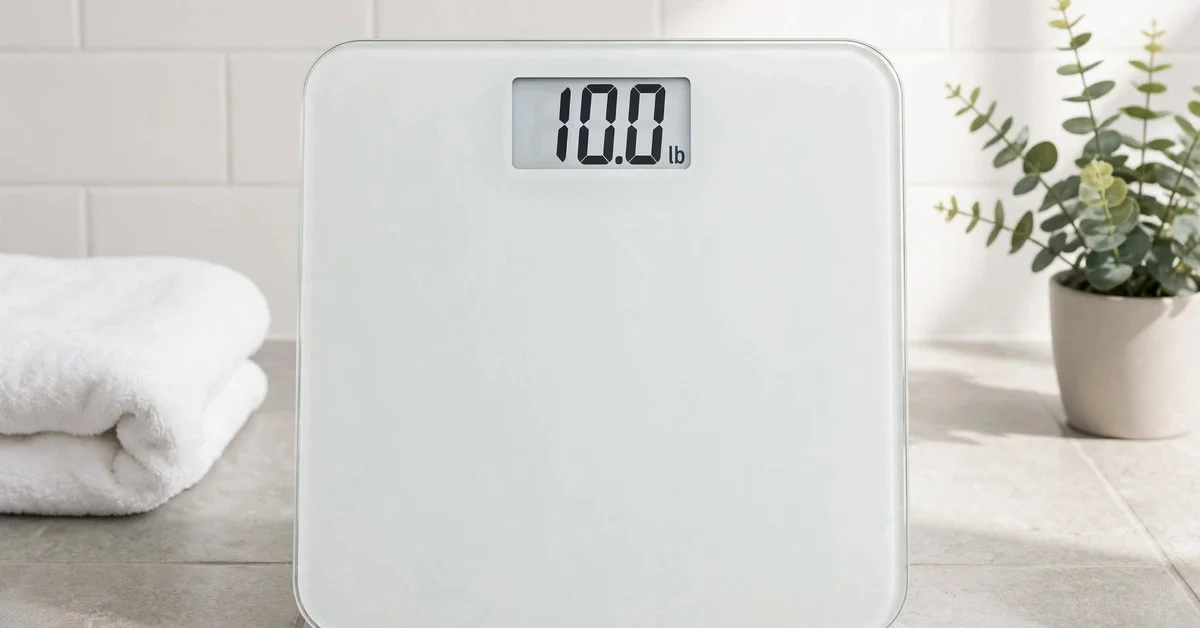
There is a moment in every grocery trip when you have to decide: one bag or two, one trip or two trips, hero or sensible person. The weight behind that decision is almost always about 10 pounds. Ten pounds is the classic single-bag limit, the standard dumbbell jump, the size of the bags stacked in the produce aisle. It is heavy enough to notice and light enough to argue with, which makes it the most useful carrying weight in daily life to know by feel.
A 10-pound load is also where technique starts to matter. Grip, handle, balance, and distance all change how 10 pounds feels, and the grocery store is the laboratory where everyone runs this experiment weekly. This guide covers the exact numbers, fifteen everyday objects that weigh about 10 pounds, and the grocery-bag carry test: a practical method for judging any 10-pound load before you commit to carrying it.
Ten pounds, exactly
Ten pounds is 160 ounces, about 4,536 grams, or 4.54 kilograms. It is ten 1-pound anchors stacked together, which makes it the easiest weight in the imperial system to build mentally: picture ten butter boxes, ten pasta boxes, ten cans of beans. In water terms, 10 pounds is about 1.2 gallons, since each gallon weighs 8.34 pounds; add roughly two pints to a gallon jug in your mind and you have it.
The reason 10 pounds shows up everywhere in commerce is that it sits at the edge of comfortable one-handed carrying for most adults. Bag it, box it, or jug it and the average person can manage it from shelf to car without a second thought, which is exactly why so many products are sold in 10-pound sizes. It is the largest weight that still feels like an errand rather than a workout.
The grocery-bag carry test
Here is the signature skill for this weight: a repeatable test, run in the aisle, that tells you whether a given 10-pound load is a one-bag carry or a two-bag job. It accounts for the three things that change how weight feels: the handle, the balance, and the distance.
Step one: read the handle. Before lifting, look at what your fingers will hold. A 10-pound bag of flour has no handle at all, you will hug it. A rigid plastic tote handle concentrates all 10 pounds onto two finger-widths of plastic, which hurts out of proportion to the weight. A wide reusable-bag strap spreads the same 10 pounds across your palm and feels dramatically lighter. The test’s first rule: the handle is part of the weight. If the handle is bad, the carry is bad, regardless of what the scale says.
Step two: the three-second lift. Lift the load and hold it still for three seconds, arm hanging straight. A true 10-pound load pulls firmly but doesn’t demand a grip adjustment. If your fingers start sliding or your shoulder hikes up in those three seconds, the effective weight is higher than 10 pounds, either from awkward shape or a bad handle, and you should split the load. This test works because three seconds is long enough for your grip to report honestly but short enough to run on every item.
Step three: the parking-lot estimate. Judge the distance before you commit. Ten pounds carried fifty steps is an errand; ten pounds carried five hundred steps is a workout. The rule of thumb: if the walk is under a minute, carry by hand freely. One to three minutes, switch hands halfway or balance the load across both arms. Over three minutes, use a cart, no exceptions, because grip fatigue makes the last hundred steps the ones where bags tear and fingers give out.
Step four: balance the pair. Two 10-pound bags, one in each hand, feel lighter than one 10-pound bag in one hand. The balanced load keeps your spine straight and splits the grip work across both hands, which is why experienced shoppers distribute weight evenly rather than loading one heroic bag. Twenty pounds balanced beats ten pounds lopsided: the body prefers symmetry to lightness.
The plastic-bag corollary. A standard plastic grocery bag starts to feel risky around 10 pounds: the handles stretch, thin, and cut into the hand. That handle stretch is actually a built-in scale, your hand’s own 10-pound indicator. When the handles go from flexing to thinning, you have found the bag’s limit. Double-bagging buys margin, but the real fix is the reusable tote, whose wide straps move the practical limit well past 10 pounds.
The stairs problem. Stairs multiply every weight. Ten pounds on flat ground is an errand; ten pounds up a flight of stairs is a lift with every step, because each step is a small squat with the load. The technique: switch to the two-hand hug carry on stairs, load against your chest, and take the steps at a steady pace instead of rushing. Never carry 10 pounds in one hand down stairs while holding the rail with the other, that’s the correct move, not a compromise; the rail hand is doing more work than the load hand. And if the trip involves both stairs and distance, that’s two problems, solve them in order: cart for the distance, hug carry for the stairs.
Fifteen 10-pounders you’ll meet in the aisles
- A 10-pound bag of charcoal briquettes. The grilling-season staple, dense and lumpy. Hoisting it into the cart is the textbook 10-pound lift, handle-free and honest.
- A 10-pound bag of flour. Sold in the big bag for serious bakers, soft and shifting. It drapes over the forearm instead of hanging from the fingers, which changes the whole feel of the weight.
- A 10-pound bag of onions. The mesh bag from the produce section, round and rustling. The onions settle as you carry it, so the load moves, a small preview of water’s sloshing problem.
- A large tub of laundry pods. About 10 pounds of detergent in a rigid plastic tub with a handle. The handle makes it the easiest-feeling item on this list, proof of the handle rule.
- A 10-pound sledgehammer. Head plus full-length handle, about 9 to 10 pounds total. The most dramatic 10 pounds here, and the one that makes the weight feel smallest, because the handle is perfect.
- A 10-pound medicine ball. Gyms stock these for core work, and the weight is exact. Catching one tossed at you is the fastest possible education in what 10 pounds means.
- Two reams of printer paper. Each ream is 5 pounds, so two make exactly 10. Office workers carry this pair under one arm regularly, the flattest 10 pounds on the list.
- A packed diaper bag. Diapers, wipes, bottles, changes of clothes: a fully packed diaper bag runs about 10 pounds. New parents carry this weight daily, which builds the strongest 10-pound arms in civilian life.
- An infant car seat with base. About 11 pounds before the baby. The curved handle forces an awkward one-sided carry, making it feel heavier than the scale says, a perfect case study in handle physics.
- A small hard cooler packed with ice and cans. Cooler, ice, and a dozen cans total roughly 10 to 12 pounds. The rigid handle and boxy shape make it the most carry-friendly 10 pounds here.
- An armload of firewood. Four or five split logs run about 12 pounds. The bark, the uneven shapes, and the hug-carry make it feel like honest work, which it is.
- A gas-powered leaf blower. About 10 pounds with fuel. Yard crews carry this all day on a shoulder strap, which is the professional solution to the distance problem.
- A 1-gallon watering can, full. A gallon of water is 8.34 pounds plus the can, landing near 9 pounds. Gardeners make this trip dozens of times a season, the gentlest 10-pound commute there is.
- A small home paper shredder. About 10 pounds of motor and bin. It lives under desks and gets lifted exactly twice: in and out of the box.
- A queen air mattress with built-in pump. About 10 pounds rolled up. Guests meet this weight when the mattress comes out of the closet, and hosts meet it again when it goes back.
Ten pounds at the airport: the carry-on game
The grocery-bag test has a travel twin, because 10 pounds is also the unit of luggage strategy. Most US airlines set no weight limit for carry-ons, but international and budget carriers do: 10 kilograms, about 22 pounds, is the common ceiling, which is two 10-pound bags plus a little margin. Packing to that limit is an exercise in tens.
The bathroom-scale trick is the traveler’s calibration: weigh yourself holding the bag, weigh yourself without it, subtract. Do it the night before, not at the counter, because repacking at the airport is how 10 pounds becomes a public performance. And remember the handle rule from the grocery test: a carry-on’s telescoping handle and wheels move the practical limit well past what your fingers could manage, which is why 22 pounds rolls easily but carries badly.
The overhead bin is the final exam. Lifting 15 to 20 pounds of bag into the bin is a press performed in an aisle, in front of an audience, usually with the seatbelt sign about to come on. Travelers who have done the grocery-bag carry test know this lift already: it’s the same weight, the same three-second judgment, the same decision to ask for help instead of being a hero. Flight attendants will tell you the overhead-bin shoulder is one of the most common travel injuries, and it comes from treating 20 pounds like nothing because the wheels made the terminal easy.
Pack in tens and the whole system gets simple: the laptop bag is about 10, the carry-on is about 20, the checked bag flirts with 50. Three numbers, three bags, no scale required at the gate.
Questions about carrying 10 pounds
Is 10 pounds too heavy for a child to carry?
It depends on the child and the carry. A 10-year-old can typically manage 10 pounds for a short distance, a bag from the car to the kitchen, but the handle matters more than the weight: a backpack-style carry is far safer for a child than a one-handed bag. As a rule, keep kids’ sustained carries under about 10 to 15 percent of body weight, and let the three-second lift test decide individual cases.
Why does 10 pounds feel heavier at the end of the shopping trip?
Grip fatigue is cumulative and it doesn’t reset between items. Every bag you lifted in the store spent a little of your forearm’s endurance, so the last bag of the trip is lifted by tired hands. This is also why the final carry to the car feels hardest: it isn’t heavier, you are weaker. The fix is the cart for the long hauls and balanced two-hand carries for the short ones.
How many 10-pound bags make 50 pounds?
Five, exactly. The 10-pound bag is the standard subunit for thinking about heavy weights: five bags is 50 pounds, ten bags is 100. Movers, gardeners, and DIYers all do this math instinctively, which is one more reason to have the single 10-pound bag calibrated in your hands.
Can a plastic grocery bag really hold 10 pounds?
Usually yes, briefly. Standard plastic bags are typically rated for around 10 to 15 pounds, but the handles are the weak point, not the bag body. The failure mode is handle tear or finger pain, not the bottom dropping out. For a 10-pound load, double-bagging or switching to a reusable tote removes the drama entirely.
What is the heaviest thing I should carry in one trip from the car?
For most adults, about 20 to 25 pounds total, balanced across both hands: two 10-pound bags plus a little extra. Beyond that, grip and posture degrade faster than pride admits, and the second trip is always faster than recovering from a dropped bag. The two-trip rule isn’t weakness; it’s logistics.
See also: what weighs 50 pounds.
See also: what weighs 1 pound.
Pass the carry test
What weighs 10 pounds? The charcoal bag, the flour sack, the diaper bag, the medicine ball, two reams of paper: the inventory of an ordinary week, each one a small negotiation between your hands and gravity. And now you have the test for all of them: read the handle, hold for three seconds, judge the distance, balance the pair. Ten pounds is the weight where carrying becomes a conscious act, and conscious acts go better with a method. Run the test in the aisle, respect what your fingers tell you, and the parking lot walk stays exactly what it should be: the easy part of the trip.

I’m Priya Sharma, a content writer at MeasureZit.com, specializing in measurements, unit conversions, and mathematical concepts. I turn technical topics into clear, accurate content that’s easy to understand. My focus is precision, clarity, and genuinely useful information.










