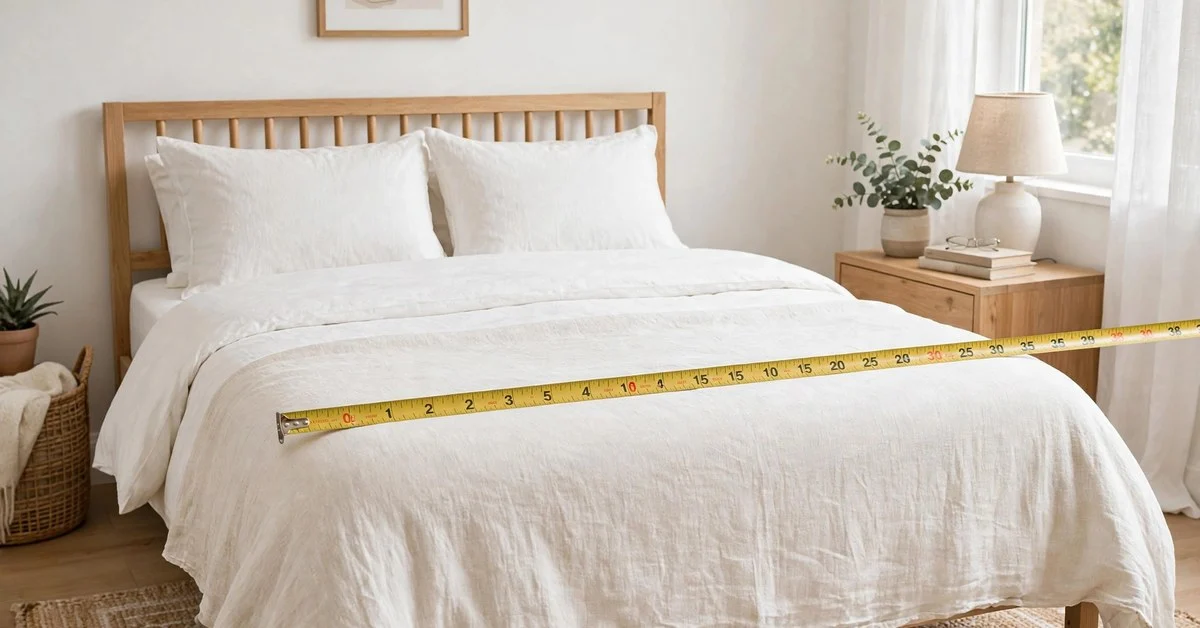
Stand in your kid’s bedroom with a tape measure and the question gets real fast: will the bed, the desk, and the dresser all fit without turning the room into an obstacle course? That is the exact moment twin bed dimensions start to matter. A twin bed measures 38 inches wide by 75 inches long (96.5 × 190.5 cm) — the smallest standard mattress an adult can sleep on, and the workhorse of children’s rooms, bunk beds, dorms, and guest rooms everywhere. Those two numbers decide everything downstream: which wall the bed goes against, whether a desk fits underneath the window, and how much floor survives for actual living. This guide is built around that planning job. You will get the dimensions in every unit, three room layouts that fit a twin plus a desk plus a dresser, fifteen real-world objects for scale, and straight answers to the questions parents ask before they buy.
Twin bed numbers in inches, feet, and centimeters
Here are the core twin bed dimensions, converted every way you are likely to need them — the tape measure reads inches, the furniture store tags read feet, and the flat-pack instructions read centimeters.
| Measurement | Inches | Feet and inches | Centimeters |
|---|---|---|---|
| Width | 38 | 3 ft 2 in | 96.5 |
| Length | 75 | 6 ft 3 in | 190.5 |
| Diagonal (corner to corner) | 84.1 | 7 ft 0 in | 213.6 |
| Sleeping surface | 2,850 sq in | 19.8 sq ft | 1.84 sq m |
The 38-inch width is the number that surprises people — it sounds narrow until you realize it is wider than most office desks are deep. The 75-inch length is the generous part: six feet three inches of sleeping length fits the average adult man (about 5 ft 9 in) with room to spare, which is why the twin keeps working from first big-kid bed through the teenage years. Note that these are mattress dimensions. A frame adds roughly 2 to 4 inches on each side, so plan on a footprint closer to 41 × 78 inches once the bed is dressed and framed.
The floor space a twin actually claims
A mattress footprint of 38 × 75 inches is only the beginning. A bed you cannot get into is furniture, not a bed, so the honest planning number includes clearance. On the long side you climb in from, leave 24 to 30 inches of walkway — 24 is workable, 30 is comfortable. At the foot, leave nothing if the bed goes against a wall, or 36 inches if it holds drawers you will actually open. Add it up: a twin against one wall with a comfortable side walkway claims a floor zone of roughly 68 × 75 inches, or about 35 square feet. In a 10-by-10-foot room (100 square feet), the bed and its breathing room take about a third of the floor. That remaining two-thirds is your budget for the desk, the dresser, and the door swing — and the layouts below spend it three different ways.
Three kid-room layouts: twin plus desk plus dresser
This is the section the tape measure is for. Each layout below assumes a framed twin (about 41 × 78 inches in practice), a standard kids’ desk (44 × 20 inches), and a six-drawer dresser (52 × 18 inches). Pick the one that matches your room’s shape.
Layout one: bed on the long wall (best for 10 × 10 rooms)
Push the twin’s long side against the longest wall. The bed plus a 30-inch walkway eats 71 inches of the room’s 120-inch width, leaving a 49-inch-deep strip along the opposite wall — not enough for the dresser (18 inches deep) plus comfortable passage, so split the furniture. Put the 44-inch desk under the window on the short wall, where daylight lands on homework, and slide the 52-inch dresser onto the remaining long-wall space beside the bed. The door swing needs a clear 30-inch arc; keep it on the walkway side. Everything fits with about 24 inches of passage between dresser front and bed edge — snug but workable, and the room keeps one genuinely open floor area for play.
Layout two: bed in the corner (best for 9 × 11 rooms)
In a narrower room, float the twin into a corner with the head against the short wall. You lose walkway on one long side, but you gain a single unbroken stretch of floor — roughly 9 feet by 4 feet — along the opposite wall. That stretch swallows the desk and dresser side by side (44 + 52 = 96 inches, just under the 108-inch wall) with room to spare. The corner placement also leaves the foot of the bed open, which matters for changing sheets — anyone who has wrestled a fitted sheet in a tight corner knows why. Keep the desk near the window end of the run for light, and the dresser near the door for grab-and-go mornings.
Layout three: the shared sibling room (best for 10 × 12 rooms)
Two twins go parallel on the long walls, heads against the same short wall, with a shared aisle between them. Two 41-inch framed widths plus a 30-inch middle aisle totals 112 inches — it fits a 120-inch wall with 8 inches to spare for baseboards and imperfect measuring. The desk and dresser share the far short wall: the 44-inch desk centered under the window, the 52-inch dresser beside it. Each kid gets a nightstand-width zone at the head of their bed (about 20 inches), and the middle aisle doubles as the room’s main walkway. It is tight, but it is fair — and it is the layout bunk beds were invented to beat, so if the aisle feels pinched, a bunk over one twin frees half the room.
Fifteen things measured against a twin bed
Numbers on a page are one thing; objects you have touched are another. Each of these is a real thing with a real size, checked against the twin’s 38-inch width and 75-inch length.
- A crib mattress (28 × 52 in). The bed your kid is graduating from. The twin is 10 inches wider and a full 23 inches longer — that extra two feet of length is the whole reason the upgrade lasts a decade.
- A kids’ desk (44 × 20 in). The standard homework desk is 6 inches wider than the bed. If the desk fits against a wall, the bed’s width fits there too, with room to spare.
- A six-drawer dresser (52 × 18 in). Fourteen inches wider than the bed, and the reason layouts put the dresser on its own wall — it is the bulkiest piece in the room after the bed itself.
- A nightstand (22 × 18 in). A touch over half the bed’s width. Two nightstands flanking a twin’s head look proportional because each one is roughly half the scale of the bed.
- A 5 × 7 area rug (60 × 84 in). Slide it under the bed’s long side and it extends about 11 inches past each end of the 75-inch length — the classic “rug peeking out” look, and soft landings for morning feet.
- A patio chaise lounge (about 73 in long). Two inches shy of the bed’s length. If you have ever stretched out on one, you have felt 75 inches minus a rounding error.
- A double-hung window (36 in wide). Two inches narrower than the bed. A twin centered under a standard window looks balanced because the two widths are nearly identical.
- A toy chest (36 × 18 in). Two inches shy of the bed’s width. Line it up at the foot of the bed and the two read as a matched pair — which is why so many kids’ furniture sets are built on the 36-inch module.
- A beanbag chair (about 40 in across). Two inches wider than the bed. Plop it beside the twin and the two lumps of furniture are essentially the same width, one for sitting, one for sleeping.
- A four-cube storage shelf (31 × 59 in). Seven inches narrower than the bed is wide, and a favorite for kids’ rooms because its 59-inch height keeps everything reachable while its footprint sips floor space.
- A rocking chair (about 30 in wide). Eight inches narrower than the bed. The nursery rocker you already own is a decent preview of how much wall the twin’s width will claim.
- A twin XL mattress (38 × 80 in). Identical width, five inches longer. Dorms and tall teenagers get the XL; everyone else gets the standard. The width match is exact, so one teaches you the other.
- A captain’s bed (38 × 75 in). Same footprint as the twin, with storage drawers built into the base. The catch is clearance: each drawer needs about 24 inches of pull-out space, so only choose it for layout one or two above, where the long side stays accessible.
- A tall dresser (34 × 18 in). Four inches narrower than the bed and the space-saver’s dresser — same storage as the six-drawer in roughly two-thirds the wall width, trading horizontal inches for vertical ones.
- Under-bed storage bins (32 × 18 in). The flat bins sold for under-bed storage slide beneath a standard frame with inches to spare on every side. Two of them swallow a season of clothes in the dead space the bed was wasting.
Twin, twin XL, or full: picking the right one
The twin’s two rivals are the twin XL and the full, and the choice is simpler than the showroom makes it feel. The twin XL (38 × 80 inches) keeps the twin’s width and adds five inches of length — buy it when the sleeper is over six feet tall or still growing fast, which in practice means teenagers and college dorms. The full (54 × 75 inches) keeps the twin’s length and adds sixteen inches of width — buy it when one adult wants sprawling room, or when a guest room needs to plausibly host a couple for a weekend. For a child’s room, the standard twin wins on every axis that matters: it is the cheapest mattress, the cheapest bedding, the smallest footprint, and the 75-inch length fits most kids until they are well into their teens. Upgrade to the XL when feet reach the footboard; upgrade to the full when the room — and the sleeper — outgrow cozy.
What parents ask before buying a twin
What age is a twin bed right for?
Most kids move from a crib or toddler bed to a twin between ages 4 and 7, and the same bed commonly serves until 15 or 16. The 75-inch length is the reason for that long run: a child who is 4 feet tall at move-in has nearly two and a half feet of growing room. Guard rails solve the falling-out worry for the first year or two, and they fit standard twin frames without special hardware.
How long will a kid fit a 75-inch twin?
Comfortably until they pass about 6 feet tall — the mattress matches a 6-foot-3 sleeper end to end, but most people want a few inches of clearance past their feet. The average 15-year-old boy is around 5 ft 7 in, so the standard twin typically lasts through high school. If your teenager is tracking tall, skip straight to the twin XL (38 × 80) rather than buying twice.
Twin or twin XL for a teenager?
Measure the teenager, not the room. If they are under 5 ft 10 in, the standard twin’s 75 inches is plenty and the shorter bed is easier to fit. Over 6 feet, the XL’s extra five inches is the difference between sleeping comfortably and curling up. Sheet note: twin XL needs XL sheets — standard twin fitted sheets will pop off the deeper corners.
What size sheets fit a twin bed?
Standard twin sheets, made for a 38 × 75-inch mattress up to about 12 inches deep. A flat sheet is typically 66 × 96 inches, and the fitted sheet’s pocket depth matters more than most buyers expect — measure your mattress thickness (most twins are 8 to 12 inches) and buy deep-pocket sheets if you use a topper. Twin XL mattresses need twin XL sheets; the width is the same but the length is not.
Will a twin fit in a small bedroom?
Yes — the twin is the small-room champion. A 9-by-9-foot room (81 square feet) fits a twin, a desk, and a tall dresser if you use layout two above: bed in the corner, furniture on the one long clear wall. The minimum workable room is about 7 by 10 feet, with the bed’s long side against the 10-foot wall. Below that, you are in bunk-bed territory.
See also: full bed dimensions.
See also: queen bed dimensions.
Tape the outline before you buy
The twin bed dimensions — 38 by 75 inches — are simple, but rooms are not, and the most expensive mistake is buying the bed before testing the layout. Painter’s tape costs a few dollars: mark the 38 × 75 rectangle on the floor, add the desk and dresser outlines from the layouts above, and walk the room for a day. Open the closet, swing the door, sit at the imaginary desk. If the tape version works, the furniture version will too. The twin has furnished kids’ rooms for generations because it asks so little floor and gives so many years — measure once, tape once, and it will make its own case.

I’m Dane Whitfield, a content writer at MeasureZit.com, where I specialize in creating clear, accurate articles on measurements, unit conversions, and mathematical concepts. I enjoy breaking down complex numerical topics into simple, practical explanations that readers can actually use. My goal is always precision and clarity helping people make sense of the numbers around them.