Introduction
Fabric stores sell cloth by it, football games are measured in it, and your kitchen counter was probably built to match it. A yard is exactly 3 feet, or 36 inches: about 0.91 meters. Stretch your arms out to the sides and the distance from your nose to your fingertips is often close to a yard, which is actually where the unit is said to come from.
Knowing how long a yard is comes in handy for home projects and everyday shopping. You can estimate curtain lengths, picture the size of a rug, judge whether furniture will fit through a door, or make sense of sports commentary. Once a yard lives in your body as a distance you can feel, you stop reaching for the tape measure for every small job.
Yard Conversion Chart
One yard converts to these standard imperial and metric units:
| Unit | 1 Yard Equals |
|---|---|
| Inches | 36 |
| Feet | 3 |
| Yards | 1 |
| Millimeters | 914.4 |
| Centimeters | 91.44 |
| Meters | ≈ 0.91 |
Common Objects That Are About a Yard Long
| Item | Approximate Length |
|---|---|
| 1. Wooden yardstick | 36 in (exactly) |
| 2. Kitchen countertop height | 36 in |
| 3. Doorknob height | About 36 in from the floor |
| 4. Interior door width | 36 in |
| 5. Baseball bat | About 32–34 in |
| 6. Full-size guitar | About 38–41 in |
| 7. Skateboard deck | About 31–32 in |
| 8. Golf putter | About 33–35 in |
More Everyday Items Around a Yard
| Item | Approximate Length |
|---|---|
| 9. Dishwasher height | About 34 in |
| 10. Washing machine height | About 38–39 in |
| 11. A yard of fabric | 36 in (exactly) |
| 12. Small 3-foot bookshelf | 36 in tall |
| 13. Tabletop Christmas tree | 36 in tall |
| 14. Two-year-old toddler | Roughly 34–36 in tall |
| 15. Garden fence picket | About 36 in tall |
How Long Is a Yard, in Plain Terms?
A yard is the length of a long stride’s worth of space: three feet, thirty-six inches, just short of a meter. Hold a standard ruler in your mind and triple it, end to end, and you have a yard. It is long enough to feel substantial but short enough to picture all at once, which is why so many household dimensions landed on it.
For a smaller reference, think of two feet: a yard is half again as long. For a bigger one, think of three feet laid twice, which is two yards, or picture a meter stick: a yard is about three and a half inches shorter than a meter. A yard sits in the sweet spot between “arm’s length” and “room-sized.”
Easy ways to estimate a yard in everyday life
- Use your nose-to-fingertip: Stretch one arm straight out to the side. For many adults, the distance from nose to middle fingertip is close to a yard.
- Triple a ruler: Line up three 12-inch rulers end to end. That is exactly one yard.
- Check the counter: Standard kitchen counters are 36 inches high. That distance from floor to countertop is a yard you can touch.
- Pace it out: One large walking step covers roughly 2.5 feet, so a yard is a step plus a bit more.
- Picture the door: A standard interior door is 36 inches wide. Its width is a yard, hiding in plain sight.
- Remember the fabric: Cloth is sold by the yard, so the bolt at the fabric store is literally a stack of yard-long references.
1. A Wooden Yardstick
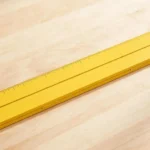
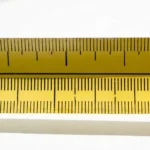
The yardstick is the definition made physical: a flat strip of wood exactly 36 inches long, marked in inches and fractions. Generations of students met it in classrooms, and carpenters still keep one for quick checks. Because it is the unit itself, there is no estimating involved. If you own one, hang it somewhere visible; it is the single best tool for teaching your eyes what a yard looks like. Every other item on this list is really just “a yardstick in disguise.”
2. Kitchen Countertop Height
Building codes and cabinet makers settled on 36 inches as the standard kitchen counter height, which means the distance from your kitchen floor to the counter is exactly one yard. You touch this measurement dozens of times a day without noticing. Next time you lean against the counter, remember: your hip is about a yard off the ground. Remodelers use this height as the starting point for the whole kitchen layout, which is why it never changes. That makes the kitchen the best classroom for the yard. Any room’s counter, vanity, or workbench at standard height is a yard you can measure against.
3. Doorknob Height
Walk through any modern home and the doorknobs sit about 36 inches above the floor: one yard. Builders standardized this height so handles fall naturally at hand level for most adults. It is a reference you pass through constantly, which makes it wonderfully easy to internalize. Stand next to any interior door and put your hand on the knob. That height, floor to hand, is a yard. When you need to estimate a yard outdoors, just recall the doorknob and transfer the feeling.
4. Interior Door Width
A standard interior door is 36 inches wide, exactly one yard across. Contractors chose this width because it comfortably fits people and furniture, and the number stuck. The door’s width is easy to check: stand in the doorway with your arms slightly out and you are spanning a yard. This is also a practical reference for moving day. If a sofa or a mattress is wider than the doorway, it is wider than a yard, and you will know before you start lifting.
5. A Baseball Bat
A regulation adult baseball bat runs about 32 to 34 inches long, just a couple of inches shy of a yard. Players choose bat length by feel, and the near-yard length turns out to be the sweet spot for leverage and control. The bat is a great “slightly short” reference: picture a bat, then add the width of two fingers, and you have a yard. Sports fans can calibrate instantly, because the bat’s length is something they have seen thousands of times on screen.
6. A Full-Size Guitar
A standard dreadnought or full-size acoustic guitar measures about 38 to 41 inches from top to bottom, a few inches longer than a yard. Lean one against a wall and it reaches roughly to an adult’s hip or waist. The guitar is the mirror image of the baseball bat on this list: a touch long instead of a touch short. Musicians and music lovers get a two-sided calibration from the pair. Bracket a yard between the bat (just under) and the guitar (just over) and your estimate will be close.
7. A Skateboard Deck
A standard skateboard deck is about 31 to 32 inches long, roughly four inches short of a yard. The deck’s compact length is easy to picture for anyone who has seen skaters at a park. Like the baseball bat, it serves as a “slightly short” anchor: add the length of your hand and you are at a yard. The skateboard also shows how much use fits into less than a yard of material. Four inches may sound like little, but it is the difference between the deck and the full unit.
8. A Golf Putter
Golf putters are typically 33 to 35 inches long, landing just under the yard mark. Golfers are fitted for putter length with real precision, so the measurement is trustworthy. The putter’s near-yard length makes it a fine reference on the course, where distances are already measured in yards. Stand a putter upright next to your leg: the grip ends a couple of inches below the full yard. Add a golf ball’s width or two and you are there.
9. A Dishwasher Height
A standard built-in dishwasher is about 34 inches tall, designed to slide under the 36-inch counter. That two-inch gap is the giveaway: the dishwasher is a yard minus a little. Anyone remodeling a kitchen learns this number fast. As a reference, the dishwasher is useful because it is a big, boxy, memorable object. Picture it, add the thickness of two fingers on top, and you have reconstructed a yard from an appliance.
10. A Washing Machine Height
Top-load washing machines stand about 38 to 39 inches tall, a few inches over a yard. The machine’s height is something laundry-doers see every week, usually with the lid open at eye level. Like the guitar, it anchors the “slightly long” side of the yard. Pair it with the dishwasher (slightly short) and you have bracketed the yard between two appliances most homes contain. The distance from the floor to the top of the washer is a yard plus a couple of inches.
11. A Yard of Fabric
This one is exact by definition: fabric stores sell cloth by the yard, cut 36 inches long off the bolt. Quilters, sewers, and crafters handle yard lengths constantly, unfolding them across cutting tables. If you have ever bought fabric, you have held a yard in your hands. Quilters often buy several yards at once and can judge the length the way cooks judge a cup of flour: by feel and habit. The bolt itself, usually 44 to 60 inches wide, is wider than a yard, but the cut length is the unit itself. For anyone who sews, “a yard” is not abstract at all. It is a specific piece of cloth.
12. A Small 3-Foot Bookshelf
The compact 3-foot bookshelf, a staple of dorm rooms and small apartments, stands exactly 36 inches tall. It holds two or three shelves of books and fits under most windows. Because it is a common furniture size, many people have assembled one and know its height in their bones. The bookshelf is a friendly, room-scale yard: not a tool or a body part, but a piece of furniture. When you need to picture a yard vertically in a room, think of the little bookcase.
13. A Tabletop Christmas Tree
The popular tabletop Christmas tree stands 3 feet tall: one yard of holiday cheer. It sits on side tables and office desks every December, which gives the yard a seasonal anchor. The tree’s height is easy to remember because it is marketed by the foot. When you see one, you are looking at a yard made festive. It is also a good reminder that a yard is not very tall. A 3-foot tree looks charmingly small next to a full-size 7-foot tree, and that contrast teaches the unit’s true scale.
14. A Two-Year-Old Toddler
A typical two-year-old stands roughly 34 to 36 inches tall, right around one yard. Parents watch this milestone closely, marking heights on doorframes, so the number is well established. The toddler is the most relatable reference on this list for families: a yard is “as tall as a two-year-old.” It also gives the unit a human scale that sticks in memory better than any tool. Picture a small child standing next to a yardstick and the two match almost exactly.
15. A Garden Fence Picket
Many garden and picket fences are built about 3 feet tall, making each picket roughly a yard from ground to tip. Walk past any such fence and you are walking past a row of yard measures. The picket is an outdoor reference, useful when there are no doors or counters around. Gardeners who build or repair fences learn the height by handling the boards. A yard, in the garden, is simply “picket height.”
Frequently Asked Questions
Can you estimate a yard with your body?
Yes. For many adults, the distance from nose to fingertip with one arm stretched straight out to the side is close to a yard. A large walking step also covers roughly a yard. Measure both once against a tape measure and you will know your personal yardsticks.
How many feet are in three yards?
Nine feet. Each yard holds 3 feet, so three yards is 3 times 3. Three yardsticks end to end, or three kitchen-counter heights stacked, reach nine feet.
How many inches are in a yard?
Exactly 36 inches. Three feet of 12 inches each gives 36, which is the definition of the yard.
Is a yard longer than a meter?
No, slightly shorter. A yard is 0.9144 meters, so a meter stick extends about 3.4 inches beyond a yard.
What is the difference between a yard and a foot?
A yard is three times a foot: 36 inches versus 12 inches. Three feet laid end to end make exactly one yard.
How many yards are in a mile?
There are 1,760 yards in a mile. A mile is 5,280 feet, and dividing by 3 feet per yard gives 1,760.
See also: how long a mile is.
See also: how many feet in a mile.
Final Thoughts
So, how long is a yard? Exactly 3 feet or 36 inches: the height of your kitchen counter, the width of your door, the length of a yardstick. From baseball bats to toddlers to fence pickets, yard-long things are everywhere once you start looking. If you are hanging curtains, buying fabric, or calling a football play, you now have fifteen ways to feel a yard without a tape measure. It is one of the handiest distances to know by heart.

I’m Owen Reeves, a content writer at MeasureZit.com, specializing in measurements, unit conversions, and mathematical concepts. I turn technical topics into clear, accurate content that’s easy to understand. My focus is precision, clarity, and genuinely useful information.