Introduction
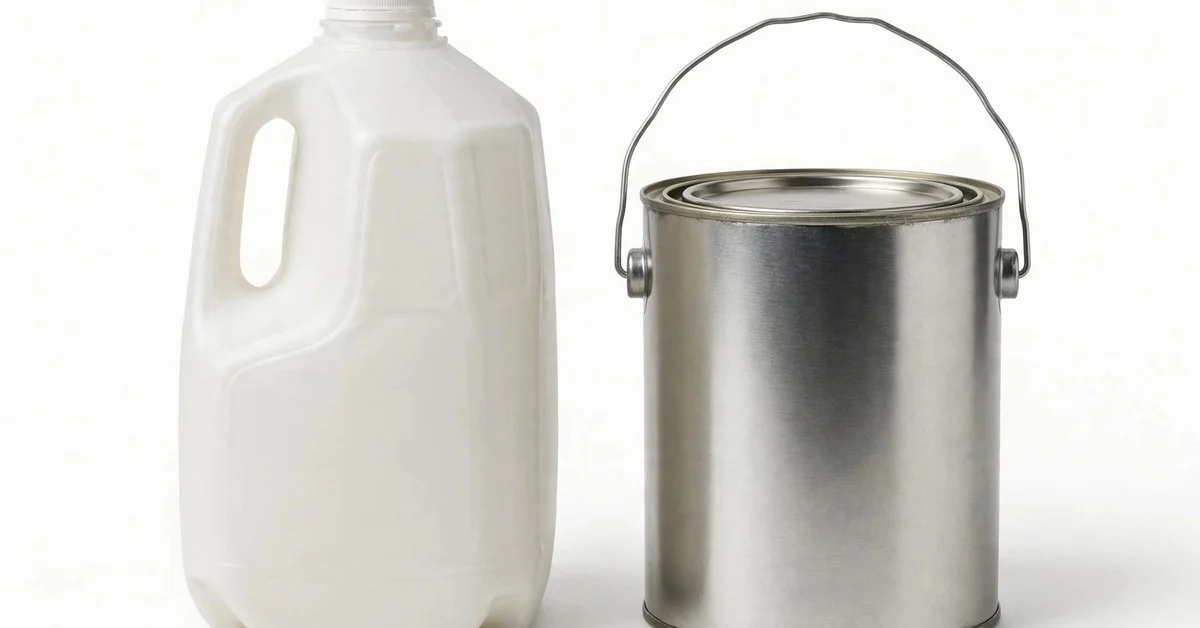
You hear “one gallon” on paint cans, milk jugs, and gas cans all the time, but what does that amount actually look like? A gallon is exactly the size of a standard US milk jug: about 10 inches tall, 6 inches wide, and 6 inches deep. Hold your hands about a foot apart and a little under half a foot wide, and you are framing roughly one gallon of space.
Understanding how big a gallon is helps in surprisingly practical moments. You can judge whether a bucket will hold the paint you bought, guess if a cooler fits enough ice for the trip, or picture how much water a recipe or a garden bed really needs. Once the size of a gallon lives in your head as a picture instead of a number, estimating volume gets easy.
Gallon Size Conversion Chart
One US gallon equals 231 cubic inches of space, which converts to:
| Unit | 1 Gallon Equals |
|---|---|
| Cubic inches | 231 |
| Teaspoons | 768 |
| Tablespoons | 256 |
| Fluid ounces | 128 |
| Cups | 16 |
| Pints | 8 |
| Quarts | 4 |
| Milliliters | ≈ 3,785 |
| Liters | ≈ 3.79 |
Common Objects That Show a Gallon’s Size
| Item | Approximate Size |
|---|---|
| 1. Standard US milk jug | About 10.5 in tall, 6 in square |
| 2. One-gallon paint can | About 7.5 in tall, 6.5 in across |
| 3. Family-size cereal box | About 1 gallon of space inside |
| 4. Five-pound fire extinguisher | Just under 1 gallon in volume |
| 5. Two-liter soda bottle | Just over half a gallon |
| 6. Quart paint can | Exactly one quarter of a gallon |
| 7. Five-gallon hardware bucket | Five times a gallon |
| 8. Large coffee can | About half a gallon |
More Everyday Size References
| Item | Approximate Size |
|---|---|
| 9. Five wine bottles | Five 750 ml bottles ≈ 1 gallon |
| 10. Three and a half bricks | A gallon ≈ 3.5 standard bricks |
| 11. School backpack | A gallon fills just the bottom |
| 12. Men’s shoebox | A gallon fills a little over half |
| 13. Gallon of water | Weighs about 8.3 pounds |
| 14. Basketball | About 1.9 gallons in volume |
| 15. Gallon zip-top bag, laid flat | Covers about a square foot |
How Big Is a Gallon, in Plain Terms?
A gallon is a medium-small container you can lift with one hand but not hide behind your back. The classic milk jug is the best mental picture: taller than a sheet of paper is long, and about as wide as two fists side by side. It is bigger than most people expect the first time they really look at one.
For a smaller reference, picture a quart paint can, which is exactly one quarter of a gallon and fits easily in your palm’s span. For a bigger one, picture the 5-gallon bucket from the hardware store: five gallons in one tall pail, heavy enough that you carry it with two hands. A gallon sits right between them, closer to the small end.
Easy ways to estimate a gallon in everyday life
- Frame it with your hands: Hold your hands about 10 inches apart vertically and 6 inches apart horizontally. That box is roughly one gallon.
- Picture the milk jug: If you can see the jug in your mind, you can judge any container against it in seconds.
- Think 231 cubes: A gallon is 231 one-inch cubes. Picture a box of sugar cubes about 6 cubes wide, 6 deep, and 6 or 7 high.
- Use the soda-can ladder: A gallon jug stands more than twice as tall as a standard 12-ounce soda can and about one and a half times as tall as a tall 16-ounce energy drink can.
- Weigh it mentally: A gallon of water weighs about 8.3 pounds, like a small bowling ball or a bag of flour plus a bit more.
- Halve a shoebox: A standard men’s shoebox holds not quite two gallons, so a gallon is a generous half-box.
1. A Standard US Milk Jug
Nobody has to imagine this one, because almost every kitchen has the real thing in the fridge. The standard milk jug stands about 10.5 inches tall with a base roughly 6 inches square, and it holds exactly one US gallon. Its handle cutout and sloped shoulders make the shape unmistakable. Because the jug is transparent enough to see the milk level, you also get a free lesson in fractions of a gallon every time you pour a glass. For pure “how big is a gallon” questions, this is the reference all others are measured against.
2. A One-Gallon Paint Can
The paint can proves a gallon does not have to look like a milk jug. It is a metal cylinder about 7.5 inches tall and 6.5 inches across, shorter and rounder than the jug but holding the same 231 cubic inches. Anyone who has painted a room has lifted one and felt how dense a gallon of liquid feels. The can’s printed coverage guide (“covers up to 400 square feet”) also connects the gallon to a real job. When you see any round container, compare it to the paint can to judge whether it holds about a gallon.
3. A Family-Size Cereal Box
Here is a surprising one: a large family-size cereal box encloses roughly a gallon of space. The box is about 12 inches tall, 8 inches wide, and 3 inches deep, which multiplies out to nearly 290 cubic inches, a bit more than a gallon once the cardboard thickness is accounted for. It will not hold liquid, but as a pure size reference it is excellent because every pantry has one. Next time you wonder how big a gallon is, look at the biggest cereal box on the shelf. That box, filled solid, is your gallon.
4. A Five-Pound Fire Extinguisher
The standard 5-pound fire extinguisher hanging in offices and garages is just under a gallon in total volume: about 15 inches tall and 4.25 inches in diameter. Most people have seen one up close, which makes it a handy public-space reference. It is taller and skinnier than a milk jug, yet the amount of space it occupies is nearly identical. The lesson repeats everywhere in this article: shape fools the eye, but volume does not change. A gallon is a gallon whether it is short and round or tall and slim.
5. A Two-Liter Soda Bottle
The familiar 2-liter soda bottle holds just over half a gallon (2 liters equals about 0.53 gallons). Set two of them side by side and you are looking at slightly more than a gallon of liquid. The bottle is taller than a milk jug at around 13 inches, but much narrower, which is why two of them roughly match one jug. This is a useful reference at parties and barbecues, where 2-liter bottles are everywhere. If someone asks how much punch to make, “about two 2-liter bottles’ worth” and “about a gallon” mean nearly the same thing.
6. A Quart Paint Can
The small paint can sold for touch-ups and craft projects holds exactly one quart, which is one quarter of a gallon. At about 4.9 inches tall and 4 inches across, it fits comfortably in one hand. Four of these make a gallon, and picturing them in a two-by-two square gives you a neat mental model of gallon size. It is also the perfect “small reference” for this article: anything roughly four times this can is about a gallon. Keep one in mind the next time a container’s size puzzles you.
7. A Five-Gallon Hardware Bucket
The big orange or white bucket from the hardware store holds five gallons, making it the ideal “large reference.” It stands about 15 inches tall and 12 inches across at the top. Mentally divide it into five equal horizontal layers and each layer is one gallon, which turns the bucket into a measuring tool. Movers, gardeners, and anglers all think in bucketfuls. If a job calls for a gallon of anything, picture one-fifth of that bucket and you will be close enough for practical work.
8. A Large Coffee Can
The big metal or plastic coffee can, the kind that holds about 30 ounces of ground coffee, encloses roughly half a gallon of space. At about 6 inches tall and 5 inches across, it is a comfortable two-handed container. Two of these make a gallon, which gives you another easy mental stack. Because the can is opaque and common in kitchens and workshops, it works as a reference in rooms where milk jugs never appear. It also shows how a gallon breaks down: two coffee cans, four quart cans, eight pint jars.
9. Five Wine Bottles
A standard wine bottle holds 750 milliliters, and five of them add up to 3.75 liters, just a whisper under one US gallon (3.79 liters). Line up five wine bottles on a counter and you are staring at almost exactly a gallon of liquid. This reference shines at dinners and events, where wine bottles are already on the table. It also helps travelers: in countries that sell wine by the bottle but think in liters, five bottles is the bridge between the two systems and the size of a gallon.
10. Three and a Half Bricks
A standard brick measures about 8 by 3.6 by 2.25 inches, which works out to roughly 65 cubic inches. Divide a gallon’s 231 cubic inches by 65 and you get about three and a half bricks. Stack three bricks and picture a fourth cut in half, and you have built a gallon out of masonry. This is a builder’s reference, useful on job sites and in gardens where bricks are lying around. It also gives the gallon a satisfying weight comparison: those three and a half bricks weigh roughly what a gallon of water does.
11. A School Backpack
A typical school backpack holds 20 to 30 liters, which is five to eight gallons, so one gallon fills just the bottom of the bag. Pour a gallon of water into a backpack (in a sealed jug, of course) and it would slump into the base with most of the bag still empty. That image corrects a common mistake: people often guess a gallon is bigger than it is. The backpack test shows that a gallon is a modest amount, easy to carry and easy to store. It fits in the footwell of a car without a second thought.
12. A Men’s Shoebox
A standard men’s shoebox is about 13 inches long, 7 inches wide, and 4.5 inches tall, enclosing roughly 410 cubic inches or about 1.8 gallons. A gallon therefore fills a little over half the box. Almost everyone has a shoebox within reach, which makes this one of the most accessible references on the list. Slide any puzzling container next to a shoebox: if it looks like half the box, it is about a gallon. The shoebox also demonstrates the gallon’s modest footprint; it takes up less shelf space than a pair of boots.
13. A Gallon of Water
Sometimes the best way to feel a size is to feel its weight. A gallon of water weighs about 8.3 pounds, and a gallon of milk is a touch heavier at about 8.6 pounds. That is roughly the weight of a small bowling ball, a gallon paint can, or a large bag of flour with a little extra. Carrying it one-handed from the car to the kitchen gives your muscles a permanent memory of the gallon. When someone says a container holds a gallon, ask yourself whether you could carry it comfortably in one hand. If yes, the claim is plausible.
14. A Basketball
A regulation basketball is about 9.55 inches in diameter and encloses roughly 1.9 gallons of space, nearly twice a gallon. Hold a basketball in one hand and a milk jug in the other (mentally, at least) and the comparison clicks: the ball is rounder and bigger, the jug is taller and narrower. Sports fans get an instant upgrade to their volume intuition from this one. It also sets up a clean fraction: half a basketball’s worth of space is about a gallon, a handy estimate at the gym or the park.
15. A Gallon Zip-Top Bag, Laid Flat
Lay a gallon-size zip-top bag flat and it covers about a square foot of counter, roughly 12 inches by 12 inches. Fill it with water and it puffs up to about 3 inches thick, which is the gallon made visible as a slab. This is the most dramatic shape-shifter on the list: the same 231 cubic inches as the milk jug, but flat as a cutting board. Cooks who freeze stock in these bags already know the trick. It proves the article’s running theme one last time: a gallon is an amount of space, and space can wear many shapes.
Frequently Asked Questions
How big is a gallon compared to a 2-liter bottle?
A gallon is almost twice as big. A 2-liter bottle holds about 0.53 gallons, so you need nearly two full 2-liter bottles to make one gallon.
How many inches tall is a gallon jug?
A standard US gallon milk jug is about 10 to 10.5 inches tall, with a base roughly 6 inches square. Paint cans and other gallon containers vary in shape but hold the same volume.
Is a gallon of water heavy?
A gallon of water weighs about 8.3 pounds. That feels like carrying a small bowling ball or a large bag of flour in one hand: noticeable, but easy for most adults.
How big is half a gallon?
Half a gallon is 64 fluid ounces, or about 1.9 liters. Picture half a milk jug, a large coffee can, or two quart containers side by side.
See also: how much a liter is.
See also: how many ounces in a cup.
Final Thoughts
So, how big is a gallon? It is the milk jug in your fridge: about 10 inches tall, 6 inches wide, holding 231 cubic inches or 128 fluid ounces. Picture it as five wine bottles, half a shoebox, or three and a half bricks: the size is the same. Keep one of these fifteen references in mind and you will never have to guess at a gallon again. Volume stops being abstract the moment you can see it sitting on your counter.

I’m Priya Sharma, a content writer at MeasureZit.com, specializing in measurements, unit conversions, and mathematical concepts. I turn technical topics into clear, accurate content that’s easy to understand. My focus is precision, clarity, and genuinely useful information.










