Every wall in your house is whispering the same number. The drywall, the studs, the ceiling overhead — they were all cut, spaced, and stacked to a single module: 8 feet, exactly 96 inches, 243.84 centimeters, about 2.44 meters. It’s not a coincidence and it’s not tradition for tradition’s sake. Eight feet is the backbone of American construction, the length of a plywood sheet, the height of the classic ceiling, the width of a garage door. Understand eight feet and you understand the hidden grid your whole house is built on. Ninety-six inches is the length of the plywood sheet, the pickup bed built to carry it, and the ceiling hung above it all. It divides into halves, thirds, quarters, and eighths without producing a single fraction — the most cooperative number in construction. This guide tours fifteen eight-footers, from soccer goals to black mambas, and explains exactly how eight feet became the height of the American room.
The Sheet That Built the Suburbs
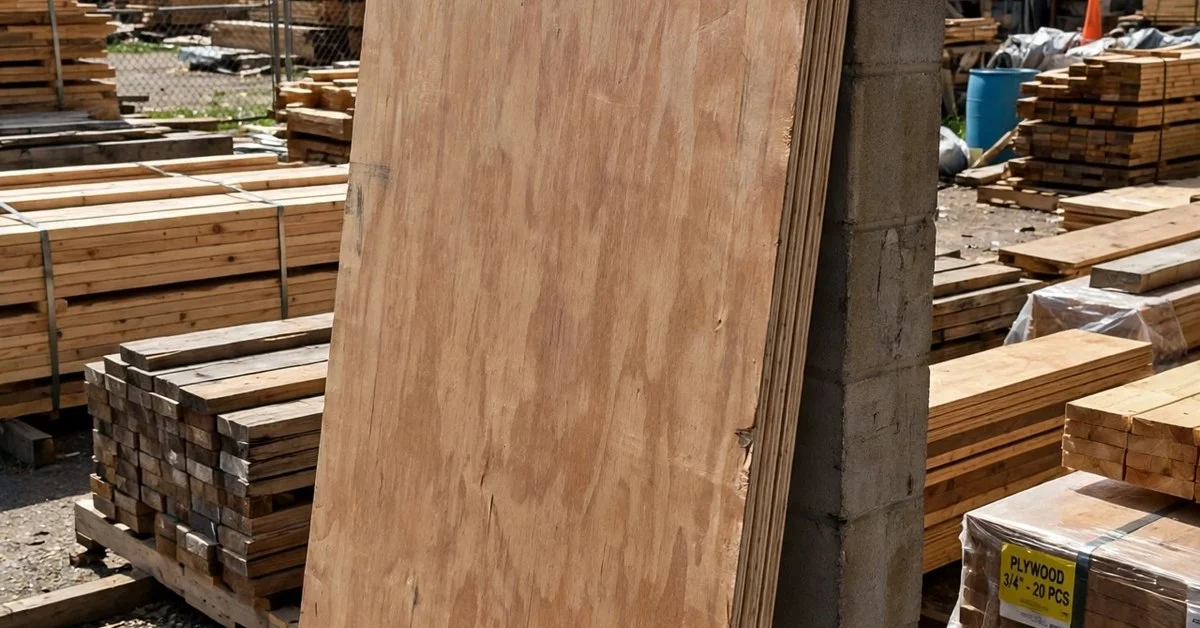
If eight feet has a physical embodiment, it’s the big flat panel leaning against the lumber rack — the module every builder thinks in.
An 8×4-foot plywood sheet is 96 inches on its long side, 48 on the short — the most manufactured rectangle in construction. Walls, floors, roofs, and sheathing all start as these sheets because the entire framing system (studs every 16 inches, joists every 16 or 24) is designed so sheet edges always land on structure. One sheet, two people, and you’ve covered 32 square feet of house. The 8-foot length isn’t arbitrary: it’s the longest panel two workers can maneuver without machinery.
Eight Feet That Hauls and Builds
The vehicle world standardized around eight feet for the same reason builders did — it’s the length of the materials everyone needs to move.
A long-bed pickup’s 8-foot bed exists for exactly one reason: to swallow a 4×8 sheet of plywood flat with the tailgate up. The 96-inch bed and the 96-inch sheet are the same number on purpose — contractors call it the “full-sheet bed,” and it’s the dividing line between a work truck and a lifestyle truck. If the bed fits the sheet, the truck fits the job.
An 8-foot utility trailer is the homeowner’s workhorse — 96 inches of deck that hauls the same plywood sheets, plus mowers, ATVs, and a weekend’s worth of mulch. The 8-foot deck matches the 8-foot cargo for the same reason the pickup bed does: the building supply industry speaks in eight-foot units, and everything that carries them does too.
8-foot deck boards are the standard cut at the lumberyard — 96 inches of pressure-treated or composite board, the length every deck frame is designed around. Joists spaced 16 inches on center divide eight feet cleanly, which is why the 8-foot board became the default. When you’re estimating a deck, count in eight-foot boards and the math does itself.
Eight Feet of Play
Sports and recreation landed on eight feet from a completely different direction — the size of the human body in motion, scaled up for fields and water.
A regulation soccer goal stands 8 feet tall (and 24 feet wide). The eight-foot height is the goalkeeper’s universe — high enough that placement beats power, low enough that a keeper can own it. Every World Cup goal ever scored passed through eight feet of vertical possibility. Youth goals shrink it; the pros play the full eight.
An 8-foot surfboard — the classic funboard — is 96 inches of foam and fiberglass that splits the difference between a nimble shortboard and a cruising longboard. At eight feet it paddles like a longboard and turns (almost) like a shortboard, which is why surf schools hand beginners the 8-footer. It’s the board that forgives.
An 8-foot toboggan is the old-school snow sled: 96 inches of curved wood that seats three or four kids in a giggling chain. The length is the ride — shorter sleds spin, longer ones track straight, and eight feet tracks straight downhill at glorious speed. Wax the bottom, point it downhill, and hold on.
An 8-foot pram — the flat-bottomed rowboat — is the pond-and-lake classic. Ninety-six inches of stable, car-toppable boat that one person can launch alone. Prams are the pickup trucks of small watercraft: unglamorous, indestructible, and exactly eight feet of useful.
Eight Feet Out Back
An 8-foot round stock tank is the rancher’s big option — 96 inches across, holding around 700 gallons. On working ranches it waters herds; in backyards it’s become the stock-tank pool, the redneck Riviera. Eight feet across is the size where a tank becomes a pool: big enough to float in, small enough to fill with a garden hose over a weekend.
An 8-foot-wide shed is the standard small outbuilding — eight feet across the front, whatever depth you need. The eight-foot width matters because it matches the plywood module: sheathe the walls with full sheets, no ripping, no waste. Shed kits are dimensioned in eight-foot increments for exactly this reason. Build on the module and the materials practically assemble themselves.
A 6×8-foot greenhouse runs eight feet long — the starter greenhouse that fits the side yard. The 8-foot length takes standard glazing panels and base framing without custom cuts, which keeps the kit affordable. Eight feet of greenhouse grows an astonishing amount of food: roughly 48 square feet of bench space, enough tomatoes to embarrass the grocery store.
Eight Feet With Teeth
And then there’s the eight feet you don’t want to meet. Nature’s predators seem to find this length as convenient as carpenters do.
A black mamba averages about eight feet long — 96 inches of the fastest, most feared snake in Africa. At eight feet it can lift a third of its body off the ground, putting its head at your chest height. The length is the weapon: strike range is roughly half the body, which means a mamba owns about four feet in every direction.
An ostrich stands about eight feet tall — the tallest bird on Earth, all legs and attitude. That 96 inches is mostly neck and leg; the body is the size of a large dog mounted on stilts. An ostrich can disembowel a lion with a kick, which reframes “eight feet tall” considerably.
An 8-foot alligator is a mature adult, and at 96 inches nose to tail it’s entered the size class that wildlife officers treat with full respect. Eight feet is where an alligator stops being relocated and starts being a resident — too big to move casually, too established to argue with. Observe the eight feet from the boardwalk.
A bull shark runs about eight feet — 96 inches of muscle that swims up rivers and tolerates fresh water, which is why it’s the shark you’re most likely to actually encounter. Eight feet of bull shark is the reason lifeguards close beaches: big enough to be dangerous, common enough to be plausible.
Why Every Room Is 8 Feet: The Ceiling Standard
Here’s the signature story: why did eight feet become the height of the American room? It wasn’t decreed. It emerged — from sheets, studs, and dollars — and then it stuck for half a century.
The chain starts with the 4×8 sheet. When plywood and drywall standardized at 4 by 8 feet after World War II, builders realized a wall exactly eight feet tall could be sheeted with zero horizontal seams and zero waste: one sheet, floor to ceiling, done. Studs followed — the pre-cut 92-5/8-inch stud plus plates equals exactly 96 inches of wall. The whole framing package became an 8-foot kit, and the kit became the house.
Then came the economics. Eight-foot ceilings need less lumber, less drywall, less paint, and less heating than taller ones. In the great postwar building boom, when the goal was decent houses fast and cheap, every inch of ceiling height was money. Eight feet was the minimum that felt like a real room — any lower and buyers balked — so eight feet it was, millions of times over.
The module reinforced itself through everything else in the house. Doors are 80 inches, leaving 16 inches of header — a clean number. Cabinets, trim, and moldings all dimensioned to the 8-foot wall. HVAC ducts fit the joist bays. Even wallpaper and paint coverage got calculated per 8-foot wall. The entire supply chain speaks eight feet fluently.
Now the 9-foot rebellion is underway. New construction increasingly offers 9-foot ceilings as the “upgrade” — airier, grander, better for tall windows and 8-foot doors. But the 8-foot ceiling isn’t going anywhere: it’s in a hundred million existing homes, it’s cheaper to build, and honestly, most rooms don’t need more. Eight feet was never about grandeur. It was about the sheet, the stud, and the dollar — and it won.
Practical takeaway: when you’re planning anything for a standard room — paint, wallpaper, curtains, built-ins — assume eight feet until proven otherwise. Measure to confirm, but the module is the default. The house is telling you its dimensions. Listen.
Bonus skill: the sheet-count estimate. Driving past a house under construction? Count the plywood sheets stacked on the subfloor or leaning against the framing. Each sheet is 4×8 feet, so a stack of ten sheets is 320 square feet of wall or floor. Framers think in sheets the way cooks think in cups — “that’s a twelve-sheet wall” means a 48-foot run. Once you see the module, every construction site becomes legible: the sheets are the words, eight feet is the grammar, and the house is the sentence.
What Builders and Buyers Ask About Eight Feet
Why are ceilings 8 feet instead of 9 or 10?
Cost and the 4×8 sheet. Eight-foot walls sheet perfectly with standard plywood and drywall — no waste, no seams — and they use less material and energy than taller walls. In the postwar boom, that economy built millions of homes. Nine- and ten-foot ceilings are upgrades: nicer, airier, and more expensive in materials, heating, and paint. Eight feet was the sweet spot where affordability met dignity, and it became the default.
Can I raise an 8-foot ceiling?
Sometimes — it depends on what’s above it. If there’s an attic with roof trusses, you’re generally stuck: the trusses are structural and can’t be cut. With conventional rafter framing, a contractor can sometimes vault the ceiling by sistering rafters and adding a ridge beam, but it’s major surgery — expect five figures and an engineer’s stamp. The cheaper transformation is visual: vertical stripes, tall bookcases, and curtain rods hung at the ceiling all make eight feet feel like nine.
Will 8-foot lumber fit in my SUV?
Probably, with the seats down and the front passenger seat folded or reclined. Most midsize SUVs offer 95 to 100 inches of cargo length with everything folded — just enough for an 8-foot (96-inch) board with the tailgate closed, or with an inch to spare. Full-size SUVs swallow it easily. Measure your cargo floor first, bring a blanket to protect the interior, and flag anything that sticks out the back — most states require a red flag on loads extending four feet past the bumper.
How many 8-foot sheets do I need to drywall a 12×12 room?
About 17. The math: four walls, each 12 feet long and 8 feet tall, need three 4×8 sheets per wall (12 ÷ 4 = 3) — that’s 12 sheets. The 12×12 ceiling needs the same three-sheet rows, four rows deep… actually 12×12 is 144 square feet and each sheet covers 32, so 4.5 sheets — round up to 5. Total: 17 sheets, plus 10 percent waste for cuts around doors and windows. Buy 19 and return what you don’t use.
Is an 8-foot ceiling too low for a ceiling fan?
No — it’s the most common fan installation in the country. Building codes require fan blades to hang at least 7 feet above the floor, and standard mount fans drop about 12 inches from an 8-foot ceiling, putting blades right at 7 feet. That’s the legal minimum, so it works — but tall people should choose hugger (flush-mount) fans that keep blades closer to 7.5 feet. In rooms with 8-foot ceilings, hugger mounts are the comfortable choice.
See also: how long 7 feet is.
See also: how long 9 feet is.
Living in the Eight-Foot Module
Eight feet isn’t just a length — it’s the grid your house was drawn on. The plywood, the pickup bed, the garage door, the ceiling overhead, the soccer goal at the park: all 96 inches, all speaking the same language. Once you hear it, you can’t unhear it. Every room becomes a little more legible, every project a little more predictable, every lumber aisle a little less intimidating. That’s the quiet power of a standard: measure once, count the sheets, and the whole house agrees with you. Welcome to the module. You’ve been living in it all along — now you finally speak its language.

I’m Dane Whitfield, a content writer at MeasureZit.com, where I specialize in creating clear, accurate articles on measurements, unit conversions, and mathematical concepts. I enjoy breaking down complex numerical topics into simple, practical explanations that readers can actually use. My goal is always precision and clarity helping people make sense of the numbers around them.