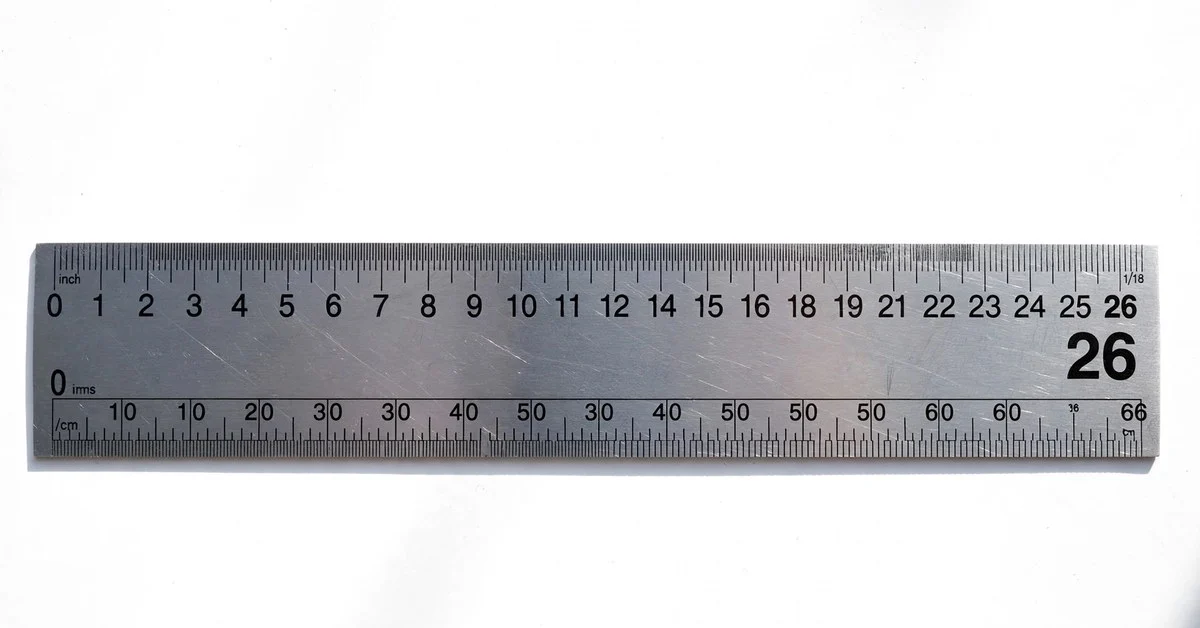
You are in the bike aisle, and the tag says “26-inch wheels” — but 26 inches of what? The tire? The frame? The whole bike? It is one of the most misunderstood numbers in cycling, and it matters: wheel size decides how a bike rolls, what terrain it likes, and whether replacement parts will still be on shelves in five years. Twenty-six inches is 2 feet 2 inches, or 66.04 centimeters — and on a bicycle, it is the outside diameter of the wheel with the tire mounted and inflated.
This guide does two jobs at once. First, it answers how long 26 inches is in plain terms, with exact conversions and fifteen everyday objects that carry the length — from tenor ukuleles to trash cans. Second, it is a genuine mini-guide to the 26-inch wheel: what the number actually measures, why it ruled mountain biking for decades, how to measure your own wheels, and which bikes still roll on 26 today. Whether you are buying a bike or just settling a bet, you will leave knowing this number cold.
26 Inches by the Numbers
Twenty-six inches sits two inches past the two-foot mark — a small surplus that matters when you are sliding a box onto a shelf or checking a doorway. In metric it is 66.04 centimeters, just over two-thirds of a meter. Here is the full conversion set:
| Unit | 26 inches equals |
|---|---|
| Inches | 26 in |
| Feet | 2 ft 2 in (about 2.17 ft) |
| Yards | about 0.72 yd |
| Millimeters | 660.4 mm |
| Centimeters | 66.04 cm |
| Meters | 0.6604 m |
A quick mental model: picture a two-foot ruler, then add the width of two adult thumbs. That is 26 inches. Cyclists get a bonus trick — one full turn of a 26-inch wheel covers about 81.7 inches of ground (pi times the diameter), which is roughly 6.8 feet per revolution. Spin it ten times and you have traveled about 68 feet, or a little over 20 meters. It is a party trick that also happens to be how bike computers calculate your speed.
The 26-Inch Wheel, Explained
This is the number’s natural habitat, so it deserves more than a passing mention. If you have ever wondered what “26-inch wheels” really means — or whether the size is dying out — here is the complete picture.
What the number actually measures
The 26 inches is the outside diameter of the wheel with the tire mounted and inflated, measured straight across through the hub. It is a nominal size, not an engineering dimension — the number the industry agreed to call it. The precise bead-seat diameter (where the tire grips the rim) is 559 millimeters, or exactly 22 inches; the tire’s sidewalls make up the rest. That is why two “26-inch” tires of different widths can measure slightly different overall diameters: a fat 2.3-inch knobby tire stands a touch taller than a skinny 1.5-inch street tire on the same rim. When anyone says “26-inch wheel,” they mean the classic mountain-bike size, ISO 559.
A quick history: from standard to specialty
For roughly three decades, 26 inches was the mountain bike wheel. From the 1980s through the early 2010s, nearly every mountain bike sold rolled on 26-inch wheels, and the aftermarket — tires, rims, tubes, forks — was built around them. Then came 27.5-inch (650b) and 29-inch wheels, which roll over roots and rocks more smoothly and hold speed better. The industry shifted hard: most new mountain bikes today use 27.5 or 29. But 26 is far from dead. It survives on dirt-jump bikes, kids’ mountain bikes, touring bikes, fat bikes’ smaller cousins, and millions of older trail bikes still ridden daily. Tires and tubes in 26 remain widely manufactured because the installed base is enormous.
How to measure your own wheel
Stand the bike upright, or lay the wheel flat on the ground. Run a tape measure straight across the tire, edge to edge, passing through the center of the hub — that is the diameter. Do it twice, at different angles, and average the readings; tires are never perfectly round. Expect something between 25.5 and 26.5 inches depending on tire width and pressure — close enough to confirm you are holding a 26er. If you want the engineering number, look for “559” or “26 x 2.10” printed on the tire sidewall: the first figure is the bead-seat diameter in millimeters, the second the tire width in inches.
Which bikes still roll on 26
You will find 26-inch wheels on dirt-jump and slopestyle bikes (where small, strong wheels win), many folding bikes, touring rigs built for remote places (a 26-inch tire is easier to find in a village shop than a 29er), older mountain bikes from the 1990s and 2000s, and youth mountain bikes bridging the gap between 24-inch kids’ bikes and adult sizes. 1. The 26-inch wheel itself is therefore your first reference object: stand one upright next to anything you are measuring and its diameter is the definition of this article’s number.
More Things That Sit Near 26 Inches
Beyond the bike shop, 26 inches hides in music rooms, kitchens, and garages. Each of these is countable, checkable, and genuinely close to the mark.
2. A tenor ukulele — about 26 inches. The tenor is the second-largest common ukulele, running about 26 inches from headstock top to body base. Its warm, full tone made it a player favorite, and instrument-making tradition keeps the length steady. If a musician friend owns one, you have a 26-inch gauge with strings attached.
3. A concert flute — about 26 inches assembled. Headjoint, body, and footjoint connect into a slender silver tube of about 26 inches. Flute makers follow the Boehm system, which keeps dimensions consistent across brands. Its straight, narrow shape makes small differences easy to spot when you hold it beside a box or shelf edge.
4. A tall 13-gallon kitchen trash can — about 25 to 26 inches. The tall rectangular can that takes standard kitchen bags stands roughly 25 to 26 inches high — the height is set by the bag it must hold. Stand it upright and you have a vertical 26-inch marker, handy for judging whether a plant, a stack of boxes, or a pet crate fits under a counter.
5. A large duffel bag — about 26 to 30 inches long. The weekender duffel that swallows clothes, shoes, and gear for a short trip lists its length on the tag, with most large models starting at 26 inches. Lay it flat and measure along the base: a soft but useful 26-inch line, good for checking trunk space or an overhead bin.
6. A 26-inch TV — 26 inches diagonal. Before big screens took over, the 26-inch set was a beloved bedroom and kitchen size, measured corner to corner. Plenty still hang on walls. The size is easy to picture: a screen a little wider than two feet, and the number on the old box was literal.
7. A kid’s hula hoop — about 26 to 28 inches across. Children’s hoops are smaller and lighter than adult fitness hoops, sized for smaller bodies. Hold one upright and its diameter gives you 26 inches in a fun, visual way — toy aisles and playgrounds are full of them.
8. A passenger car tire — about 25 to 28 inches tall. Most sedan tires stand in this range, sidewall to sidewall, with the exact size printed on the sidewall. Crouch next to a parked car and the tire’s height is one of the most available 26-inch references outdoors — no equipment needed.
9. A nightstand — about 26 to 28 inches tall. Bedroom nightstands cluster in this height range so the top surface sits near mattress level. Kneel beside yours: floor to tabletop is a solid everyday 26-inch gauge, and you see it twice a day.
10. A large portable toolbox — about 26 inches long. Big cantilever and chest-style portable toolboxes run about 26 inches end to end. The length is set by the tools inside — saws and levels need the room. If you have one in the garage, its base is a rigid, honest measuring stick.
11. A full-size viola — about 26 inches. The violin’s deeper-voiced sibling measures about 26 inches in total on a full-size (4/4) instrument. Orchestra instruments are built to strict patterns, so a school music room is full of dependable 26-inch references — with a mellow tone as a bonus.
12. A fireplace poker — about 26 to 30 inches long. Fireplace tool sets are sized so you can tend the fire without leaning over the flames, and the poker typically lands at 26-plus inches. Hold it upright beside whatever you are measuring; most sets cluster near the low end of the range.
13. A small ceiling fan — 26-inch blade span. Compact ceiling fans are sold by blade span, and 26 inches is a standard small-room size — the diameter of the circle the blades sweep. Look up: that spinning disc is a 26-inch circle overhead, and the box it came in said so.
14. An oversized wall clock — about 24 to 26 inches across. Big decorative wall clocks run 24 to 26 inches in diameter. A 26-inch clock face is a perfect circle of our number, hanging in plain sight. Check the product listing if you want the exact figure — clockmakers print diameters proudly.
15. A 2-cubic-foot bag of potting soil — about 26 inches long. Laid flat, a standard 2-cubic-foot bag of potting mix or mulch runs roughly 26 inches end to end. Garden centers stack them by the pallet every spring, which makes this a seasonal but unmistakable 26-inch landmark.
Questions Riders Ask About 26 Inches
Can I put 27.5-inch wheels on a 26-inch bike frame?
Generally no. Frames, forks, and especially rim brakes are built around a specific wheel diameter — a bigger wheel will not clear the fork crown or seat stays, and rim brakes will not reach the braking surface. Some disc-brake frames have a little extra clearance, but handling and bottom-bracket height change in ways the designer did not intend. If you want bigger wheels, it is cheaper and safer to buy a bike designed for them than to force the conversion.
Is a 26-inch-wheel bike right for my 10-year-old?
Often yes, as a final step before an adult bike. Kids typically move from 24-inch wheels to 26-inch wheels around ages 9 to 12, depending on height and inseam rather than age. The real test: standing over the bike, the child should have an inch or two of clearance above the top tube and be able to touch the ground with tiptoes. Wheel size is only half the story — frame size and standover height decide the fit.
How tall a rider fits a 26-inch-wheel mountain bike?
Wheel size and rider height are only loosely related — frame size matters far more. That said, 26-inch-wheel mountain bikes were traditionally built for riders roughly 5’2″ to 6’0″, with the frame (small, medium, large) doing the actual fitting work. A 5’6″ rider on a medium 26er was the classic setup for twenty years. Get the frame size right first; the wheels take care of themselves.
What tire pressure should 26-inch wheels run?
Check the sidewall — the manufacturer prints a recommended range there, typically 30 to 50 psi for mountain-bike tires and 50 to 65 psi for street-oriented 26-inch tires. Heavier riders and rough terrain call for the higher end; lighter riders chasing grip can go lower. Never exceed the printed maximum, and recheck monthly, because all tires lose pressure over time. The right pressure matters more for how the bike feels than the wheel diameter does.
Are 26-inch wheels obsolete?
Not even close — just specialized. The mountain-bike mainstream moved to 27.5 and 29, but 26-inch tires, tubes, and rims remain in wide production because millions of bikes still use them, and dirt-jump, touring, and youth bikes keep the size alive by choice. You will not struggle to find parts. “Obsolete” would mean unsupported; 26-inch is merely no longer the default, which is a very different thing.
See also: how long 25 inches is.
See also: how long 28 inches is.
Rolling Away With the Number
Twenty-six inches is two feet and two thumbs — the diameter of the wheel that carried mountain biking through its golden age, the length of a tenor ukulele, the height of your kitchen trash can. It is bracketed by the 24-inch monitor on one side and the 28-inch suitcase on the other, which makes it easy to triangulate even when nothing exact is handy. The next time a spec sheet, a bike tag, or a shelf measurement throws 26 inches at you, you will not need to convert anything. You will picture a wheel, count two feet plus two, and know exactly how much space you are dealing with.

I’m Dane Whitfield, a content writer at MeasureZit.com, where I specialize in creating clear, accurate articles on measurements, unit conversions, and mathematical concepts. I enjoy breaking down complex numerical topics into simple, practical explanations that readers can actually use. My goal is always precision and clarity helping people make sense of the numbers around them.










