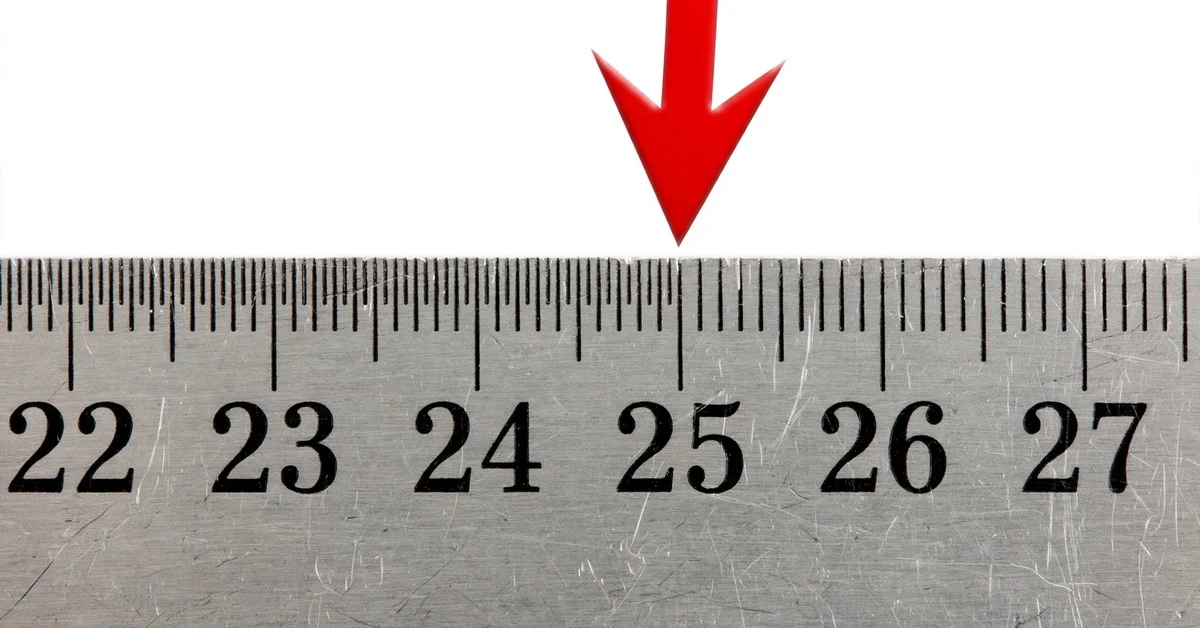
You’re standing in the pet aisle with a tape measure in one hand and your beagle’s leash in the other, staring at a medium crate and wondering one very practical thing: how long is 25 inches, and will your dog actually fit? It is the kind of question that sounds simple until money is on the line. Twenty-five inches is 2 feet 1 inch, or 63.5 centimeters — a length that turns up constantly in pet gear, kitchen specs, and screen sizes. It sits just past the two-foot mark, close enough to familiar landmarks that you can learn it once and recognize it forever.
What makes 25 inches memorable is how many living things wear it. An adult beagle stretched out for a nap, a dachshund trotting down the hallway, a Maine Coon draped over the couch arm — all of them land within a whisker of this measurement. Below you will find the exact conversions, seven animals that embody the length, eight household anchors that prove it, and crate-and-bed sizing advice you can use the next time you shop for your pet. By the end, 25 inches will feel less like a number and more like a beagle.
25 Inches in Every Unit
Before the comparisons, here is the precise math. Twenty-five inches converts cleanly because it is a round-enough number to remember: just over two feet, just under two-thirds of a meter. Keep the centimeter figure handy — 63.5 cm — because pet products sold internationally often list metric first.
| Unit | 25 inches equals |
|---|---|
| Inches | 25 in |
| Feet | 2 ft 1 in (about 2.08 ft) |
| Yards | about 0.69 yd |
| Millimeters | 635 mm |
| Centimeters | 63.5 cm |
| Meters | 0.635 m |
A handy mental shortcut: think “two feet plus a thumb’s width.” Two feet is 24 inches, and the extra inch is roughly the width of an adult thumb. That framing also explains why 25 inches is so easy to estimate — you already know what two feet feels like, and the remainder is the smallest unit your eye can judge. Four US dollar bills laid end to end span 24.56 inches (each bill is 6.14 inches long), landing you within half an inch of the target with nothing but wallet contents.
What 25 Inches Looks Like on Four Legs
This is the signature trick for remembering 25 inches: picture the animals. Dogs, cats, and a few wild neighbors all cluster around this body length, which means you can summon the measurement anywhere — no tape, no phone, just the memory of a pet you have actually touched. The lengths below are body measurements (nose to tail base, unless noted), and each is approximate the way living creatures always are.
Dogs in the 25-Inch Club
9. An adult beagle, nose to tail base — about 25 inches. The beagle is the unofficial mascot of this measurement. A grown beagle’s body, measured from the tip of the nose to where the tail begins, runs right around 25 inches. If you have ever watched one stretch out along the couch, you have seen this length in its natural habitat. Next time you need 25 inches, picture that long, low loaf of a dog.
10. A standard dachshund, nose to tail tip — roughly 25 inches. Bred long on purpose, the standard dachshund carries its 25 inches horizontally like a furry ruler. From nose to the end of the tail, most adults land between 24 and 26 inches, putting the breed average squarely on our number. It is one of the few dogs you can measure without the animal curling up and ruining your estimate.
Cats: The Long and Short of It
11. A Maine Coon, nose to tail base — about 25 inches. An ordinary housecat’s body is only around 18 inches, but a Maine Coon plays in a different league. A big male measured from nose to where the tail starts runs about 25 inches — before you even count the magnificent tail. If the beagle is the everyman of 25 inches, the Maine Coon is its deluxe edition. When someone says their cat is “basically a small dog,” this is the measurement that proves it.
Wild Neighbors Near the Mark
12. A red fox, head and body — roughly 25 inches on average. Red foxes vary by region, but the head-and-body length of an average adult lands near 25 inches, with a bushy tail adding another foot-plus behind it. If you have glimpsed one trotting across a field at dusk, the body you saw — tail excluded — was carrying our measurement through the grass.
13. A nine-banded armadillo, nose to tail tip — about 25 inches. This is the party trick of the list. The nine-banded armadillo’s full length, armored nose to pointed tail tip, measures right around 25 inches. It is not an animal most people handle, but its odd, unmistakable shape makes it stick in memory — and memorable is exactly what a reference object should be.
14. An American badger, nose to tail base — about 25 inches. Low, wide, and famously grumpy, the American badger’s body runs about 25 inches from nose to tail base. Like the dachshund, it wears the measurement horizontally, which makes the visual easy: picture a badger waddling and you are picturing 25 inches of mustelid.
15. A bobcat, head and body — around 25 inches on average. Twice the size of a housecat but built on the same plan, a bobcat’s head-and-body length averages close to 25 inches, plus a stubby “bobbed” tail of a few inches. It is a good reminder that this length scales across the animal kingdom — from 20-pound beagles to 25-pound wildcats.
Putting It to Work: Crates, Beds, and Gates
Knowing that your dog is roughly 25 inches long turns crate shopping from guesswork into arithmetic. Measure your dog standing, from nose to tail base, then add 4 to 6 inches so the animal can stand, turn, and lie flat — a 25-inch dog belongs in a 30-inch crate, not a 24-inch one. For beds, the same math applies: look for a bed around 30 inches long so a stretched-out sleeper is not dangling paws over the edge. And if you are sizing a pet gate, remember gates are sold by width, but a 25-inch-tall gate suits calm small-to-medium dogs — athletic jumpers will treat it as a suggestion. Measure the animal, add the margin, buy once.
25-Inch Anchors Around Your Home
Animals make 25 inches vivid, but your house is full of backup references. These eight are worth memorizing because you encounter them daily — each one is a tape measure you already own.
1. A kitchen countertop — 25 inches deep. The single best indoor anchor. Standard countertops run 25 inches from the front edge to the wall, a depth set so cabinets and appliances line up. You bridge this distance every time you reach for something at the back. Rest your forearm on the counter: that span is 25 inches, measured by your own arm thousands of times.
2. A 25-inch TV — 25 inches diagonal. Small flat-screens are still sold in 25-inch sizes for kitchens, dorms, and bedrooms, measured corner to corner like all screens. The number on the box is literal, not marketing. That modest rectangle on the dresser is a genuine 25 inches you can point to.
3. Four dollar bills, end to end — 24.56 inches. Each US bill is 6.14 inches long, so four in a row span 24.56 inches — less than half an inch short of the target. It is the fastest wallet-based estimate you will ever make, and it works anywhere on earth that you happen to be carrying American cash.
4. A standard dishwasher — 24 inches wide. Kitchen cabinets, counters, and appliances are all built around the 24-inch module, and the dishwasher is its most familiar face. Picture the dishwasher with a finger’s width added on one side and you are at 25 inches exactly.
5. A standard yoga mat — 24 inches wide. Unroll a mat and its width is 24 inches, one inch shy of our number. If you practice — or trip over someone else’s mat — that familiar rectangle is a ready-made gauge. Add a thumb’s width and you have 25.
6. A full-size violin — about 23.5 inches long. A 4/4 violin runs roughly 23.5 inches from scroll to base, putting it an inch and a half under the target. It is a graceful smaller neighbor: picture the violin, then add the length of its chin rest, and you are at 25 inches.
7. A compact toilet — about 25 inches deep. A compact two-piece toilet measures roughly 25 inches from the wall to the front of the bowl. It is not the first object anyone chooses to memorize, but it is in every small bathroom, and its footprint is remarkably consistent. One more fixture quietly carrying the measurement.
8. A bath towel’s short edge — about 27 inches. A standard bath towel runs about 27 by 52 inches, so its short edge sits two inches above our target. Fold that edge back by a couple of finger widths in your mind and you land on 25. Towels are everywhere, which makes this one a fine emergency reference.
Questions Dog Owners Ask About 25 Inches
What size crate does a 25-inch-long dog need?
Buy a 30-inch crate. Measure your dog standing from nose to tail base, then add 4 to 6 inches so the dog can stand fully, turn around, and stretch out flat. A 25-inch dog in a 24-inch crate will be cramped; in a 30-inch crate it fits comfortably. Also check height: the dog’s standing height plus a few inches matters as much as length. When in doubt between two sizes, size up — dogs do not complain about extra room, but they do chew crates they cannot turn in.
How do I measure my dog’s length at home?
Have the dog stand squarely — a treat held at nose height keeps most dogs still. Run a tape from the tip of the nose to the base of the tail, where the tail meets the body (do not include the tail itself). Write the number down, then measure standing height from floor to the top of the shoulders. Do it twice; dogs shift. These two numbers size every crate, bed, carrier, and gate you will ever buy, so they are worth getting right once.
Is 25 inches long for a house cat?
For the body alone, yes — that is large-breed territory. An ordinary domestic shorthair’s body (nose to tail base) is only about 18 inches. A 25-inch body means you are looking at a Maine Coon, a Norwegian Forest Cat, or a similarly grand animal. Measured nose to tail tip, though, plenty of regular cats reach 25-plus inches, because the tail adds 10 to 14 inches. So check which measurement someone means before you picture the animal.
Will a 25-inch-tall pet gate keep my dog in?
It depends on the dog’s athleticism more than its length. Pet gates are sold by doorway width, but height is the real question: a 25-inch gate contains calm small-to-medium dogs that respect boundaries. Determined jumpers — many terriers, herding breeds, and any dog with springs for legs — will clear it without thinking. For jumpers or large breeds, look at 30- to 36-inch gates. Match the gate to the dog’s vertical ambition, not just its body length.
What size dog bed fits a 25-inch dog?
Look for a bed around 30 inches long, such as a common 30-by-20-inch rectangle. Dogs sleep stretched, curled, and sprawled, so the bed should fit the stretched position — that is the full 25-inch body plus a few inches of margin. Dogs that always curl into a donut can use a smaller round bed, but a stretched-out beagle on a too-short bed ends up with paws on the floor. When the bed arrives, watch one nap: if nothing dangles, you chose well.
See also: how long 24 inches is.
See also: how long 26 inches is.
A Length Worth Knowing by Heart
Twenty-five inches turns out to be one of the friendliest odd measurements you will ever meet. It is the depth of the counter you cook on, the diagonal of the kitchen TV, four dollar bills with a whisper to spare — and, most memorably, the length of a beagle stretched out for a nap. Bracketed by the 24-inch dishwasher on one side and the 27-inch towel edge on the other, it barely needs a tape measure once you have met its landmarks. The next time a crate tag, a countertop spec, or a curious kid asks how long 25 inches is, skip the arithmetic: picture the dog. You will be within an inch before you ever reach for the tape.

I’m Priya Sharma, a content writer at MeasureZit.com, specializing in measurements, unit conversions, and mathematical concepts. I turn technical topics into clear, accurate content that’s easy to understand. My focus is precision, clarity, and genuinely useful information.