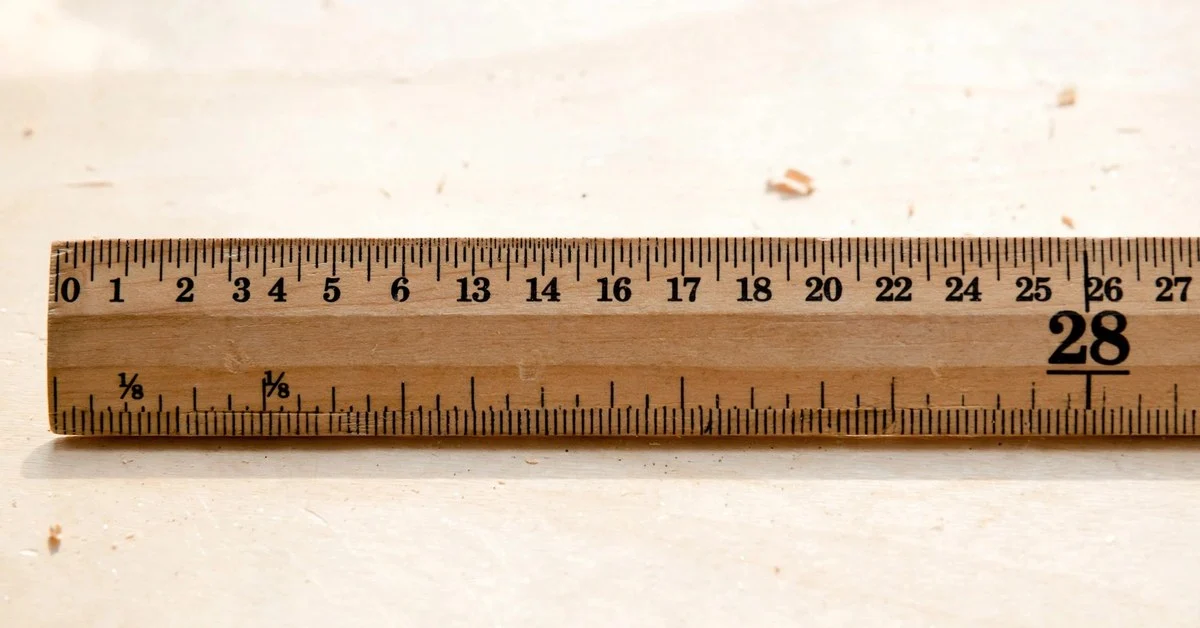
You are in the luggage aisle, and the big checked bag on the shelf says 28 inches. Is that the height? With wheels? Will the airline accept it, will it fit your trunk, and can you actually lift it when it is full? Twenty-eight inches is 2 feet 4 inches, or 71.12 centimeters — and in luggage, it names the large checked suitcase, the workhorse of two-week trips. It is also a length your house already knows: your dining table, your desk, and a traffic cone all stand within an inch of it.
This guide answers how long 28 inches is three ways: the exact conversions, fifteen everyday objects that carry the length, and — the centerpiece — a practical suitcase height check. You will learn what “28-inch” means on a luggage tag, how to run the airline’s 62-linear-inch rule on your own bag, and how to confirm it fits your trunk and closet before you buy. Pack smarter; measure once.
28 Inches in Every Unit
Twenty-eight inches is two feet plus four inches — that extra four inches is about the length of a credit card, which makes the mental math easy. In metric it is 71.12 centimeters, a little over two-thirds of a meter. The full set:
| Unit | 28 inches equals |
|---|---|
| Inches | 28 in |
| Feet | 2 ft 4 in (about 2.33 ft) |
| Yards | about 0.78 yd |
| Millimeters | 711.2 mm |
| Centimeters | 71.12 cm |
| Meters | 0.7112 m |
For quick estimates, think “two feet plus a palm.” Two feet is 24 inches, and an adult palm — wrist to fingertip — runs about 4 inches for many people, though you should check your own hand against a ruler once. Another handy anchor: two and a half US letter sheets laid end to end make 27.5 inches, just half an inch shy. Between the palm and the paper, you can summon 28 inches anywhere in the house.
The 28-Inch Suitcase Check
This is where the number earns its keep. A 28-inch suitcase is the large checked bag — the one for long trips — and buying the wrong size is an expensive mistake. Here is how to check a 28-incher like a frequent flyer.
What “28-inch” means on a luggage tag
The 28 inches is the bag’s height standing upright, wheels and handles included. Manufacturers measure the tallest dimension, and that includes the spinner wheels and the retracted handle housing — the parts airlines count too. A typical 28-inch bag also runs about 19 inches wide and 12 inches deep, giving roughly 100 to 120 liters of packing space, enough for two weeks of clothes. 1. The 28-inch checked suitcase is your first reference object: stand it upright and you have a vertical 28-inch gauge you can use to check trunk space, closet depth, or whether it slides under a bed (it will not — most bed frames clear 7 to 14 inches).
The 62-linear-inch airline rule, worked out
Most airlines cap checked bags at 62 linear inches — height plus width plus depth — and 50 pounds (23 kg). Run the math on a typical 28-incher: 28 + 19 + 12 = 59 linear inches. That clears the limit with 3 inches to spare, which is exactly why luggage makers settled on 28 as the large checked size: it is the biggest bag that still flies without an oversize fee. Note the trap, though: bulge the bag by overpacking and the depth grows — a stuffed 28-inch bag can creep past 62. Pack it, zip it, then measure the real thing, not the tag.
Will it fit? Trunk, closet, and back seat
Before buying, check the three places the bag has to live. Car trunk: most sedan trunks are 36 to 42 inches wide between the wheel wells, so a 28-inch bag laid on its side (28 inches long, 19 wide) fits with room to spare — measure your trunk’s narrowest point to be sure. Closet: a standard reach-in closet is 24 inches deep, so a 12-inch-deep suitcase slides in easily; the 28-inch height needs a shelf at least 29 inches up. Back seat: it fits, but it blocks the middle seat. Do this measuring in the store with your phone’s tape app and you will never haul home a bag that does not fit your life.
Measuring your bag the right way
Stand the suitcase upright on a hard floor, wheels down, handle retracted. Measure floor to the highest point — usually the handle housing or a wheel — for height. Then width across the front, then depth front to back with the bag zipped and packed as you would travel. Add all three for linear inches. If the total is under 62 and the packed weight is under 50 pounds, you are flying fee-free on virtually every major airline. Write the three numbers on a luggage tag or in your phone notes; you will reuse them every trip.
Furniture and Fixtures Hovering at 28 Inches
The suitcase is the star, but 28 inches is a working height all over your home. Fourteen more references, each countable and checkable:
2. A 28-inch TV — 28 inches diagonal. The classic second-TV size for kitchens, bedrooms, and dorms, measured corner to corner. These sets still hang on plenty of walls — a screen a bit wider than two feet, and the number on the bezel was always literal.
3. A 700c road bike wheel — about 28 inches in diameter. Road bikes roll on 700c wheels, which measure roughly 28 inches across with the tire mounted. The “700c” label is an old French sizing standard, but the rolling diameter lands right at our number — it is even printed on the tire sidewall so you can verify instead of guessing.
4. A dining table — about 28 to 30 inches tall. Table makers settled on this height because it pairs with standard 18-inch chair seats. Sit at your table and rest your hand on its edge: floor to tabletop is about 28 inches, a gauge you touch at every meal.
5. A standard desk — about 29 to 30 inches tall. Office and writing desks are built for comfortable typing with a standard chair, and the range barely varies. Kneel beside yours — it is one of the most consistent furniture measurements in any home, landing within an inch or two of 28.
6. A full-size traffic cone — 28 inches tall. The big orange cones used on roads and construction sites stand exactly 28 inches. It is a regulated size, so every full-size cone matches. You have passed thousands of them; each one was a 28-inch ruler standing on the asphalt.
7. A two-shelf bookcase — about 28 to 30 inches tall. The cube-style short bookshelf that fits under windows and beside desks. Flat-pack furniture keeps these dimensions steady, and the boxy shape lets you compare height and width in one glance — a handy marker when planning storage.
8. A dorm mini-fridge — about 28 to 33 inches tall. Compact fridges are built to tuck under lofted beds and beside desks, with the most common cube size landing near the low end of the range. For students and small apartments, it is a familiar 28-inch landmark always within reach.
9. A conga drum — about 28 to 30 inches tall. These tall, narrow hand drums put the drumhead at a comfortable striking height for standing or seated players, and drum makers keep the proportions traditional. Stand beside one and its rim sits near your hip — a musical 28-inch reference with straight, easy-to-compare sides.
10. A 32-gallon trash can — about 27 to 28 inches tall. The big wheeled bins many cities issue for curbside pickup stand roughly 27 to 28 inches. Roll one upright and you have a rough outdoor gauge — good for checking fence heights, planter sizes, or how tall the firewood stack has grown.
11. A lateral file cabinet — about 28 to 30 inches tall. Two-drawer lateral cabinets are sized to slide under standard counters or sit beside desks, and offices buy them by the dozen. In any workplace, this cabinet is one of the easiest 28-inch vertical references you will find.
12. A table lamp — about 24 to 30 inches tall. Lamp makers size table lamps to sit well on side tables and desks, with most living-room models landing in the upper half of that range. Measure base to shade top on a medium-to-large lamp and you have a quick 28-inch marker for judging shelf clearance.
13. A console table — about 28 to 32 inches tall. The narrow table behind the sofa or against the hallway wall is kept near dining-table height so it blends with other furniture. Run your hand along its top edge: that height is about 28 inches, useful when arranging furniture or hanging art above it.
14. A standard crib mattress — 27.25 inches wide. Crib mattresses are regulated to 27.25 by 51.625 inches so they fit standard cribs snugly. That 27.25-inch width sits three-quarters of an inch under our target — one of the most precisely standardized near-28 measurements in any home.
15. A pedestal birdbath — about 28 to 36 inches tall. Garden birdbaths on pedestals stand in this range, putting the basin at a comfortable height for birds and viewers alike. A shorter model lands right at 28 inches — an outdoor reference that doubles as garden decor.
Questions Travelers Ask About 28 Inches
Does a 28-inch suitcase count as oversized on airlines?
Usually no. The standard limit is 62 linear inches (height + width + depth) and 50 pounds, and a typical 28-inch bag measures about 28 x 19 x 12 inches — 59 linear inches total. That 3-inch margin is why 28 became the standard large checked size. The exceptions: overpack it until it bulges and the depth grows past the limit, or fly a budget carrier with stricter rules. Measure the packed bag, not the empty tag, and confirm your specific airline’s policy before you fly.
How much can you actually pack in a 28-inch suitcase?
Roughly 100 to 120 liters — enough for two weeks of clothes for one person, or a week for two light packers. In practice, the 50-pound weight limit binds before the space does: 120 liters of clothes easily exceeds 50 pounds if you pack dense fabrics or shoes. Weigh the packed bag on a bathroom scale (weigh yourself holding it, then subtract). If you consistently hit the weight limit with room to spare, you are a candidate for compression packing cubes, not a bigger bag.
Will a 28-inch suitcase fit in my car trunk?
In most sedans, yes, laid on its side. Trunks are typically 36 to 42 inches wide between the wheel wells, and the bag on its side occupies 28 inches of length and 19 of width — it fits with room for a second bag or a backpack. The tight spot is usually the trunk opening’s height, not its interior: measure the narrowest point of the opening, not just the cavern inside. Hatchbacks and SUVs swallow 28-inchers upright without a thought.
Should I buy a 28-inch or a 30-inch suitcase?
Buy the 28-inch unless you know why you need bigger. A 30-inch bag typically measures about 30 x 20 x 12 inches — 62 linear inches, exactly at the airline limit with zero margin, and many 30-inchers exceed it once packed. Oversize fees run $100 to $200 each way, which quickly eclipses the price difference between the bags. The 28-inch is the largest size that flies fee-free with a comfortable buffer. Go 30 only if you always travel with bulky gear and have confirmed your airline’s oversize policy.
Do the wheels and handle count in the 28-inch height?
Yes — manufacturers include spinner wheels and the retracted handle in the stated height, and airlines measure the bag’s total exterior dimensions the same way. That is actually convenient: the number on the tag already represents the worst case. What the tag does not include is packing bulge, which is why seasoned travelers measure the packed, zipped bag before important trips. If your bag measures 28 inches empty and 29.5 packed, plan for 29.5.
See also: how long 26 inches is.
See also: how long 32 inches is.
Measure the Bag, Skip the Fee
Twenty-eight inches is two feet plus a palm — the height of the large checked suitcase, the dining table you eat at, and the traffic cone you drive past. It is bracketed by the 26-inch bike wheel below and the 30-inch bar stool above, so even without a reference handy you can triangulate it. But the real takeaway is procedural, not numerical: measure your packed bag’s three sides, add them up, keep the total under 62 linear inches and the weight under 50 pounds, and the 28-inch suitcase will fly fee-free every time. Know the number, check the bag, and spend the saved oversize fee on something better than baggage charges.

I’m Owen Reeves, a content writer at MeasureZit.com, specializing in measurements, unit conversions, and mathematical concepts. I turn technical topics into clear, accurate content that’s easy to understand. My focus is precision, clarity, and genuinely useful information.










