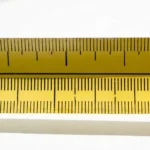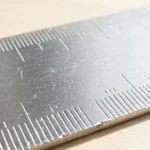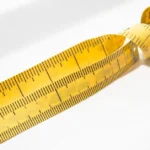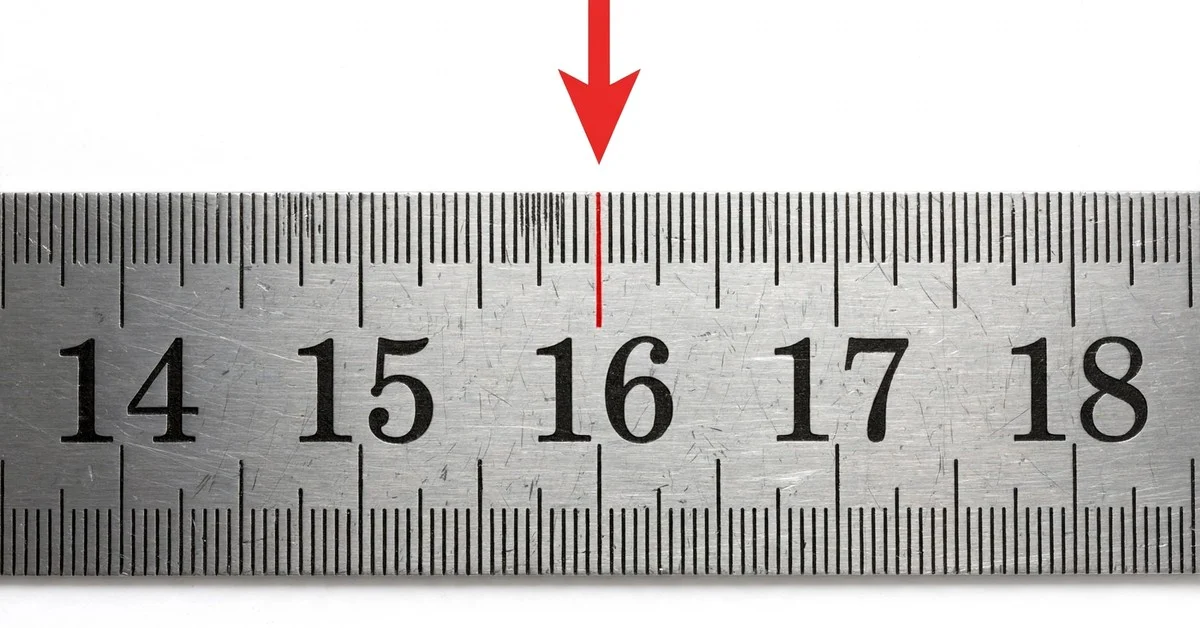
It happens during every bookshelf reorganization: most books slide in neatly, and then you hit the tall ones — the atlas, the art book, the portfolio — that refuse to fit the standard shelf. Those oversized volumes are standing around 16 inches tall, and they are the perfect doorway into a useful question: how long is 16 inches? Sixteen inches is 1 foot 4 inches, which equals 40.64 centimeters. It is a third of a yard plus a bit, a foot with a third of another foot stacked on top, and a length that turns up in some wonderfully specific places.
Sixteen inches sits in a sweet spot. It is clearly bigger than the 12-inch ruler everyone knows, yet it stops well short of two feet, so it stays easy to handle and easy to picture. This article takes a different path to the number: instead of a grab bag of random objects, we will audit a bookshelf, measure some honest circles, and line up the straight-edged sixteens hiding in garages and kitchens. By the end, 16 inches will be a length you can see.
The shelf audit: books that stand about 16 inches tall
Start where the tall books live. Most novels and textbooks top out at 8 to 11 inches, which is why standard shelves are built for them — but a whole class of oversized books breaks the mold, and 16 inches is their neighborhood. Measure a few and a pattern appears:
| Book type | Typical height |
|---|---|
| Mass-market paperback novel | ≈ 7 in |
| Hardcover novel | ≈ 8–9 in |
| College textbook | ≈ 10–11 in |
| Coffee-table photography book | ≈ 12–14 in |
| Large world atlas | ≈ 15–17 in |
| Oversize art folio | ≈ 16–18 in |
The jump from textbook to atlas is the jump into 16-inch territory. And here is a shelf-math bonus: an average paperback spine is about an inch thick, so 16 inches of shelf space holds roughly 15 to 20 paperbacks standing shoulder to shoulder. That means “16 inches” is also the answer to how much shelf a good-sized stack of novels occupies.
1. The large world atlas — about 16 inches tall
A big world atlas — the kind with topographic maps you can trace with a finger — typically stands 15 to 17 inches tall. Publishers print them oversized because maps shrink badly, so the height is deliberate, not accidental. If your family ever owned one, it probably lived on the bottom shelf or flat on a table, too tall for anywhere else. Stand it upright in your mind: that is 16 inches of cartography.
2. The oversize art folio — about 16 to 18 inches tall
Art monographs and museum folios are printed large so reproductions stay faithful, and many land at 16 to 18 inches tall. These are the heavy, glossy volumes that double as coffee-table statements and require two hands to lift. Gallery shops size them for impact, which makes them consistent: picture the biggest art book you have ever handled, and you are picturing 16 inches.
3. The deep bookshelf — 16 inches deep
Bookshelves come in standard depths, and 16 inches is the deep option — built for oversized books, storage bins, and baskets that would jut out of a standard 12-inch shelf. Furniture makers offer the depth precisely because atlases and folios exist. Run your hand from the front edge of a deep bookcase to the back wall and you have traced 16 inches with your own arm.
Round sixteens: circles you already know
Sixteen inches has a habit of showing up as a diameter. Round objects are wonderful measuring references because a circle’s width reads instantly — no deciding which edge counts. Here are the 16-inch circles hiding in kitchens, garages, and band rooms.
4. The large 16-inch pizza
Many pizzerias sell their large as a 16-inch pie, measured straight across the middle. The number is trustworthy because dough, pans, and boxes are all built around it — a 16-inch pizza genuinely will not fit a 14-inch box. You have seen this wide, flat circle at parties and family dinners more times than you can count. When you need 16 inches fast, picture that pie: it is the tastiest ruler on this list.
5. The 16-inch pedestal fan
Standing fans are sold by blade diameter, and 16 inches is the standard full-size option — the one that actually moves air across a room, as opposed to the 12-inch desk models. The size is printed on the box because buyers match it to room size. You have felt that oscillating breeze on a hot day; the circle of blades behind the grille is a genuine 16 inches of cooling.
6. The 16-inch lazy Susan
Turntable organizers for cabinets and dining tables commonly come in 16-inch diameters — big enough to hold condiments for the whole table, small enough to fit a standard cabinet. Kitchen stores stock this size because it matches common shelf widths. Give one a spin in your mind: that rotating circle is 16 inches across, and it has been quietly measuring your spices for years.
7. The 16-inch front-door wreath
Decorative wreaths are sized by diameter, and 16 inches is the classic medium — the size that looks right on a standard front door without overwhelming it. Craft stores label them clearly because buyers match the wreath to their door’s proportions. Picture the autumn or holiday wreath on a neighbor’s door: that welcoming circle is about 16 inches wide.
8. The oversize wall clock — about 16 inches across
While classroom clocks run 12 inches, the oversized farmhouse-style clocks that anchor living-room walls are commonly 16 inches across — big enough to read from the couch. The diameter is a selling point, printed on the tag. Glance at that big roman-numeraled face in your memory: 16 inches of time, ticking away.
9. The wheelbarrow wheel — about 16 inches in diameter
Many wheelbarrows roll on 16-inch wheels — the pneumatic tire size that balances load capacity with maneuverability over rough ground. Garden centers stock replacement tubes for exactly this size, which keeps it standardized. Picture the wheelbarrow parked by the garden bed: that sturdy rubber circle is about 16 inches across.
10. The 16-inch floor tom
Drummers buy floor toms by diameter and depth, and 16 × 16 inches is one of the standard sizes — the deep drum that gives a kit its low-end thunder. The shell is built to spec, so the number is exact. You have seen these standing on three legs behind every rock drummer: a 16-inch circle of maple and drumhead, tuned low.
Straight sixteens: boxes, blocks, and bars
The last group is all straight edges: things built, cut, or machined to 16 inches for practical reasons. These are the workhorses — less glamorous than a pizza, more likely to be exact.
11. The medium moving box — 16 inches tall
The ubiquitous medium moving box — the 18-by-18-inch workhorse sold at every hardware store — stands 16 inches tall. Movers love this size because it holds books and kitchen goods without getting too heavy to lift. If you have ever packed a house, you have taped dozens of these shut. Stack one in your mind: 16 inches of cardboard, top to bottom.
12. The concrete block — exactly 16 inches long
A standard concrete masonry unit — the gray cinder block of foundations and garden walls — measures exactly 16 × 8 × 8 inches. The 16-inch length is an industry standard that lets masons lay out walls without cutting. You have seen these stacked on construction sites and forming the walls of countless garages. Sixteen inches of concrete, precise to the fraction.
13. The 16-inch pizza peel
Pizza peels — the flat wooden paddles for sliding pies in and out of the oven — commonly come with 16-inch-wide blades, sized to handle a large pizza with margin to spare. Pizzeria suppliers standardize the width because it has to match the pies. Picture the pizzaiolo dusting the peel with flour: that wooden blade is 16 inches of pizza-delivery engineering.
14. The viola’s body — about 16 inches long
A full-size viola — the violin’s deeper-voiced sibling — has a body about 16 inches long (luthiers work in millimeters: 406 of them). The length is traditional, settled over centuries of instrument making. It is the reason violas look like violins that grew: that extra body length over the violin’s 14 inches is exactly what gives the viola its darker voice. Sixteen inches, tuned to a lower C.
15. The 16-inch chainsaw bar
Chainsaw guide bars come in standard lengths, and 16 inches is the most popular size for homeowner saws — long enough for firewood and storm cleanup, short enough to control safely. The length is stamped on the bar because it determines which chain fits. Picture the saw’s business end, chain and all: 16 inches of cutting capacity, and a reminder to respect it.
Putting 16 inches to work: three quick estimating tricks
Knowing the objects is half the battle; the other half is using them without overthinking. Here are three field-tested ways to land on 16 inches when no tape measure is handy. First, the ruler-plus trick: lay a standard 12-inch ruler (or a sheet of US letter paper, which is 11 inches long) against the object and picture one more third of it — that extra four inches gets you to 16. Second, the pizza rule: if the thing you are judging looks about as wide as a large pizza box, call it 16 inches and you will usually be within half an inch. Third, the shelf test: most interior wall studs sit 16 inches apart, so if you are measuring along a wall, every stud bay you cross is another 16 inches — two bays is 32, three is 48, and you can pace off a whole room that way.
One caution: screen sizes lie to the intuition. A “16-inch” laptop sounds like it should match a 16-inch pizza, but the diagonal-versus-diameter difference means the laptop’s longest edge is nowhere near 16 inches. When someone quotes inches on a screen, always picture the diagonal; when they quote them on anything round, picture the diameter. Keep those two geometries straight and 16 inches will never fool you.
Shelf-side questions about 16 inches
IKEA lists shelf heights in centimeters — what do I look for to get 16 inches?
Look for 40 or 41 cm. IKEA shelf inserts are listed in whole centimeters, so 40 cm (15.75 inches, a quarter-inch shy) or 41 cm (16.14 inches, a hair over) are your targets. For books, that quarter-inch rarely matters — but for storage boxes, measure the box first: a 40 cm cube leaves a nominal 16-inch opening with no wiggle room, so size up to 41 cm if the box must slide in and out daily.
Is 16 inches the same as a foot and a third?
Very close, but not exact. A third of a foot is 4 inches, and 12 plus 4 is 16 — so yes, 16 inches is precisely a foot and a third. It is one of the tidier fractions: a foot and a quarter is 15 inches, a foot and a half is 18. Memorizing that little ladder makes all three lengths easier to picture.
What is the difference between a 16-inch pizza and a 16-inch laptop?
The pizza is measured straight across its diameter — a true 16-inch circle of pie. The laptop is measured diagonally across the screen, corner to corner, so the machine itself is wider than 16 inches and shorter than 16 inches tall. Same number, totally different geometry: one is a diameter, the other a diagonal. This is why “16 inches” always deserves a follow-up question — 16 inches of what, measured how?
How many paperbacks fit in 16 inches of shelf?
Roughly 15 to 20. An average paperback spine runs about three-quarters of an inch to a little over an inch thick, so a 16-inch stretch of shelf swallows a respectable stack. It is a handy rule when you are buying a bookcase: measure your unread pile’s thickness, divide by 16, and you know how many shelves of “paperback inches” you need.
Is 16 inches bigger than 40 centimeters?
Barely — by about two-thirds of a centimeter. Sixteen inches is 40.64 centimeters, so 40 centimeters is just a hair shorter. If a metric product lists 40 centimeters and you are wondering whether your 16-inch item fits, the answer is: almost certainly, with about a quarter inch to spare.
See also: how long 15 inches is.
See also: how big a 16 inch pizza is.
Sixteen inches, shelved and settled
So, how long is 16 inches? A foot and a third — the height of the atlas that would not fit your shelf, the width of the pizza that feeds the table, the length of a concrete block, the diameter of a floor tom. It is a measurement with range: literary on the bookshelf, delicious at dinner, and dead serious on the construction site. The next time 16 inches comes up — on a fan box, a fan blade, or a moving box — you will not need to convert anything. You will just see it: sixteen inches, shelved and settled in your mind.

I’m Owen Reeves, a content writer at MeasureZit.com, specializing in measurements, unit conversions, and mathematical concepts. I turn technical topics into clear, accurate content that’s easy to understand. My focus is precision, clarity, and genuinely useful information.