Introduction
The 8×10 is the rug that designers reach for first. It shows up in magazine living rooms, model homes, and furniture store displays because it hits a sweet spot: big enough to ground a full seating arrangement, small enough for ordinary rooms. But numbers on a product page do not tell you how it feels underfoot.
An 8×10 rug measures 8 feet by 10 feet, covering 80 square feet of floor, or 96 × 120 inches. It comfortably holds a three-seat sofa, two armchairs, and a coffee table with every leg on the rug, which is exactly why decorators love it.
This is the go-to size for main living rooms, master bedrooms, and open-plan spaces. Once you can picture 80 square feet against real rooms and furniture, you will know in seconds whether it is right for your space.
8×10 Rug Conversion Chart
| Unit | Converted Value |
|---|---|
| Square inches | 11,520 sq in |
| Square feet | 80 sq ft |
| Square yards | ≈ 8.89 sq yd |
| Square centimeters | ≈ 74,322 sq cm |
| Square meters | ≈ 7.43 sq m |
| Dimension | Value |
|---|---|
| Length × width | 8 × 10 ft |
| In inches | 96 × 120 in |
| In centimeters | ≈ 244 × 305 cm |
| Diagonal (corner to corner) | ≈ 12.8 ft |
| Perimeter | 36 ft |
8 Things About the Size of an 8×10 Rug
| # | Item | Approximate Area |
|---|---|---|
| 1 | Half a standard parking space | ≈ 81 sq ft (about the same) |
| 2 | Almost two king-size beds | ≈ 84.4 sq ft (slightly bigger) |
| 3 | Two and a half plywood sheets | 80 sq ft (exactly) |
| 4 | A common garden shed | 80 sq ft (same footprint) |
| 5 | More than two queen mattresses | ≈ 66.7 sq ft (smaller) |
| 6 | A compact car’s footprint | ≈ 90 sq ft (slightly bigger) |
| 7 | A 9×12 area rug | 108 sq ft (bigger) |
| 8 | Two-thirds of a 10×12 bedroom | 80 sq ft (exactly) |
7 More Everyday Areas Around 80 Square Feet
| # | Item | Approximate Area |
|---|---|---|
| 9 | A small home office | ≈ 80 sq ft |
| 10 | Two 5×7 rugs side by side | 70 sq ft (slightly smaller) |
| 11 | Two and a half pool tables | 80 sq ft (exactly) |
| 12 | Four twin beds | ≈ 81.2 sq ft (about the same) |
| 13 | Three plywood sheets | 96 sq ft (bigger) |
| 14 | A large apartment balcony | ≈ 84 sq ft (slightly bigger) |
| 15 | A 6×9 rug plus a 4×6 rug | 78 sq ft (about the same) |
15 reference items total: 8 in Table A, 7 in Table B.
How Big Is an 8×10 Rug, Really?
Lie down on an 8×10 rug with your arms spread and you will not reach the edges. An average adult lying diagonally still leaves fabric to spare in every direction. It reads as a proper “room within a room”: step onto it and you feel you have entered the seating zone, step off and you are back on bare floor.
For scale, the rug is a touch smaller than half a parking space and almost exactly the footprint of a common garden shed. It is also precisely two and a half sheets of plywood, which gives contractors and DIY shoppers an instant mental image. Compared with the popular 5×7 rug, it covers well over twice the floor, and the difference is dramatic in person.
In a living room, the 8×10 earns its reputation. A standard sofa (about 7 feet long) plus two armchairs and a coffee table all fit with every leg on the rug, and there is still a comfortable border of fabric around the arrangement. That all-legs-on look is what makes a seating area feel intentional rather than scattered.
Easy ways to estimate an 8×10 rug in everyday life
- Split a parking space: a standard space is about 9 × 18 feet, so half of one is almost exactly your rug.
- Picture a garden shed: the classic 8×10-foot shed has precisely the same footprint as the rug.
- Count plywood sheets: two full 4×8 sheets plus one cut in half equals 80 square feet on the nose.
- Walk it off: pace about 13 heel-to-toe steps for the long side and 10 for the short side.
- Think two queens: two queen mattresses cover about 67 sq ft, so add a twin bed’s worth and you have the rug.
- Use the bedroom test: in a 10×12 bedroom, the rug would cover two-thirds of the floor.
1. Half a Standard Parking Space
A typical parking space runs about 9 × 18 feet, or 162 square feet. Cut it in half and you get roughly 81 square feet, essentially the rug. Anyone who drives has stood in hundreds of parking spaces, so the reference is baked into muscle memory. Picture the painted lines of one space, then erase one half. The remaining rectangle, big enough to feel roomy yet small enough to take in at a glance, is your 8×10 rug. It is a surprisingly dignified comparison for a living room purchase.
2. Almost Two King-Size Beds
One king bed covers about 42.2 square feet, so two of them total roughly 84.4, just over the rug. Hotel rooms with two kings give you the visual for free: that crowded, wall-to-wall-bed feeling is only slightly more floor than the rug covers. The comparison also settles bedroom questions fast. If two kings would overwhelm your bedroom, an 8×10 rug under one bed will feel generous but sane, which is exactly the balance most bedrooms want.
3. Two and a Half Plywood Sheets
A 4×8 plywood sheet is 32 square feet, so two and a half sheets equal exactly 80. This is the most precise everyday reference available, and anyone who has hauled plywood knows the size by heart. Lay two sheets end to end in your mind, then add half a sheet. The resulting rectangle matches the rug inch for inch. When a rug listing says 8×10 and you want a no-nonsense sense of the footprint, the lumber aisle has already taught it to you.
4. A Common Garden Shed
The 8×10-foot garden shed is one of the best-selling shed sizes, and its floor plan is precisely the rug’s footprint. If you have ever stepped inside one to grab a rake or a lawnmower, you know the space: cozy, functional, every corner reachable. Strip out the walls and the tools, lay that floor in your living room, and you have the rug. It is a wonderful anchor because sheds are honest rectangles with no furniture to distort your sense of scale.
5. More Than Two Queen Mattresses
Two queen mattresses cover about 66.7 square feet, so the rug adds roughly another half-queen on top. The queens give you the “smaller” reference that sharpens the estimate: picture two queens side by side on the floor, then tack on a twin bed’s worth of extra space. That surplus is what lets the 8×10 hold a full seating group instead of just a bed. It is the difference between a rug that fits under furniture and a rug that defines a room.
6. A Compact Car’s Footprint
A compact sedan sits on roughly 15 × 6 feet of pavement, about 90 square feet. That is a little more than the rug, making the car the “slightly bigger” bookend. Look at a parked compact car and shave a couple of feet off its length in your mind. What remains is the rug’s extent. The comparison works because cars are among the largest single objects we judge by eye every day, so scaling down from one feels natural.
7. A 9×12 Area Rug
The next standard size up, 9×12, covers 108 square feet, about a third more than the 8×10. Showrooms often display both, and the step up is obvious: the 9×12 wants a large living room or an open-plan space, while the 8×10 is content in ordinary rooms. The 28-square-foot gap between them is roughly another 4×7 strip of rug. If the 9×12 looks luxurious but your room is average-sized, the 8×10 is the sensible star.
8. Two-Thirds of a 10×12 Bedroom
A 10×12 bedroom has 120 square feet of floor, so the rug covers exactly two-thirds of it. Bedrooms are spaces everyone knows by feel, which makes the fraction easy to picture: the rug would fill the room wall to nearly wall on the 10-foot side and leave a 2-foot strip bare at one end. That leftover strip is why the rug works so well in bedrooms. It leaves breathing room around the edges while still softening nearly the whole floor.
9. A Small Home Office
Many small home offices are built around 8 × 10 feet of floor, giving them exactly the rug’s footprint. If you have worked in one, you know the layout by heart: desk against one wall, chair, a bookshelf, and just enough space to push back and stand. Replace the walls with rug fringe and you have the same area as an open, usable surface. For anyone planning a rug under a desk setup, the office comparison confirms there will be room to roll the chair without leaving the rug.
10. Two 5×7 Rugs Side by Side
Two of the popular 5×7 rugs total 70 square feet, about an eighth less than the 8×10. This is a useful comparison because the 5×7 is the size most shoppers know best. Picture two of them laid side by side, then stretch the result a little wider and longer. The 8×10 is what you get. It also explains the price jump between the sizes: you are buying more than twice the material of a single 5×7, not just a slightly bigger rectangle.
11. Two and a Half Pool Tables
A standard 4×8 pool table occupies 32 square feet, so two and a half tables equal exactly 80. Game rooms make the reference vivid: the tables are big, heavy, unmistakable objects, and two and a half of them is a serious amount of floor. The rug covers that same ground as open, walkable space. If your basement fits a pool table with playing room to spare, it will swallow an 8×10 rug without effort.
12. Four Twin Beds
Four twin beds at 20.3 square feet each total about 81.2, essentially the rug. Summer camp bunkhouses and hostel dorms are full of twin beds in rows, so the image is familiar: four beds pushed together make one big sleep platform. The rug covers that same platform as a single flat surface. The comparison is handy for large families, since it translates directly into “this rug is about four kid-beds big.”
13. Three Plywood Sheets
Three full 4×8 sheets total 96 square feet, clearly more than the rug. This is the “bigger” anchor for shoppers who already know the plywood reference: take three sheets, then remove half a sheet from the pile. The remainder is the rug. The exercise also shows how quickly area adds up. Half a sheet of plywood, 16 square feet, is the entire difference between “fits easily” and “might overwhelm the room.”
14. A Large Apartment Balcony
A generous apartment balcony at roughly 12 × 7 feet offers about 84 square feet, just over the rug. Balconies are spaces people know intimately in square-foot terms because every inch gets used: chairs, plants, a little table. That hardworking 84 square feet maps neatly onto the rug’s 80. If your balcony feels like plenty of outdoor living space, the rug will feel like plenty of indoor softness.
15. A 6×9 Rug Plus a 4×6 Rug
Lay a 6×9 rug (54 sq ft) next to a 4×6 rug (24 sq ft) and the pair covers 78 square feet, within a whisper of the 8×10. Since both are standard sizes shoppers recognize, the sum is easy to visualize. It also demonstrates something practical: one 8×10 rug usually costs less and looks calmer than two smaller rugs covering the same floor. A single large rug unifies a room in a way patchwork never quite manages.
How the 8×10 Fits Real Rooms
The 10-foot side of the rug runs along the sofa wall in most living rooms, with the 8-foot depth reaching out to catch the coffee table and the front legs of facing chairs. In a 12×15-foot living room, that leaves a comfortable 2-foot border of bare floor on the long sides and about 2.5 feet at the ends, which is the balanced look designers aim for.
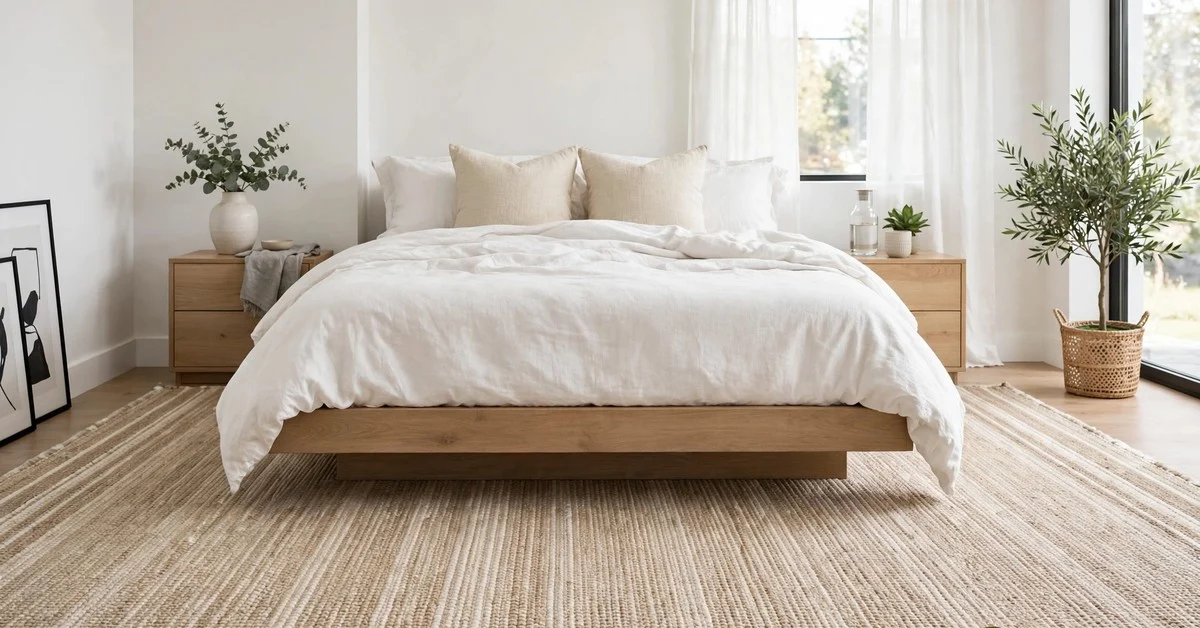
In bedrooms, the 8×10 goes under the lower two-thirds of a queen bed, extending about 2.5 feet beyond each side and leaving plenty of rug at the foot. Under a king, it still works, though designers often nudge king bedrooms up to 9×12 for a grander border. For dining rooms, the rug should extend at least 24 inches past the table on all sides so chairs stay on it when pulled out, and the 8×10 handles a six-seat table nicely.
FAQs
Is an 8×10 rug big enough for a living room?
Yes, it is the standard recommendation for most living rooms. It holds a three-seat sofa, two chairs, and a coffee table with all legs on the rug. Only very large or open-plan living rooms need to step up to 9×12.
What size room fits an 8×10 rug?
Rooms around 11 × 13 feet and larger are ideal. Aim for roughly 18 to 24 inches of bare floor between the rug edge and the walls. In smaller rooms the rug can still work if you reduce the border to about a foot, but below that it starts to look like wall-to-wall carpet.
Can an 8×10 rug go under a king bed?
It can, and many people do it. The rug will extend about 10 inches beyond each side of a king mattress. For a plusher look with more rug visible around a king, designers usually recommend stepping up to a 9×12.
Should I choose 8×10 or 9×12?
Measure your room first. If the room is under about 14 feet wide, the 8×10 is the safer pick; above that, the 9×12 fills the space better. When in doubt, tape the outline on your floor with painter’s tape and live with it for a day.
See also: what size rug for a living room.
See also: how big a 5×7 rug is.
Final Thoughts
How big is an 8×10 rug? At 80 square feet, it is half a parking space, a garden shed’s footprint, and two and a half sheets of plywood, all in one hardworking rectangle. It is the size that lets a whole seating group keep its feet on soft ground, which is why it anchors more living rooms than any other rug. Picture the shed, pace the parking space, and you will never need to guess again. Measure your room, leave a balanced border of bare floor, and the 8×10 will do the rest.
Approx. word count: 2560

I’m Dane Whitfield, a content writer at MeasureZit.com, where I specialize in creating clear, accurate articles on measurements, unit conversions, and mathematical concepts. I enjoy breaking down complex numerical topics into simple, practical explanations that readers can actually use. My goal is always precision and clarity helping people make sense of the numbers around them.










