Introduction
You download a document from a European colleague and hit print. The margins look wrong. Text that fit neatly on their screen now crowds the bottom of your page, or shrinks into a lonely island of white space. You have just met the letter vs A4 size problem.
US Letter paper measures 8.5 × 11 inches (216 × 279 mm), while A4 measures 210 × 297 mm (about 8.27 × 11.69 inches). A4 is roughly 6 mm narrower and 18 mm longer than Letter, with about 3.4% more total area. The difference is small enough to miss at a glance and big enough to wreck a carefully laid-out document.
This matters whenever you print across borders, buy a printer, format a resume, or send files to someone on another continent. Once you know the exact gap between letter and A4 paper, the fix is simple: pick the right setting before you print.
Letter and A4 Dimensions Compared
| Unit | US Letter | A4 |
|---|---|---|
| Inches | 8.5 × 11 in | ≈ 8.27 × 11.69 in |
| Feet | 0.71 × 0.92 ft | ≈ 0.69 × 0.97 ft |
| Millimeters | 216 × 279 mm | 210 × 297 mm |
| Centimeters | 21.6 × 27.9 cm | 21.0 × 29.7 cm |
| Area | 93.5 sq in | ≈ 96.7 sq in |
| Area (metric) | ≈ 603 sq cm | 623.7 sq cm |
| Diagonal | ≈ 13.9 in | ≈ 14.3 in |
The gap in plain numbers: A4 is about 0.24 inches (6 mm) narrower and 0.71 inches (18 mm) longer than US Letter. A4’s total area is roughly 3.2 square inches bigger, or about 3.4 percent more paper.
8 Everyday References for US Letter
| # | Item | Approximate Size |
|---|---|---|
| 1 | A US college notebook page | 8.5 × 11 in |
| 2 | A one-page American resume | 8.5 × 11 in |
| 3 | IRS Form 1040 (US tax return) | 8.5 × 11 in |
| 4 | A typical American magazine | ≈ 8.5 × 11 in trim |
| 5 | A ream of US copy paper | 8.5 × 11 in, ≈ 2 in thick |
| 6 | A letter sheet folded for a #10 envelope | 8.5 × 3.67 in folded |
| 7 | The long side vs an 11-inch ruler | 11 in exactly |
| 8 | A standard US manila folder’s contents | fits 8.5 × 11 in flat |
7 Everyday References for A4
| # | Item | Approximate Size |
|---|---|---|
| 9 | A European school exercise book | 210 × 297 mm |
| 10 | An international CV (outside North America) | 210 × 297 mm |
| 11 | A standard EU office document | 210 × 297 mm |
| 12 | The length gap vs a US dime | ≈ 18 mm (dime: 17.91 mm) |
| 13 | The width gap vs a pencil’s thickness | ≈ 6 mm (pencil: ≈ 7 mm) |
| 14 | An A4 sheet folded in half | two A5 sheets, 148 × 210 mm |
| 15 | Printing Letter on A4 (scale to fit) | shrink to ≈ 94% |
15 reference items total: 8 Letter-side, 7 A4-side.
How Big Is the Letter vs A4 Size Difference?
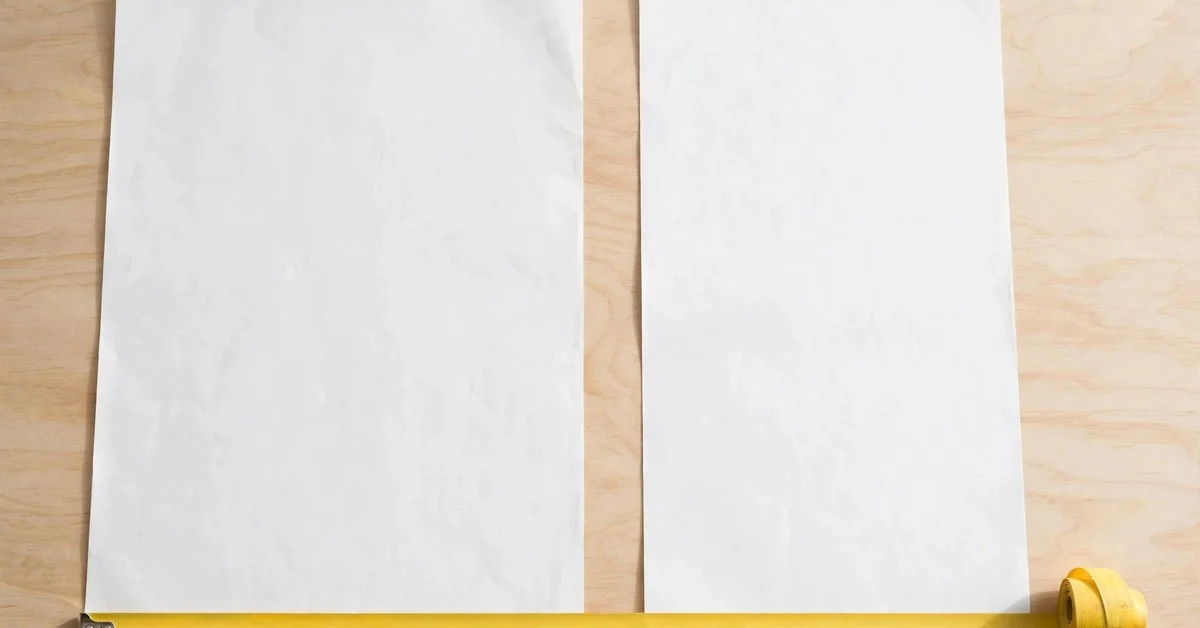
Picture two sheets on your desk. They look almost identical. Then you line up their bottom edges: the A4 sheet pokes about two-thirds of an inch past the Letter sheet at the top, and the Letter sheet sticks out a hair on each side. That hair is about 6 millimeters total, roughly the thickness of a wooden pencil.
The 18 mm length gap is easier to feel. It is about the diameter of a US dime (17.91 mm), so if a dime stands upright at the top of your Letter sheet, its height is almost exactly the extra length an A4 sheet would add. In area terms, A4 gives you roughly 3.2 extra square inches, about the size of a large sticky note.
Compared with smaller paper, both sheets dwarf a half-letter page (5.5 × 8.5 in) and look compact next to tabloid size (11 × 17 in). The real story is not which is “big” but that the two standards refuse to match, so every cross-border print job needs one extra click.
Easy ways to picture the letter vs A4 gap in everyday life
- Stand a dime on end: the 18 mm length gap is almost exactly a US dime’s diameter (17.91 mm).
- Pinch a pencil: the 6 mm width gap is roughly the thickness of a standard wooden pencil.
- Fold a sheet: A4 folds into two perfect A5 sheets; Letter folded in half gives an odd 5.5 × 8.5 in, not a standard size.
- Check your printer tray: most trays sold in the US default to Letter; most sold elsewhere default to A4.
- Read a ream label: US packs say “8.5 × 11”, European packs say “210 × 297 mm”; the numbers tell you which world you are in.
- Hold a ruler to the long edge: Letter’s 11-inch side matches an 11-inch ruler exactly, while A4 runs about two-thirds of an inch past it.
1. The US College Notebook Page
Open any student’s binder in an American classroom and you are looking at US Letter. The classic college-ruled notebook page is 8.5 × 11 inches, punched with three holes. This is why the sheet feels like the “default” paper size to most Americans: they have written on thousands of them since childhood. When teachers abroad hand out A4 worksheets, US students often notice the page feels a touch longer before they can say why. For estimating, any school notebook page in the US is a ready-made Letter reference.
2. The One-Page American Resume
Career advisors in the United States drill one rule into job seekers: keep your resume to one Letter page. The 8.5 × 11 sheet is the canvas every template assumes, with margins and font sizes tuned to fill it edge to edge. Send that same file to a recruiter in London and print it on A4, and the layout shifts: a little extra white space appears at the bottom, or the text reflows. Anyone who has formatted a resume has already worked inside the exact Letter vs A4 size debate, even without naming it.
3. IRS Form 1040 and US Tax Forms
US tax forms are designed around Letter paper, and Form 1040 is the most famous example. Every box, line, and instruction panel is laid out for an 8.5 × 11 sheet. This is a reliable reference because the IRS prints millions of identical copies: the paper size never varies. If you ever need to picture US Letter and no printer is nearby, think of the tax form envelope that arrives each spring. That sheet in your hands is the American standard, full stop.
4. A Typical American Magazine
Pick up a mainstream US magazine and check its trim size: a huge number of them are cut to about 8.5 × 11 inches. Publishers like the size because it matches the paper mills, the printing presses, and the newsstand racks built for Letter. Flip through one and you are effectively flipping through a stack of Letter sheets bound at the spine. Next time a magazine arrives in the mail, hold it against a sheet from your printer. The match is usually close enough to use the magazine as a stand-in.
5. A Ream of US Copy Paper
The 500-sheet ream is the purest Letter reference of all. In the US, the package is labeled “8.5 × 11” and the stack stands about 2 inches tall. Lift a fresh ream and you are lifting Letter paper in bulk: the weight, the footprint, the feel of the stack all encode the standard. In Europe, the equivalent ream is labeled “210 × 297 mm” and feels a whisper longer. Comparing the two labels side by side is the fastest possible lesson in the letter vs A4 size difference.
6. A Letter Sheet Folded for a #10 Envelope
The #10 business envelope (4.125 × 9.5 in) is built around the Letter sheet. Fold a Letter page into thirds and it becomes an 8.5 × 3.67-inch panel that slides neatly inside. The fit is no accident: envelope and paper standards grew up together in the US mail system. Fold an A4 sheet into thirds instead and you get 8.27 × 3.9 inches, which still fits a #10 envelope but sits a little differently. The fold test shows how the two sizes share a family resemblance without being interchangeable.
7. The Long Side Against an 11-Inch Ruler
Letter’s long edge is exactly 11 inches, which makes a standard 11-inch ruler the perfect measuring partner. Lay the ruler along the sheet and the ends line up flush: no overhang, no gap. Do the same with A4 and the sheet runs about two-thirds of an inch past the ruler’s end. This is the simplest hands-on demo of the difference. If you own a ruler and a printer, you can verify the entire letter vs A4 size story in ten seconds.
8. A Standard Manila Folder’s Contents
The manila file folder is dimensioned to hold Letter sheets flat, with a little clearance at the top and sides. Slide a Letter page in and it rests comfortably; the folder’s tab clears the sheet’s edge by design. An A4 sheet fits too, but its extra length pokes closer to the folder’s top edge. Offices that handle both standards learn this the hard way when tabs stop aligning. The folder is a quiet witness: it was cut for Letter, and A4 is merely a tolerated guest.
9. The European School Exercise Book
Across Europe, Asia, and most of the world, the school exercise book is A4: 210 × 297 mm. Students from Madrid to Mumbai write on the same proportions, which is why A4 feels like “normal paper” to most of the planet’s population. The sheet’s extra length gives lines a little more run, and teachers plan handouts around it. When these students first encounter US Letter documents, the slightly shorter, wider page is what looks odd. Globally, A4 is the default and Letter is the exception.
10. The International CV
Outside North America, the CV is built for A4. Recruiters in the UK, the EU, Australia, and much of Asia expect a 210 × 297 mm page, and templates from those regions set their margins accordingly. A two-page CV printed on A4 carries slightly more content per page than the same layout on Letter, thanks to that 3.4 percent area bonus. Job seekers applying across continents should check which standard the employer’s country uses before finalizing the layout. One wrong setting and page two starts mid-sentence.
11. The Standard EU Office Document
Walk into any office from Berlin to Bangkok and the paper in the trays, the forms on the desks, and the contracts in the files are A4. The ISO 216 standard behind it is law or custom in nearly every country, which makes A4 the working paper of global business. Company letterheads, invoices, and reports are all designed for 210 × 297 mm. This is why the rest of the world finds the American insistence on Letter puzzling: from their side of the desk, Letter is the odd size that breaks their templates.
12. The Length Gap Against a US Dime
The 18 mm that A4 adds in length is almost exactly the diameter of a US dime (17.91 mm). Stand a dime upright at the top edge of a Letter sheet and its height shows you, to within a fraction of a millimeter, how much longer A4 runs. It is a striking little demo because the dime is something nearly every American can picture or pull from a pocket. The gap that breaks print layouts turns out to be coin-sized: small in the hand, significant on the page.
13. The Width Gap Against a Pencil
The 6 mm that Letter adds in width is roughly the thickness of a standard wooden pencil, which measures about 7 mm across its hexagonal body. Pinch a pencil between thumb and forefinger and you are holding the width difference between the two world paper standards. It sounds trivial until you realize those 6 millimeters are exactly what gets cropped when a Letter document prints edge-to-edge on A4. Small numbers cause real problems when they run the full length of a page.
14. An A4 Sheet Folded in Half
Here A4 shows off its cleverest trick. Fold an A4 sheet in half and you get two A5 sheets (148 × 210 mm) with exactly the same proportions as the original. This works because the ISO 216 standard is built on the square root of 2: every size in the A series halves perfectly into the next. Fold a Letter sheet in half and you get 5.5 × 8.5 inches, a size with different proportions and no standard name. The folding test is the clearest proof that A4 was engineered while Letter simply happened.
15. Printing Letter on A4 at 94 Percent
When a Letter document must print on A4 paper, most printer drivers offer a “scale to fit” option that shrinks the page to roughly 94 percent. At that size the full Letter layout, margins included, lands safely inside the narrower A4 width. Going the other direction, an A4 document printed on Letter usually needs shrinking to about 97 percent so the extra length does not spill off the bottom. These percentages are worth memorizing: they are the two numbers that end every letter vs A4 size headache at the printer.
FAQs
Is A4 bigger than US Letter?
Yes, slightly. A4 has about 96.7 square inches of area versus Letter’s 93.5, making it roughly 3.4 percent bigger overall. A4 is longer by about 0.7 inches but narrower by about 0.24 inches, so the difference is easy to miss until you stack the sheets.
Can I print a US Letter document on A4 paper?
Yes. Choose “fit to page” or set the scale to about 94 percent in your print dialog, and the whole Letter layout will fit inside the A4 sheet. Without scaling, the slightly narrower A4 width can crop text at the left and right margins.
Which countries use A4 and which use US Letter?
A4 is the standard in nearly every country, under the ISO 216 system. US Letter dominates in the United States and Canada, with some use in Mexico and the Philippines. If you are sending documents internationally, assume A4 unless you know otherwise.
Why is A4 longer and narrower than Letter?
A4 comes from the ISO 216 standard, which defines paper sizes by the square root of 2 so each size halves neatly into the next. US Letter traces back to historical American paper-making traditions with no such mathematical basis, which is why its proportions do not scale cleanly.
See also: how big A4 paper is.
See also: how big A3 paper is.
Final Thoughts
The letter vs A4 size question looks trivial until a print job goes wrong across borders. Now you know the exact numbers: Letter at 8.5 × 11 inches, A4 at 210 × 297 mm, separated by a dime-sized length gap and a pencil-thick width gap. Everyday objects make the difference easy to remember: the notebook page and the tax form for Letter, the exercise book and the international CV for A4. Keep the two scale percentages, 94 and 97, in your back pocket, and always check the paper size setting before you print. A ten-second check beats a reprinted stack every time.
Approx. word count: 2625

I’m Owen Reeves, a content writer at MeasureZit.com, specializing in measurements, unit conversions, and mathematical concepts. I turn technical topics into clear, accurate content that’s easy to understand. My focus is precision, clarity, and genuinely useful information.










